
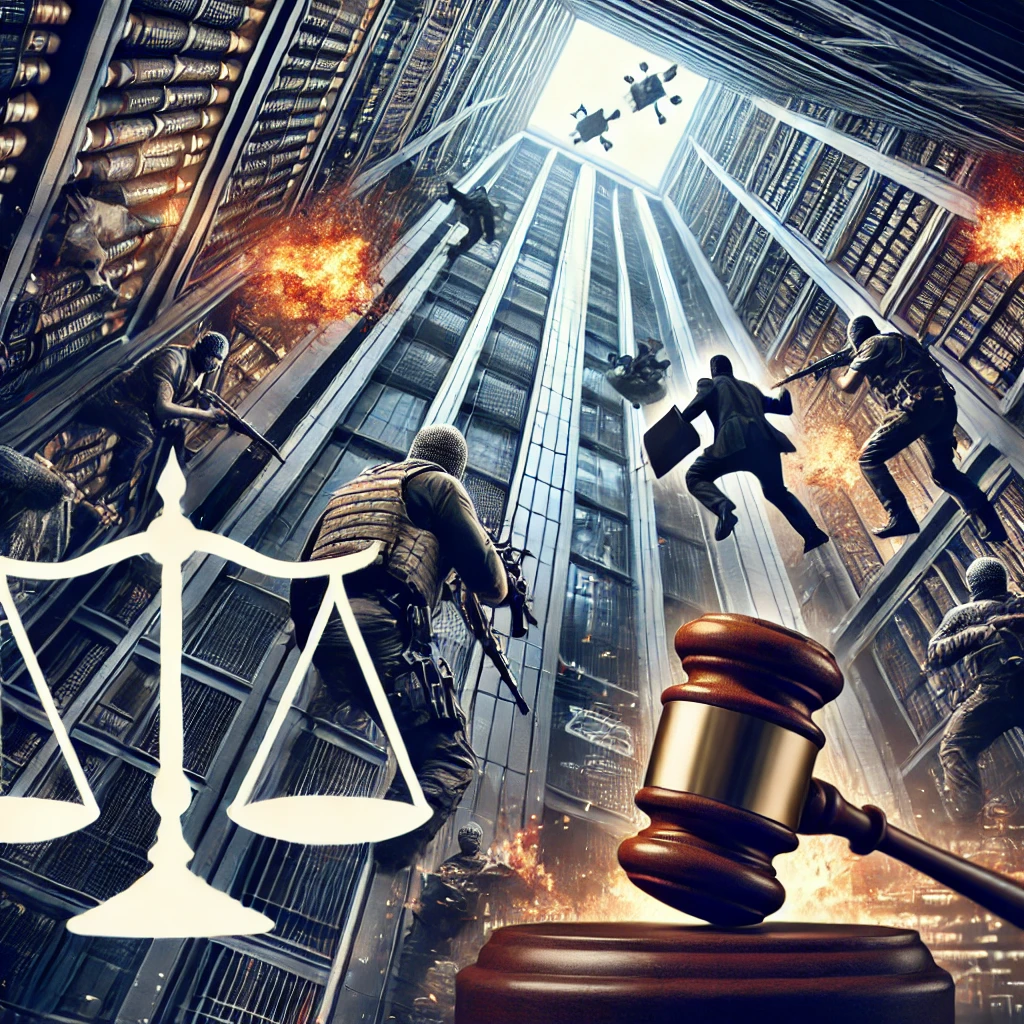
Die Hard (1988) is an iconic action film that follows NYPD officer John McClane as he battles a group of terrorists who have taken hostages in a Los Angeles skyscraper. While the movie is celebrated for its intense action sequences, the actions of the characters—particularly the terrorists—would raise significant legal issues under Washington State law. This article examines the key crimes committed in Die Hard and how they would be treated under Washington law.
1. Terrorism (RCW 9A.40.040)
The central crime in Die Hard is terrorism. Hans Gruber and his team take over Nakatomi Plaza, holding hostages and using violence to achieve their goals. In Washington, terrorism is a serious offense under RCW 9A.40.040, defined as using violence, intimidation, or threats to influence government policies or coerce civilians. Terrorism is a class A felony, carrying severe penalties, including life imprisonment without the possibility of parole.
2. Kidnapping (RCW 9A.40.020)
The terrorists take numerous hostages during their siege. Under Washington law, this would be classified as kidnapping, defined under RCW 9A.40.020 as intentionally abducting another person with the intent to hold them for ransom or to facilitate a felony. Kidnapping in the first degree is a class A felony, with penalties including life imprisonment.
3. Assault (RCW 9A.36.011)
The terrorists engage in numerous acts of violence, including shooting at hostages and law enforcement. In Washington, assault is defined under RCW 9A.36.011 as intentionally causing bodily harm to another person. Given the severity of the injuries inflicted, these actions would likely be classified as first-degree assault, a class A felony punishable by up to life imprisonment.
4. Murder (RCW 9A.32.030)
Several characters are killed by the terrorists throughout the film, including hostages and security personnel. In Washington, murder is defined under RCW 9A.32.030 as intentionally causing the death of another person with premeditation. The terrorists’ actions would constitute first-degree murder, a class A felony with penalties ranging from life imprisonment to the death penalty.
5. Robbery (RCW 9A.56.200)
Hans Gruber’s primary goal is to steal $640 million in bearer bonds. In Washington, robbery is defined under RCW 9A.56.200 as taking personal property from another person against their will by the use of force, threats, or intimidation. This would be classified as first-degree robbery, a class A felony.
6. Possession and Use of Explosives (RCW 70.74.180)
The terrorists use explosives to gain entry to the vault and create chaos. In Washington, the possession and use of explosives is regulated under RCW 70.74.180, making it illegal to possess, manufacture, or use explosives without proper authorization. Violating this statute is a felony, with penalties including imprisonment and significant fines.
7. Destruction of Property (RCW 9A.48.070-090)
The terrorists cause extensive property damage, destroying parts of the building, vehicles, and equipment. In Washington, this would be classified as malicious mischief, divided into three degrees:
- First-degree malicious mischief (RCW 9A.48.070): Damage exceeding $5,000, a class B felony.
- Second-degree malicious mischief (RCW 9A.48.080): Damage between $750 and $5,000, a class C felony.
- Third-degree malicious mischief (RCW 9A.48.090): Damage under $750, a gross misdemeanor.
The extensive destruction would likely result in first-degree malicious mischief charges.
Conclusion
Die Hard is an action-packed film that has become a holiday classic, but the crimes depicted would lead to significant legal consequences under Washington State law. From terrorism and kidnapping to murder, assault, robbery, and property destruction, these offenses would result in severe criminal charges if committed in real life. Analyzing the movie through a legal lens highlights the importance of understanding and adhering to the law, even in high-stakes situations.
Review our client resources here
Contact us anytime for your urgent legal needs.
About Blanford Law:
We are no-nonsense, relentless, fair, and honest. We are great listeners instead of fast talkers, that is just who we are. More than 20 years ago, Ken began practicing law with a deeply-seeded belief that every person has the right to the best legal representation available. He built his law firm on that belief. Another belief that he strongly adheres to is his fundamental belief that clients deserve respect, with no assumptions or preconceived notions. If you or someone you know is accused of a crime or injured as a result of the negligence of another, please have them call us at 253-720-9304 or email us info@blanfordlaw.com
Additional Resources
1. Lost Boys Crimes Under Washington Law
Analyzes fictional crimes committed in The Lost Boys and how they would be charged under Washington State law.
2. Crimes Committed in Star Wars (Episode IV)
A creative legal breakdown of crimes from Star Wars: A New Hope using Washington criminal statutes.
3. 47 Moving vs. Non-Moving Violations in Washington
Clarifies the difference between moving and non-moving traffic violations and their legal consequences in Washington.
4. Four People Die in ATV Crash in Washington
Covers the legal implications and safety concerns following a deadly ATV crash.
5. Tragic Rollover Crash in Oak Harbor
A news analysis of a fatal rollover crash involving teens, with potential legal issues under Washington law.