
When it comes to the regulation of bail bond agents and agencies in Washington, the law is clear: the authority lies solely with the state. According to RCW 18.185.080, the Washington State Legislature has established exclusive control over the licensing of bail bond professionals for regulatory purposes.
Understanding this statute is essential for both bail bond agents and local governments. It outlines exactly who can regulate, license, or tax bail bond professionals—and under what conditions.
State-Level Licensing Is Exclusive
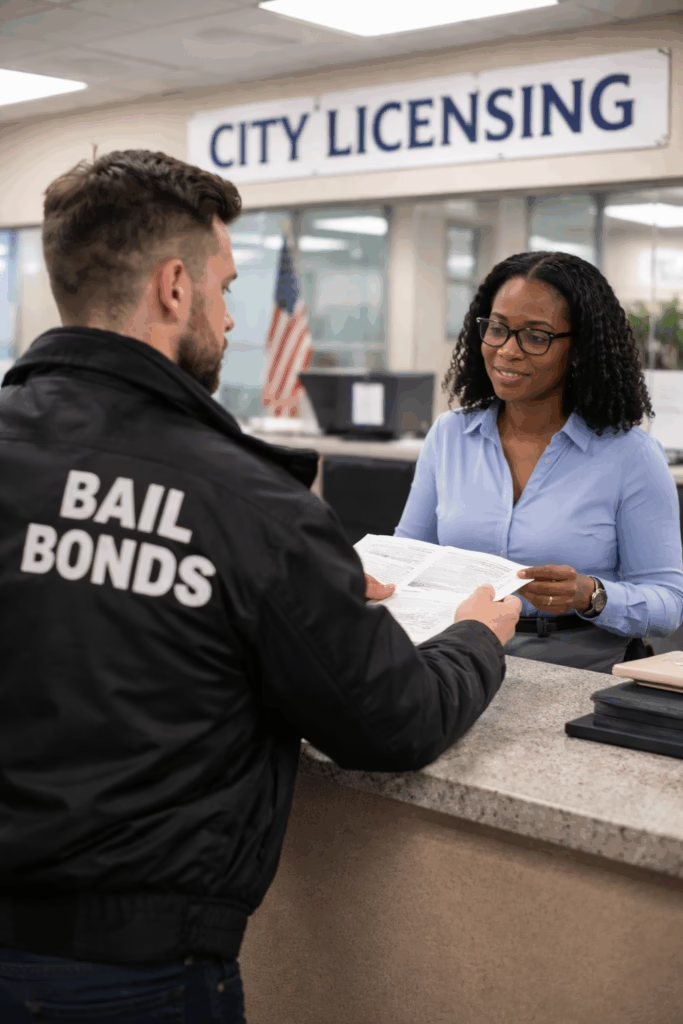
Under subsection (1) of RCW 18.185.080, only the State of Washington has the authority to license bail bond agents and agencies for regulatory purposes. This means that no county, city, or other local government may establish its own licensing scheme for bail bond regulation.
This preemption helps maintain consistency in the professional standards and qualifications required to operate a bail bond agency across the state.
Can Local Governments Impose Taxes or Fees?
Yes. Subsection (2) of RCW 18.185.080 clarifies that local governments may still levy taxes or fees on bail bond agencies. However, these must be:
- Business-related fees or taxes (e.g., business licenses or B&O taxes), and
- Applied uniformly to other businesses in the jurisdiction.
So while a city can require a bail bond agency to pay a local business license fee, it cannot impose special regulations or licensing requirements specific to bail bond services.
Regulation of Non-Regulated Activities
Subsection (3) provides a narrow exception. If a bail bond agency engages in activities not regulated under RCW 18.185, then those specific activities can be locally licensed for regulatory purposes.
For example, if a bail bond agency also offers private investigation services or operates a security firm, those separate activities may fall under other licensing schemes at the state or local level.
Why This Law Matters for Bail Bond Agents
This statute protects bail bond professionals from being subjected to a patchwork of inconsistent local regulations, while still allowing local governments to collect taxes in the same manner as from any other business. It also helps agents understand their compliance obligations clearly: for regulatory licensing, look to the state.
Contact Blanford Law Today
Navigating Washington’s bail bond laws can be complex. Whether you’re opening a new agency, expanding into other services, or facing a local licensing dispute, Blanford Law can help.
Contact us today at ken@blanfordlaw.com or 253-720-9304 to ensure your bail bond business remains compliant and protected.
Additional Resources
- Kittitas County’s Bail Bond System: A Guide to the Justification Policy – Understand local court policies affecting bail bond practices. https://blanfordlaw.com/kittitas-countys-bail-bond-system-a-guide-to-the-justification-policy/
- RCW 18.185.005 – Overview – Read the legislative intent and scope of Washington’s bail bond law. https://blanfordlaw.com/rcw-18-185-005-overview/
- Understanding WAC 308-19-020: The Organization of Washington’s Bail Bond Licensing Program – Learn how Washington structures its licensing authority. https://blanfordlaw.com/understanding-wac-308-19-020-the-organization-of-washingtons-bail-bond-licensing-program/
- RPC 1.11 – Washington Conflicts – Review conflict of interest rules for former government employees in bail and legal work. https://blanfordlaw.com/rpc-1-11-washington-conflicts/
- WAC 308-19-130 – Bail Bond Fees – A breakdown of allowed charges and fees in Washington bail bond services. https://blanfordlaw.com/wac-308-19-130-bail-bond-fees/