
Contesting a traffic infraction in Washington requires a solid understanding of court procedures. One of the most important rules guiding these proceedings is IRLJ 3.3, which outlines the procedure at a contested hearing. This article breaks down the key components of IRLJ 3.3 and what it means for your traffic infraction case.What Is a Contested Hearing?A contested hearing is a formal court process where a driver disputes the allegations in a traffic infraction notice. Under IRLJ 3.3, the court conducts this hearing “on the record” in accordance with Washington law. The burden is on the government (the plaintiff) to prove the infraction occurred.Representation at a Contested HearingIRLJ 3.3(b) governs who may represent the parties:
The plaintiff (i.e., the state or municipality) must be represented by a lawyer if local court rules require it.The defendant may be represented by an attorney. If the attorney files a notice of appearance and includes a waiver of the defendant’s presence, the defendant does not need to appear in person unless otherwise required.
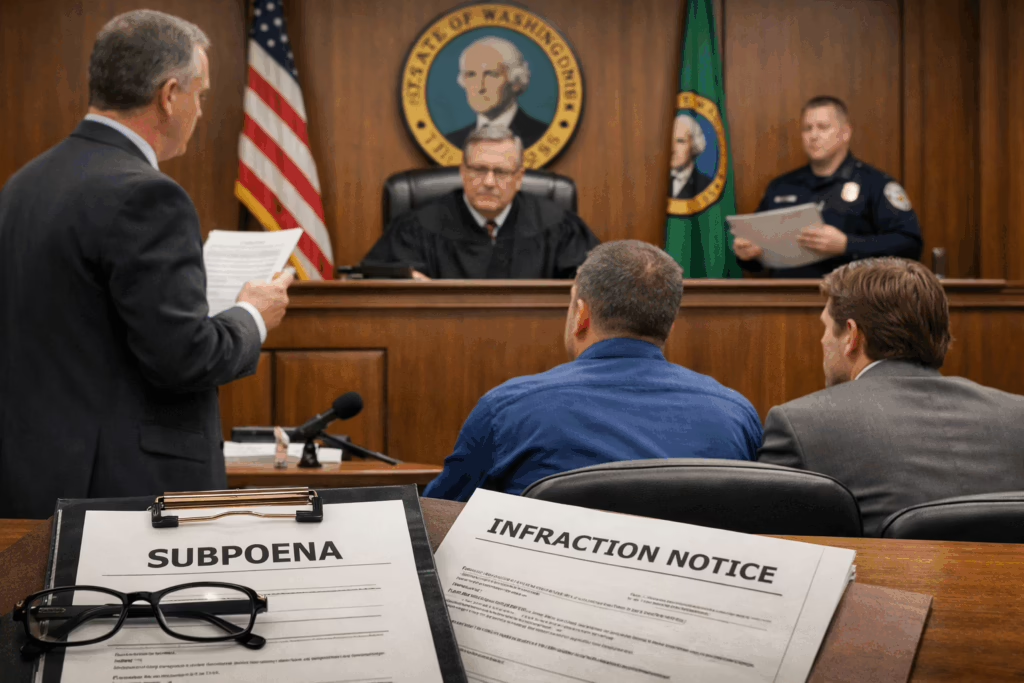
The court may consider the notice of infraction and any sworn officer statement in place of the officer’s in-person testimony.However, if the defendant wants the officer to appear, they can serve a subpoena in line with IRLJ 2.6(a)(2).
The court may impose a monetary penalty, but it cannot exceed the amount prescribed by law.Judges may waive or suspend part of the fine, allow payment plans, or substitute community restitution where appropriate.The court maintains jurisdiction for one year to supervise compliance with the disposition.
Additional Resources
- Traffic Infractions in Washington
Learn how Washington State handles traffic infractions and what legal options are available.
https://blanfordlaw.com/areas-of-practice/traffic-infraction/ - Understanding IRLJ 1.1: Infractions
A breakdown of what qualifies as an infraction under Washington law and how it differs from criminal offenses.
https://blanfordlaw.com/understanding-irlj-1-1-infractions/ - IRLJ 1.2: Infraction Rule Overview
Insight into how infraction rules are structured and their legal authority in Washington.
https://blanfordlaw.com/irlj-1-2-infraction-rule/ - Bail Bond vs. Agency Bond in Washington
Understand the difference between bail bonds and agency bonds and when each is applicable.
https://blanfordlaw.com/bail-bond-agency-bond-washington/ - Bail Bond Regulation in Washington
A detailed guide on the laws and rules regulating bail bonds across Washington State.
https://blanfordlaw.com/bail-bond-regulation-washington/