
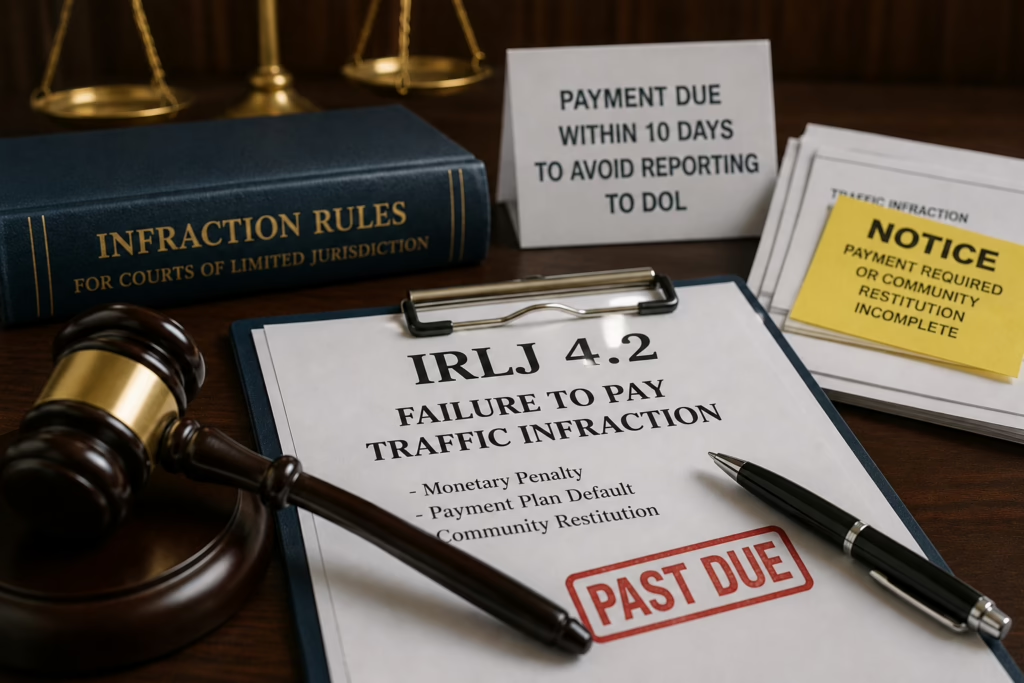
IRLJ 4.2 Failure to Pay Rule Explained
Receiving a traffic ticket in Washington does not always end when the court enters judgment. Drivers who fail to pay court-ordered penalties or fail to complete community restitution may face additional consequences under IRLJ 4.2 Failure to Pay.
This rule requires Washington courts to notify the Department of Licensing (DOL) when a person does not satisfy a traffic infraction judgment. Understanding how the rule works can help drivers avoid complications involving their driving records and court obligations.
What Is IRLJ 4.2?
IRLJ 4.2 is part of Washington’s Infraction Rules for Courts of Limited Jurisdiction.
The rule addresses what happens when a person:
- Fails to pay a traffic infraction judgment.
- Fails to comply with a court-approved payment plan.
- Fails to complete community restitution ordered by the court.
When any of these events occur, the court must notify the Department of Licensing within a specific time period.
When Must a Court Notify the Department of Licensing?
Failure To Pay a Traffic Infraction
Under IRLJ 4.2(a)(1), the court must notify the Department of Licensing within 10 days if a person fails to pay a monetary penalty that was imposed after:
- A contested hearing.
- A mitigation hearing.
- A decision based on written statements when permitted by local court rule.
Once the court determines that the monetary obligation has not been satisfied, notification to the Department is required.
Missed Payment Plans Also Trigger Reporting
Court-Approved Payment Plans
Many drivers are unable to pay a traffic infraction in a single payment.
In some cases, courts authorize installment payment plans.
However, IRLJ 4.2(a)(2) requires notification to the Department of Licensing when a person:
- Fails to make payments required by the plan.
- Misses deadlines established by the court.
- Otherwise defaults on the payment agreement.
As a result, failing to comply with a payment schedule can create additional consequences beyond the original infraction.
Community Restitution Requirements
Washington courts sometimes allow community restitution as an alternative to monetary penalties.
Community restitution generally requires a person to perform approved service hours rather than pay all or part of the financial obligation.
Under IRLJ 4.2(a)(2), the court must notify the Department if the individual fails to complete the required community restitution.
The rule treats uncompleted community restitution similarly to unpaid monetary penalties.
Which Infractions Are Excluded?
Parking and Pedestrian Infractions
Not every infraction falls within IRLJ 4.2.
The rule specifically excludes:
- Parking infractions.
- Standing violations.
- Stopping violations.
- Pedestrian infractions.
Because these infractions are treated differently under Washington law, courts generally do not report unpaid obligations arising from these violations under IRLJ 4.2.
How Does the Court Notify the Department?
Department-Prescribed Forms
IRLJ 4.2(b) requires courts to provide notice using forms prescribed by the Department of Licensing.
Today, most courts transmit this information electronically.
Electronic reporting allows the Department to quickly update records and maintain accurate information regarding traffic infraction compliance.
What Happens After the Obligation Is Satisfied?
Removal of the Failure To Pay Notice
IRLJ 4.2 does not only address reporting failures.
The rule also requires courts to update the Department when the obligation has been satisfied.
Under IRLJ 4.2(c), the court must notify the Department within 10 days after:
- Full payment of all monetary penalties, or
- Completion of all required community restitution.
This notification helps ensure that Department records accurately reflect the driver’s compliance with court orders.
Why IRLJ 4.2 Matters
Many drivers focus on the amount of a traffic ticket and overlook the importance of complying with court deadlines.
However, failure to pay or complete community restitution can result in court reporting obligations that may affect a driver’s record.
Even though Washington no longer suspends driver’s licenses solely for failure to pay many traffic fines, court compliance remains important. Ignoring court-ordered obligations can create unnecessary legal complications and make future interactions with the court system more difficult.
Common Mistakes Drivers Make
Several common mistakes can lead to problems under IRLJ 4.2:
- Ignoring court notices.
- Missing payment deadlines.
- Assuming partial payments are sufficient.
- Failing to complete community service requirements.
- Not communicating with the court when financial hardship arises.
Drivers experiencing financial difficulties should contact the court as soon as possible to discuss available options.
Key Takeaways About IRLJ 4.2 Failure to Pay
IRLJ 4.2 requires Washington courts to notify the Department of Licensing when a driver fails to pay a traffic infraction judgment, defaults on a payment plan, or fails to complete community restitution.
The rule also requires courts to notify the Department once the obligation has been fully satisfied.
Understanding IRLJ 4.2 can help drivers avoid unnecessary complications and ensure that traffic infraction obligations are handled properly.
Contact Blanford Law
If you have questions about traffic infractions, Department of Licensing issues, or court obligations in Washington, contact Blanford Law today at ken@blanfordlaw.com or 253-720-9304 for guidance on your legal matter.
Additional Resources
IRLJ 4.2 Failure to Pay: Consequences of Unpaid Traffic Infractions
Failure to pay a traffic infraction can trigger court reporting requirements and additional legal consequences. This article explains how IRLJ 4.2 governs unpaid traffic penalties and community restitution obligations in Washington.
https://blanfordlaw.com/irlj-4-2-failure-to-pay/
IRLJ 3.6 Payment Plans for Traffic Infractions
Washington courts may allow drivers to satisfy traffic infraction obligations through court-approved payment plans. Learn how IRLJ 3.6 works, eligibility requirements, and what can happen if a payment plan is not completed.
https://blanfordlaw.com/irlj-3-6-payment-plans/