
If you or someone you love has been arrested, one question is probably at the top of your mind:
“Can I get out of jail without paying bail?”
The answer is yes—many people are released without paying bail in Washington. In fact, under Washington Criminal Rule (CrR) 3.2, judges generally begin with the presumption that a person charged with a non-capital offense should be released pending trial unless there is a legal reason to require bail or impose other conditions.
That surprises many people. Television often makes it seem like every arrest requires cash bail. Washington law works differently.
Understanding how judges make release decisions can help you know what to expect after an arrest.
What Does “Released Without Bail” Mean?
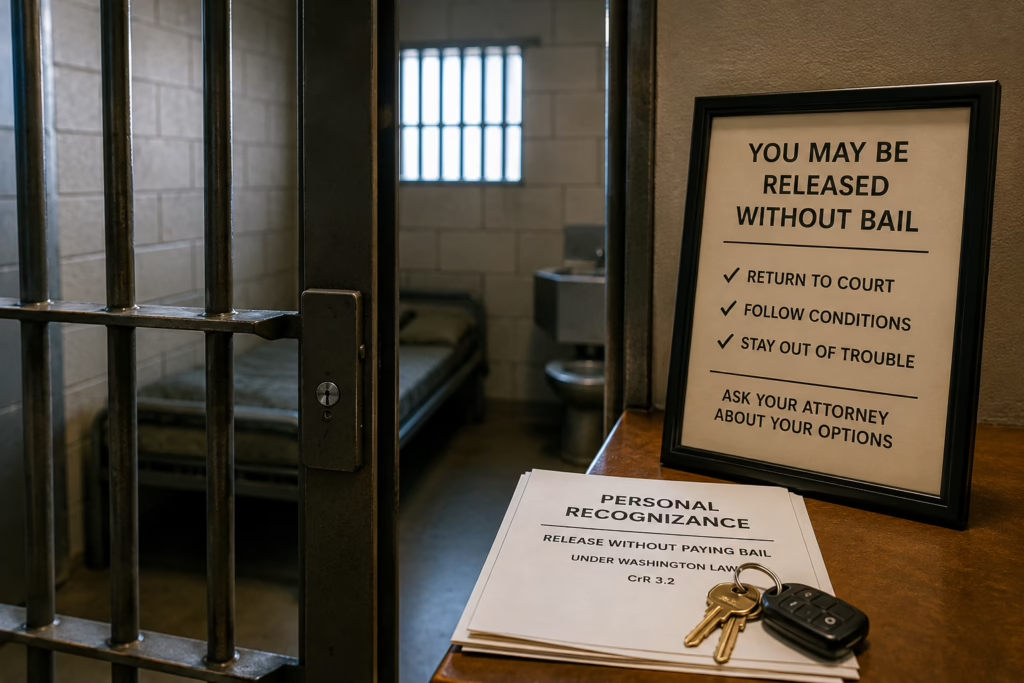
Being released without bail usually means the judge has ordered you released on personal recognizance, often called PR release.
Instead of paying money, you simply promise to:
- Return for every court hearing.
- Obey all court-ordered conditions.
- Avoid committing new crimes while your case is pending.
If you follow those rules, you remain out of custody while your criminal case moves through the court system.
Washington Law Starts with Release—Not Jail
One of the most important parts of Criminal Rule 3.2 is that judges do not begin by asking how much bail should be set.
Instead, they begin with a different question:
Can this person safely be released without bail?
If the answer is yes, the judge should order release on personal recognizance.
Only if the court finds that personal recognizance is not enough should it consider additional restrictions.
This is because people charged with crimes are presumed innocent unless and until they are convicted.
When Will a Judge Require Bail?
There are two primary reasons a judge may require bail instead of releasing someone on personal recognizance.
The Judge Thinks You Won’t Return to Court
The court considers whether you are likely to appear for future hearings.
The judge may consider:
- Have you missed court before?
- Do you have a steady job?
- Do you have family in the area?
- How long have you lived in Washington?
- Do you have a permanent address?
- Do you have a history of failing to follow court orders?
Someone with strong community ties is generally viewed as less likely to flee.
The Judge Believes Public Safety Is at Risk
The court must also consider whether releasing someone would create a substantial danger.
Examples include allegations involving:
- Violent crimes
- Domestic violence
- Witness intimidation
- Violating protection orders
- Threatening victims
- Tampering with evidence
Even in these situations, the judge must consider whether conditions short of detention can adequately address the risk.
Bail Is Not the Only Option
Many people believe the judge has only two choices:
- Keep you in jail
- Set bail
Washington law provides many more options.
A judge may order:
- Personal recognizance
- Electronic home monitoring
- Drug or alcohol restrictions
- No-contact orders
- Curfews
- Travel restrictions
- Regular reporting
- Third-party supervision
- Cash bail
- Surety bond
The law specifically encourages judges to use the least restrictive conditions that will reasonably assure your appearance and protect the community.
How Can I Improve My Chances of Being Released?
Every case is different, but several factors often help during a release hearing.
Have Stable Employment
A job demonstrates ties to the community.
Have Family Present
Family members who attend court may help show that you have community support.
Have a Permanent Residence
Judges want confidence that they know where you will be living.
Follow Court Orders
If you’ve appeared for prior hearings and complied with court orders, the judge is more likely to view you as reliable.
Hire an Attorney Early
A defense attorney can present information about your employment, family, housing, medical needs, and other circumstances that support release.
What If I Can’t Afford Bail?
If bail is set higher than you can afford, you are not necessarily out of options.
Washington law allows defendants to request a bail review hearing. During that hearing, the court may reconsider:
- Your financial resources
- Employment
- Housing
- Community ties
- Family responsibilities
- Medical issues
- Changes in circumstances
In some cases, bail may be reduced or replaced with less restrictive conditions.
Common Questions About Release Without Bail
Is everyone eligible for release without bail?
No. Judges consider the facts of each case. Serious safety concerns or a significant risk of failing to appear may justify bail or detention.
Can I be released the same day?
Yes. Many defendants are released shortly after their first appearance if the judge orders personal recognizance or once release paperwork is completed.
What happens if I miss court?
Missing court can result in a bench warrant, forfeiture of bail, and additional criminal charges in some situations.
Can the judge change my release conditions later?
Yes. The court may modify release conditions if circumstances change or if someone violates the conditions of release.
The Biggest Mistake People Make
Many defendants think the first hearing is their opportunity to argue that they are innocent.
It isn’t.
The judge is usually deciding whether you can safely be released while your case is pending—not whether you committed the crime.
That means information about your job, your family, your residence, your criminal history, and your reliability often matters far more than arguing about the facts of the case.
Preparing for that hearing can make a significant difference.
Why Criminal Rule 3.2 Matters
Criminal Rule 3.2 protects an important principle of Washington law: most people accused of crimes should not remain in jail simply because they have been arrested.
Instead, judges must carefully evaluate whether release on personal recognizance or another less restrictive condition will reasonably ensure future court appearances and protect the community.
Knowing your rights before your first appearance can help you and your family better understand what to expect during this critical stage of a criminal case.
Contact Blanford Law for Help
If you or a loved one has been arrested, the first appearance can determine whether you remain in custody or return home while your case is pending. Having experienced legal representation at this early stage can make a meaningful difference.
Contact Blanford Law today at ken@blanfordlaw.com or 253-720-9304 for guidance on your legal matter.
Additional Resources
To learn more about bail, recognizance, and release under Washington law, explore these related articles:
Out-of-State Bail Bond Agents in Washington – Find information about using an out-of-state bail bond agent in connection with a Washington criminal case.
Washington Bail and Recognizance Law – Learn how Washington courts determine bail, when release on personal recognizance may be available, and what factors affect pretrial release.
RCW 10.19.090 – Forfeiture of Recognizance – Understand when bail or recognizance may be forfeited after a missed court appearance or violation of release conditions.
RCW 10.19.110 – Recognizances in Washington – Review Washington law governing recognizances and the obligations imposed on defendants released before trial.
RCW 10.19.060 – Recording Bail with the Clerk’s Office – Learn how Washington law requires bail information to be recorded with the court clerk.