
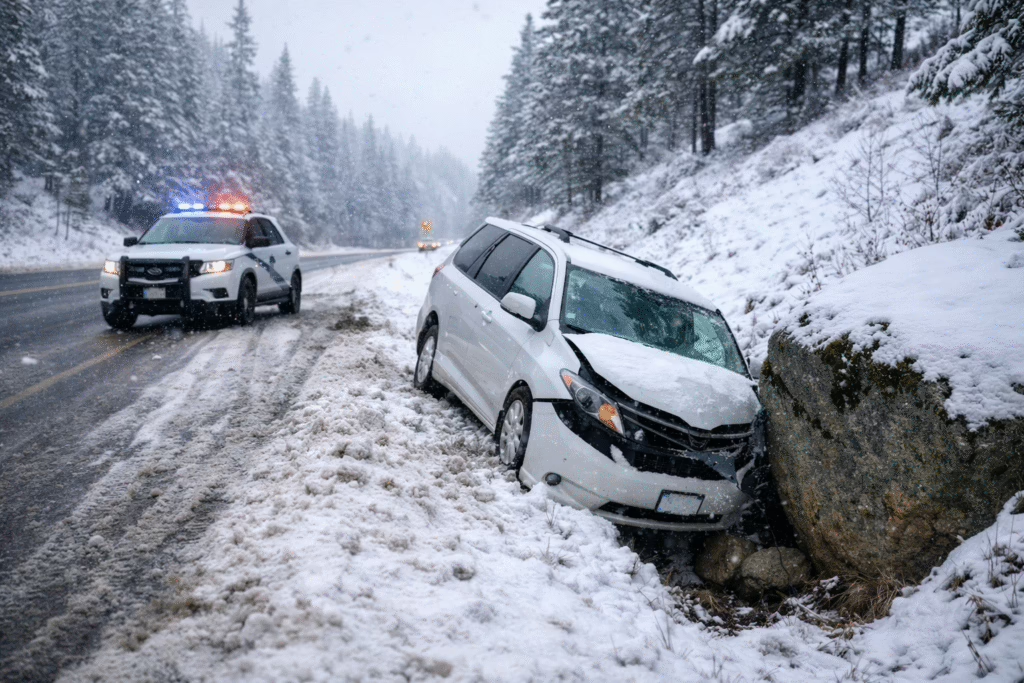
A recent crash on U.S. Highway 97 south of Peshastin highlights how quickly a routine drive near Blewett Pass can turn into a serious medical and legal situation. According to the Washington State Patrol, a minivan driven by a 61-year-old Auburn man crossed the center line, left the roadway, entered a ditch, and struck a large rock. The driver suffered injuries and was transported to Confluence Health Hospital in Wenatchee. Troopers reported the cause was unknown at the time and it was unclear whether impairment played a role.
If you or a loved one is facing a Blewett Pass injury claim, it’s important to understand a key point: “single-vehicle” does not always mean “no claim.” Many injury cases start as single-vehicle collisions, but later evidence shows a road hazard, vehicle defect, or another driver’s negligence played a role.
What makes a single-vehicle crash a potential personal injury case?
Another driver may have caused the crash without stopping
Sometimes a driver crosses the center line or leaves the roadway because another vehicle forced evasive action—unsafe passing, sudden braking, drifting into your lane, or cutting you off. If that’s what happened, you may still have a claim against:
- The at-fault driver (if identified)
- Your own policy through Uninsured/Underinsured Motorist (UM/UIM) coverage (if the other driver isn’t found or is underinsured)
Even if the other driver never made contact, witness statements, dashcam footage, and vehicle data can help prove causation.
Roadway conditions and maintenance can matter
US 97 over and around Blewett Pass sees changing weather, frost, and debris. If a dangerous condition contributed—ice not treated as required, rockfall/debris not addressed, inadequate signage, or design issues—there may be a claim involving a government entity or contractor. These cases are technical and evidence-heavy, and they often involve special notice rules and strict timelines.
Vehicle defects and mechanical failures can contribute
A blowout, steering failure, brake issue, or defective component can cause lane departure. If that’s suspected, preserving the vehicle and parts is critical.
Evidence you should try to preserve early
The earlier you gather evidence, the stronger your position tends to be—especially when the official cause is “unknown.”
Get the collision report
Washington State Patrol collision reports can be requested through the state’s electronic collision-record system.
Preserve photos, videos, and scene details
If possible, document:
- The roadway surface (ice/frost, slush, gravel)
- Tire marks and vehicle resting position
- Any signage, guardrails, and shoulder conditions
- The rock/ditch area and whether it was protected or marked
Track your medical course
In a personal injury claim, documentation matters:
- ER records, imaging, diagnosis, and referrals
- Follow-up care (PT, ortho, neuro, pain management)
- Work restrictions and time missed
- Symptom journal (pain, sleep issues, headaches, mobility limits)
How fault works in Washington
Washington uses pure comparative fault. That means if you are partly at fault, your compensation is reduced by your percentage of fault—but you are not automatically barred from recovery.
This is important in mountain-pass cases, where insurers often argue:
- “Too fast for conditions”
- “Overcorrection”
- “Driver error”
Those arguments aren’t the end of the story—especially if evidence shows another driver, a roadway hazard, or a defect contributed.
Could there be a citation, and does it decide your injury case?
Sometimes investigations involve traffic citations, including negligent driving (second degree). That infraction focuses on negligent operation that endangers people or property.
A citation does not automatically decide civil liability, but insurers often use it as leverage. Your civil case should be built on the full picture: physical evidence, medical documentation, and witness/video data.
Deadlines: don’t wait too long
In many Washington injury cases, the general filing deadline is three years.
Also, evidence can disappear quickly (weather changes the scene; vehicles are repaired; witnesses move). Early legal help can make a major difference.
Call to Action
Contact Blanford Law today at ken@blanfordlaw.com or 253-720-9304 for guidance on your legal matter.
Your Guide to Understanding RCW 46.52.020 (Legal Responsibilities After a Traffic Incident) — Explains key legal duties after a crash (stop, render aid, exchange info, report) and why compliance matters.
https://blanfordlaw.com/your-guide-to-understanding-rcw-46-52-020-legal-responsibilities-after-a-traffic-incident-in-washington-state/?utm_source=chatgpt.com
Three Injured in Head-On Crash on U.S. 97 Near Blewett Pass — Another Blewett Pass-area collision example with practical takeaways for injury claims and safety concerns.
https://blanfordlaw.com/blewett-pass-crash-injuries/
I-90 Semi Truck Crash Near Ellensburg: What Washington Negligence Law Means for Injury Claims — Breaks down how negligence, comparative fault, and evidence issues commonly play out in commercial crash cases.
https://blanfordlaw.com/i-90-semi-truck-crash-claims/
RCW 69.50.4013 Unconstitutional — Discusses legal developments and arguments around RCW 69.50.4013 and why constitutional issues can affect case strategy.
https://blanfordlaw.com/rcw-69-50-4013-unconstitutional/
Deciphering Evidence Rule 406 (ER 406): Habit and Routine Practice in Washington — A helpful overview of when “habit” evidence may be admissible and how it can impact proving or defending claims.
https://blanfordlaw.com/deciphering-evidence-rule-406-er-406-habit-and-routine-practice-in-the-state-of-washington/