
Conviction Vacatur Washington Law After State v. Abrams
The Washington Supreme Court addressed conviction vacatur Washington law in State v. Abrams, clarifying when a person can ask a court to vacate a criminal conviction.
In this case, Dustin Gene Abrams sought to vacate prior convictions while still incarcerated. The key legal question was whether Washington law allows a person to request vacatur before being released from confinement.
The Court answered no.
What Is Conviction Vacatur in Washington?
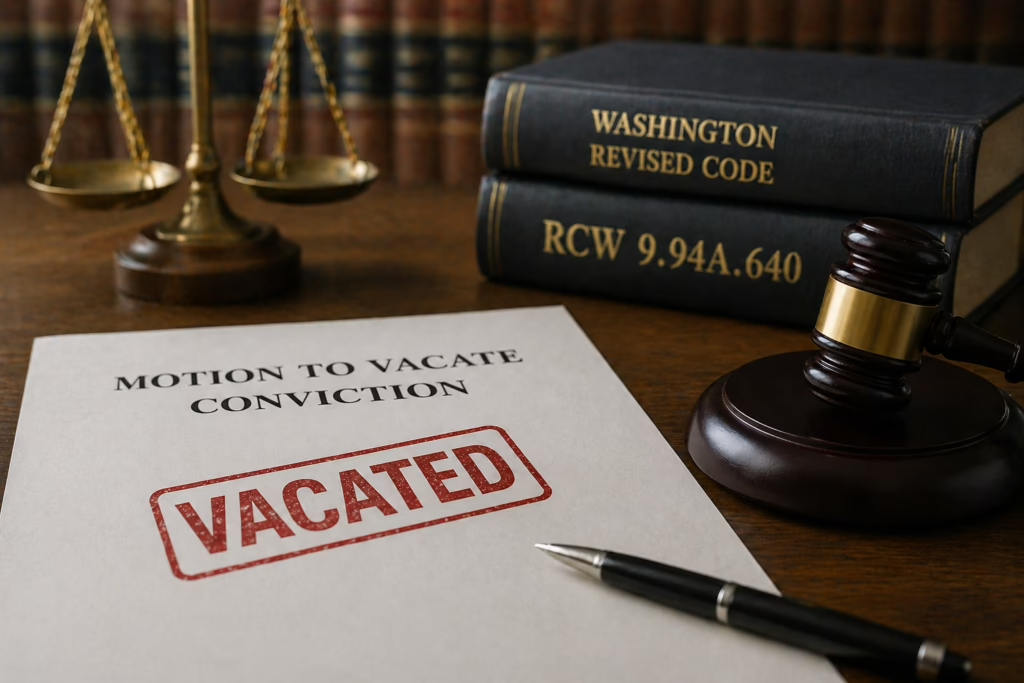
Conviction vacatur allows a person to clear a prior conviction from their record. When a conviction is vacated, the individual is legally released from the consequences of that conviction in many contexts.
The governing statute is:
👉 https://app.leg.wa.gov/RCW/default.aspx?cite=9.94A.640
Under RCW 9.94A.640, courts may vacate certain convictions if specific conditions are met.
State v. Abrams: The Key Legal Issue
Can You Vacate a Conviction While Incarcerated?
In State v. Abrams, the issue was whether a person must first be released from confinement before seeking vacatur.
Abrams argued that the statute did not explicitly require release before filing a motion to vacate.
The State argued the opposite—that release is a necessary condition.
The Court’s Holding on Conviction Vacatur Washington Rules
The Washington Supreme Court held:
- A person must be released from confinement before seeking vacatur
- The statute requires more than simply filing a motion
- Courts must evaluate whether the person has demonstrated rehabilitation
This interpretation aligns with prior case law requiring evidence of reform before granting vacatur.
Rehabilitation Requirement Under Washington Law
Evidence of Reform Matters
The Court emphasized that vacatur is not automatic. It requires proof that the individual has been rehabilitated.
This principle comes from prior Washington decisions, including cases requiring courts to consider:
- Conduct after conviction
- Compliance with legal obligations
- Evidence of rehabilitation
Without release from confinement, a court cannot properly evaluate these factors.
Why State v. Abrams Matters
The conviction vacatur Washington decision is important because it clarifies a threshold requirement.
Key Takeaways
- You cannot seek vacatur while still incarcerated
- Release from confinement is a prerequisite
- Courts require evidence of rehabilitation
- Vacatur is a discretionary remedy, not a right
This ruling prevents premature motions and ensures courts have sufficient information to evaluate whether vacatur is appropriate.
Practical Impact for Washington Defendants
For individuals seeking to clear their record:
- Wait until you are released from confinement
- Be prepared to show rehabilitation and compliance
- Work with an attorney to ensure eligibility under RCW 9.94A.640
Filing too early will likely result in denial.
Contact Blanford Law
Conviction vacatur can have a major impact on employment, housing, and future opportunities.
Contact Blanford Law today at ken@blanfordlaw.com or 253-720-9304 for guidance on your legal matter.
Additional Resources
- Washington Supreme Court Rules Life Without Parole for Juveniles Is Unconstitutional
Learn how Washington courts have limited extreme sentencing and expanded constitutional protections for juveniles.
https://blanfordlaw.com/washington-supreme-court-rules-life-in-prison-without-parole-for-juveniles-is-unconstitutional/ - Vacating a Conviction Under RCW 9.96.060
This article explains how Washington law allows certain convictions to be vacated and the requirements applicants must meet.
https://blanfordlaw.com/vacating-conviction-rcw-9-96-060/ - Cruel and Unusual Punishment in Washington – State v. Williams
Explore how Washington courts interpret constitutional protections against excessive punishment.
https://blanfordlaw.com/cruel-and-unusual-punishment-williams/ - RCW 9.96.060 DUI Vacation Explained
A breakdown of when DUI-related convictions may or may not be eligible for vacatur under Washington law.
https://blanfordlaw.com/rcw-9-96-060-dui-vacation/ - Deadly Weapon Enhancements in Washington
Learn how sentencing enhancements can increase penalties and how courts apply these rules.
https://blanfordlaw.com/deadly-weapon-enhancement-wa/