
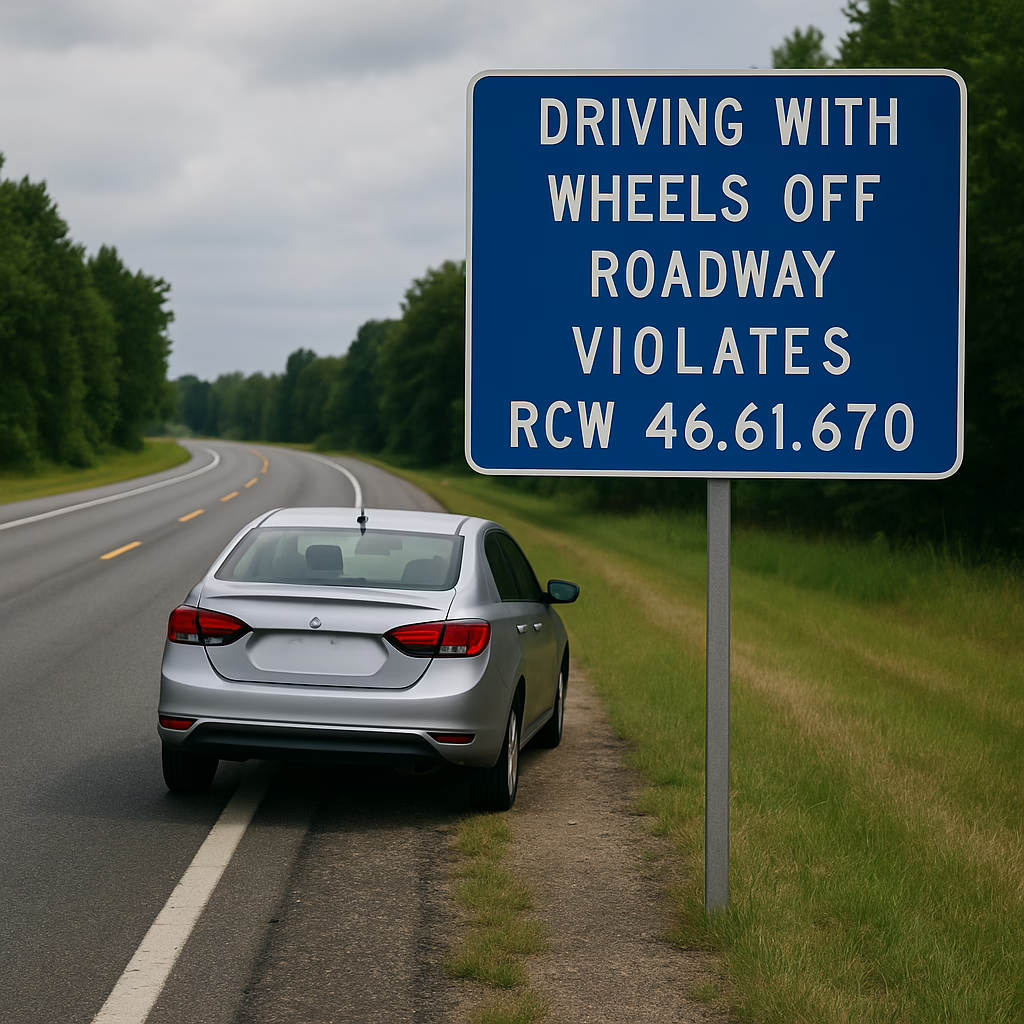
Most drivers don’t think twice about drifting slightly off the road — but in Washington, even a single wheel leaving the paved or gravel surface of a public highway can be a legal violation under RCW 46.61.670.
This lesser-known traffic law prohibits driving with any wheel off the designated roadway, and violations can lead to fines or even contribute to liability in accidents. Here’s what this statute means for Washington drivers.
📜 What RCW 46.61.670 Says
RCW 46.61.670 makes it unlawful to operate any vehicle on a public highway “with one wheel or all of the wheels off the roadway,” unless:
- Permitted under RCW 46.61.428 (which deals with passing on the right);
- Stopping off the roadway intentionally; or
- Re-entering the roadway after having stopped off of it.
In plain terms: you can’t drive on the shoulder, edge, or unpaved surface of a public road unless you are pulling over, have already pulled over, or are returning to the road from a stop.
🚫 What This Law Prohibits
RCW 46.61.670 is violated when a driver:
- Allows one or more wheels to drift off the pavement or gravel surface
- Uses the shoulder or roadside to pass, drive, or maneuver (outside permitted exceptions)
- Fails to maintain full lane control and leaves the marked travel lane without lawful reason
Even a brief moment of driving with a wheel off the road — such as during a careless turn, swerve, or improper pass — can technically qualify as a violation.
✅ What Is Allowed
There are limited exceptions:
- Passing on the right: RCW 46.61.428 allows passing on the right under certain safe conditions, such as when the road is wide enough and the maneuver does not require leaving the paved surface.
- Pulling over safely: You may drive off the road to stop safely — such as for an emergency, mechanical issue, or traffic stop — as long as you then return to the road in a lawful manner.
⚠️ Legal and Safety Consequences
Violating RCW 46.61.670 can result in:
- A traffic infraction, with potential fines and insurance implications
- An enhanced charge or citation if the behavior contributes to an accident
- A finding of negligence or fault in civil cases where a driver’s behavior is in question
This law is often enforced in conjunction with others (e.g., reckless driving, unsafe lane change, or DUI) when a vehicle loses control or leaves the road.
👮 Real-World Examples
- A driver swerves onto the shoulder to pass stopped traffic — violation
- A motorist allows the right wheels to drop onto the gravel edge during a curve — violation
- A driver pulls off the road to take a phone call, then safely reenters traffic — permitted
👥 Why This Law Exists
This statute helps promote lane discipline and roadway safety by discouraging drivers from using non-designated areas for travel. Shoulders, gravel edges, and other non-roadway surfaces are not engineered for consistent vehicle use and may pose hazards, especially at highway speeds.
📞 Call to Action
If you’ve been cited for a roadway violation or are unsure whether your driving conduct could result in liability under Washington traffic laws, get legal advice now.
Contact Blanford Law today at ken@blanfordlaw.com or 253-720-9304 for experienced legal guidance.
Additional Resources
- The Steps to Take Immediately After a Car Accident in Washington
A practical guide for Washington drivers on what to do after a collision to protect legal rights and safety.
https://blanfordlaw.com/the-steps-to-take-immediately-after-a-car-accident-a-guide-for-washington-state/ - RCW 46.61.750: Bicycle Regulations and Penalties in Washington
Explores Washington’s laws governing bicyclists, including penalties for violations under RCW 46.61.750.
https://blanfordlaw.com/rcw-46-61-750-understanding-the-effect-of-bicycle-regulations-and-penalties-in-washington-state/ - Kittitas County Victims Impact Panel: What You Need to Know
Provides an overview of the DUI-related Victims Impact Panel program in Kittitas County.
https://blanfordlaw.com/kittitas-county-victims-impact-panel/ - State v. Bagby: Racial Bias and WA Supreme Court Ruling
Highlights the implications of the Washington Supreme Court’s decision addressing racial bias in criminal trials.
https://blanfordlaw.com/washington-state-supreme-court-rules-in-favor-of-defendant-in-state-v-bagby-implications-for-racial-bias-in-the-criminal-justice-system/ - Tacoma Police Officer Involved in Traffic Collision
Reports on a Tacoma officer-involved crash that caused road closures and raised traffic safety concerns.
https://blanfordlaw.com/tacoma-police-officer-involved-in-traffic-collision-causing-road-closure/