Introduction
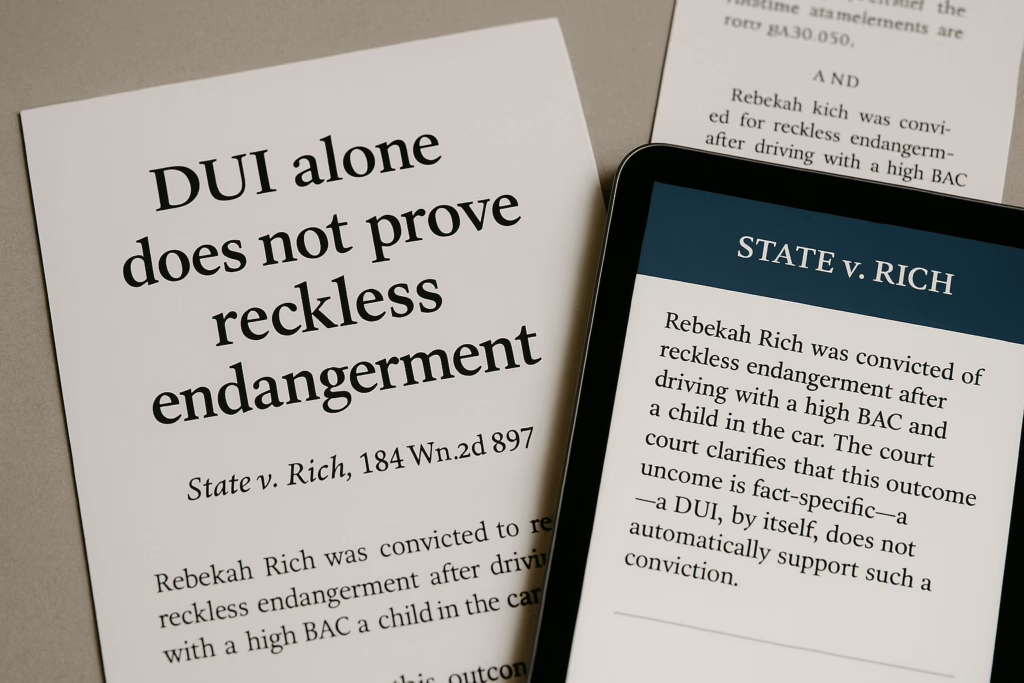
State v. Rich, 184 Wn.2d 897, 365 P.3d 746 (2016), clarified that while a DUI conviction may involve dangerous behavior, it does not automatically support a conviction for reckless endangerment under RCW 9A.36.050. The Washington Supreme Court upheld the conviction in this case—but emphasized the importance of specific, aggravating facts beyond just driving under the influence.
⚖️ DUI vs. Reckless Endangerment Under Washington Law
- DUI (Driving Under the Influence) is defined under RCW 46.61.502. It requires proof that a person operated a motor vehicle while under the influence of alcohol or drugs. It does not require proof of actual danger to others.
- Reckless Endangerment, under RCW 9A.36.050, requires the state to show that the defendant recklessly engaged in conduct that created a substantial risk of death or serious injury to another person.
🚦 Facts of the Case
Rebekah Rich was arrested in 2012 after speeding around a patrol vehicle while severely intoxicated—more than double the legal limit. A child was seated in the front passenger seat, and officers believed the car might have been stolen.
She was charged with:
- DUI under RCW 46.61.502
- Reckless endangerment under RCW 9A.36.050
🧑⚖️ Court Rulings
Court of Appeals
The Court of Appeals reversed the reckless endangerment conviction, holding that a DUI conviction alone cannot satisfy the reckless endangerment standard—an important clarification for criminal defense in Washington.
Washington Supreme Court
The Supreme Court reversed that decision, reinstating the conviction but making an important distinction:
- A DUI alone is not enough to support reckless endangerment.
- However, in Rich, the court found a combination of factors—severe intoxication, high speed, the presence of a child, and disregard for safety—that together could lead a rational juror to conclude that Rich knowingly created a substantial risk of harm.
You can read the text of the case here.
📌 Legal Takeaways
- A DUI conviction does not prove reckless endangerment by itself.
- Prosecutors must offer additional evidence of substantial risk to others.
- The case emphasizes the importance of the “totality of the circumstances” test in criminal law.
- For defense attorneys, this creates an opportunity to challenge overcharging when the state lacks facts beyond impairment.