
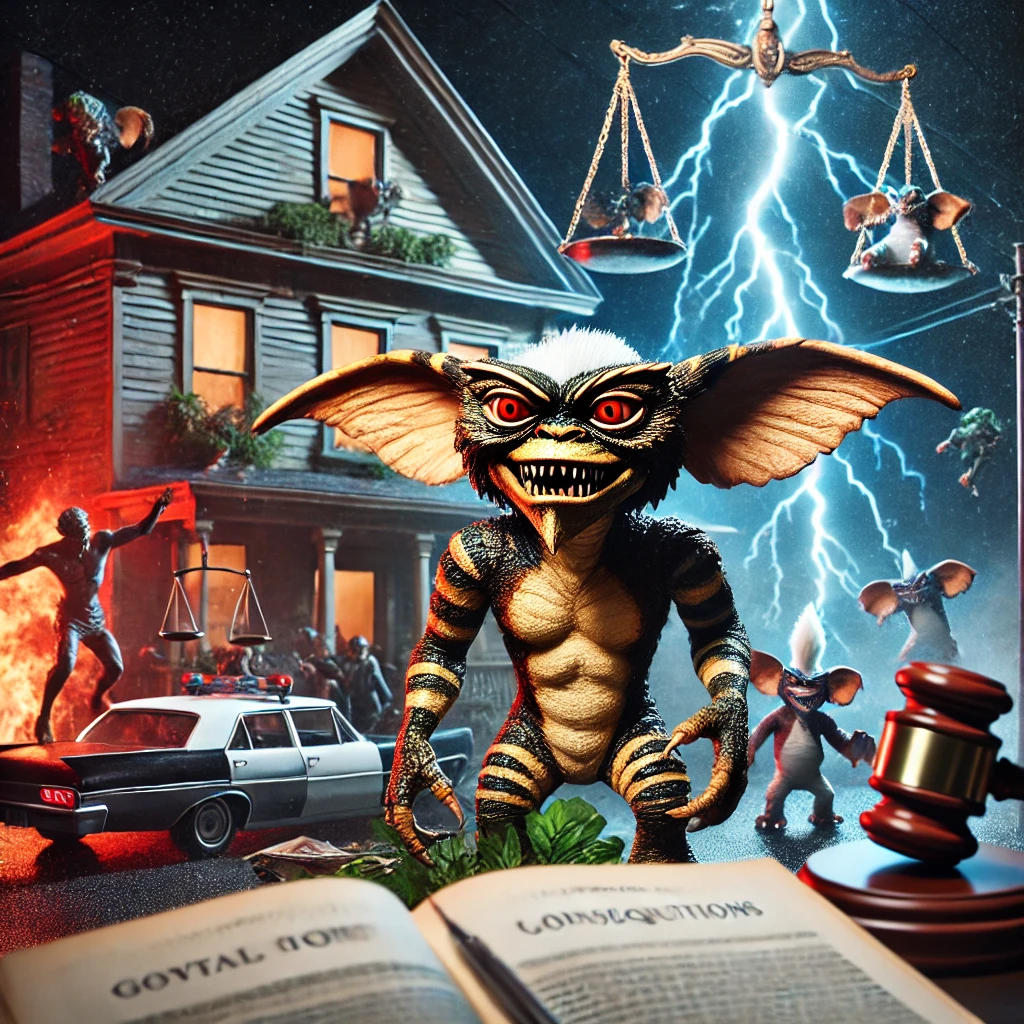
Gremlins (1984) is a classic horror-comedy that tells the story of a young man who receives a mysterious creature called a Mogwai as a Christmas gift. When the creature’s offspring, known as Gremlins, multiply and wreak havoc in the small town of Kingston Falls, they cause chaos and destruction. While the film is a mix of horror and humor, the actions of the Gremlins, if real, would lead to significant legal issues under Washington State law. This article examines the key crimes depicted in Gremlins and analyzes how these actions would be treated under Washington law.
1. Property Damage (RCW 9A.48.070-090)
One of the most notable aspects of Gremlins is the extensive property damage caused by the creatures as they terrorize the town. The Gremlins vandalize homes, businesses, and public property, leading to widespread destruction. In Washington, this would be classified as malicious mischief, which is divided into three degrees based on the extent of the damage:
- First-degree malicious mischief (RCW 9A.48.070): Damage exceeding $5,000 is a class B felony.
- Second-degree malicious mischief (RCW 9A.48.080): Damage between $750 and $5,000 is a class C felony.
- Third-degree malicious mischief (RCW 9A.48.090): Damage under $750 is a gross misdemeanor.
Given the extensive destruction caused by the Gremlins, their actions would likely fall under first-degree malicious mischief, resulting in severe criminal charges.
2. Assault (RCW 9A.36.011)
The Gremlins engage in violent behavior, attacking various characters throughout the film. These attacks range from physical altercations to more dangerous pranks. In Washington, assault is defined under RCW 9A.36.011 as intentionally causing bodily harm to another person. Depending on the severity of the harm inflicted, these actions could be classified as first-degree assault, a class A felony punishable by up to life imprisonment.
3. Breaking and Entering (RCW 9A.52.025)
The Gremlins frequently enter homes and businesses without permission, causing mayhem inside. In Washington, this would be classified as second-degree burglary under RCW 9A.52.025, which involves unlawfully entering or remaining in a building with the intent to commit a crime. Breaking and entering is a class B felony, punishable by up to 10 years in prison and significant fines. The Gremlins’ repeated unauthorized entry into private residences and businesses would likely result in multiple counts of burglary.
4. Theft (RCW 9A.56.030-050)
The Gremlins are shown stealing food, supplies, and other items as they wreak havoc in Kingston Falls. In Washington, theft is categorized based on the value of the stolen property:
- First-degree theft (RCW 9A.56.030): Theft of property or services valued over $5,000, a class B felony.
- Second-degree theft (RCW 9A.56.040): Theft of property or services valued between $750 and $5,000, a class C felony.
- Third-degree theft (RCW 9A.56.050): Theft of property or services valued under $750, a gross misdemeanor.
The Gremlins’ thefts, depending on the value of the items stolen, could result in varying degrees of theft charges, with the more severe cases potentially leading to felony charges.
5. Harassment (RCW 9A.46.020)
The Gremlins terrorize the town’s residents with pranks and threats. In Washington, RCW 9A.46.020 defines harassment as knowingly threatening to cause bodily injury, damage property, or substantially harm someone’s mental health. The Gremlins’ actions could easily be classified as harassment, which is typically a gross misdemeanor but can be elevated to a felony under certain circumstances.
6. Animal Cruelty (RCW 16.52.205)
One particularly disturbing scene in Gremlins involves the creatures attempting to harm Billy’s dog. In Washington, animal cruelty is addressed under RCW 16.52.205, which defines animal cruelty in the first degree as intentionally causing substantial pain, suffering, or death to an animal. This crime is a class C felony, punishable by up to 5 years in prison and a $10,000 fine. The Gremlins’ actions toward the dog would likely result in animal cruelty charges.
Conclusion
Gremlins is a darkly humorous film that explores what happens when mischievous creatures wreak havoc in a small town. However, if the Gremlins’ actions occurred in real life, they would lead to significant legal consequences under Washington State law. From property damage and assault to breaking and entering, theft, harassment, and animal cruelty, these crimes would result in serious charges. Analyzing the movie through a legal lens highlights the importance of understanding the law, even in the context of supernatural creatures.
Review our client resources here
Contact us anytime for your urgent legal needs.
About Blanford Law:
We are no-nonsense, relentless, fair, and honest. We are great listeners instead of fast talkers, that is just who we are. More than 20 years ago, Ken began practicing law with a deeply-seeded belief that every person has the right to the best legal representation available. He built his law firm on that belief. Another belief that he strongly adheres to is his fundamental belief that clients deserve respect, with no assumptions or preconceived notions. If you or someone you know is accused of a crime or injured as a result of the negligence of another, please have them call us at 253-720-9304 or email us info@blanfordlaw.com
Additional Resources
- Bail Bond Licensing in Washington State
Understand the key steps, requirements, and regulations for becoming a licensed bail bond agent in Washington. - Beetlejuice and Washington Criminal Law
Explore how the bizarre antics in Beetlejuice compare with real criminal offenses under Washington law. - State v. Rich: Reckless Endangerment in Washington
Learn how the Washington courts interpret reckless endangerment and the standards applied in State v. Rich. - RPC 1.13: Duties to Organizations in Washington
A look into the responsibilities attorneys have when representing organizations under Washington’s professional conduct rules. - RPC 1.9: Duties to Former Clients in Washington
Examine the ethical limits on attorneys handling matters related to former clients in Washington State.