
Understanding How Bail Works in Washington
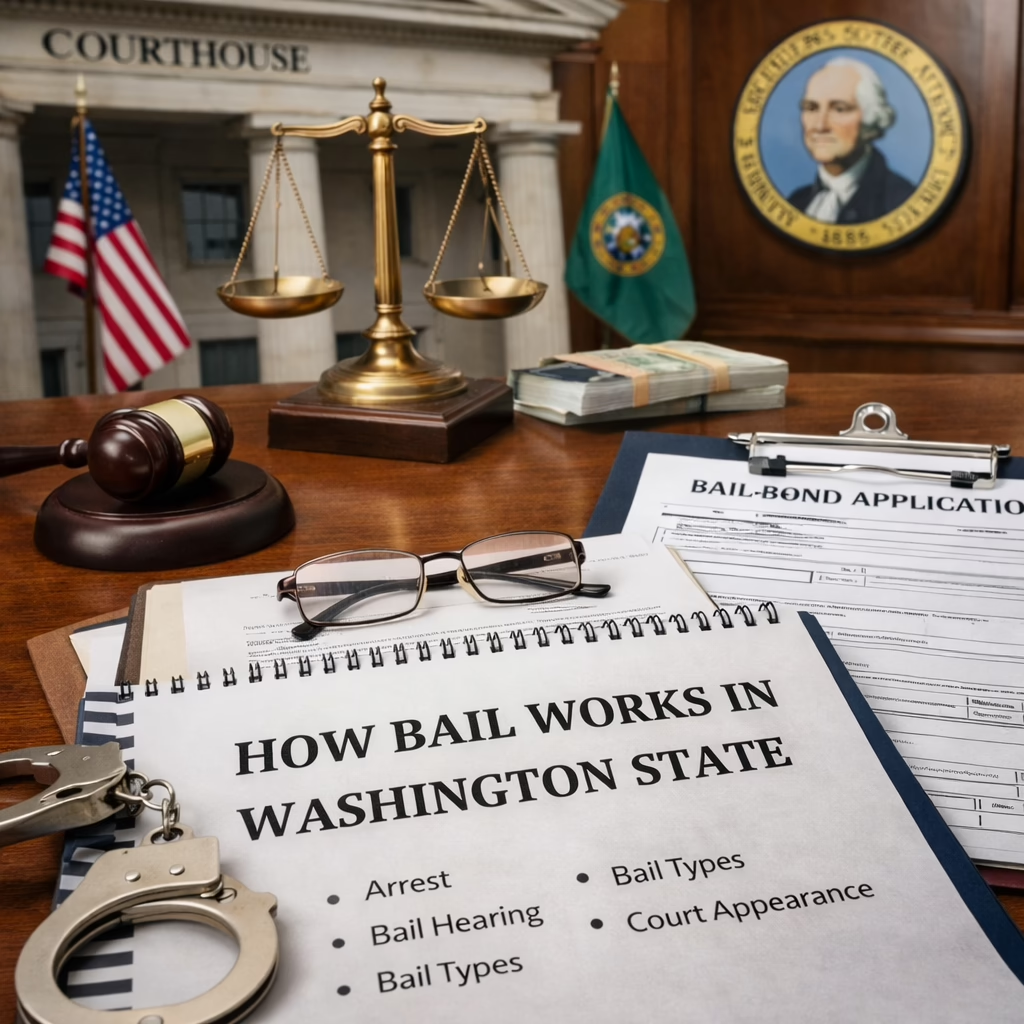
When someone is arrested in Washington State, one of the first questions their family asks is: how does bail work? Bail allows a person who has been arrested to be released from custody while their criminal case moves through the court system.
The purpose of bail is not to punish a defendant but to ensure that they return to court for future hearings. If the defendant appears as required, the bail conditions are satisfied. If they fail to appear, the court may issue a warrant and forfeit the bail amount.
Understanding how bail works in Washington can help defendants and their families navigate the legal process more effectively after an arrest.
What Happens After an Arrest
After an arrest in Washington, a defendant is typically taken to jail for booking. This process includes:
- Recording personal information
- Taking fingerprints and photographs
- Conducting a background check
- Placing the person into custody
Within a short period of time, usually 24–48 hours, the defendant must appear before a judge for a first appearance or bail hearing.
During this hearing, the judge determines whether the defendant can be released and what conditions will apply.
How Judges Decide Bail
Washington courts consider several factors when deciding whether to set bail and how much it should be.
These factors may include:
- The seriousness of the alleged crime
- The defendant’s criminal history
- The likelihood that the defendant will appear in court
- Community ties such as family or employment
- Whether the defendant poses a risk to public safety
Depending on these factors, the judge may:
- Release the defendant without bail
- Set a cash bail amount
- Allow release through a bail bond company
- Impose other conditions of release
Types of Bail in Washington
Personal Recognizance (PR Release)
In some cases, the judge may release a defendant on personal recognizance, meaning no money is required. The defendant simply promises to return to court as scheduled.
PR release is more likely when:
- The charge is relatively minor
- The defendant has no prior failures to appear
- The person has strong ties to the community
Cash Bail
The court may require a cash bail payment, meaning the full bail amount must be paid directly to the court.
If the defendant appears for all hearings, the bail money is typically returned at the end of the case, though administrative fees may apply.
Bail Bonds
When a defendant cannot afford the full bail amount, a bail bond company may help secure release.
A bail bond company typically posts a surety bond with the court guaranteeing the defendant’s appearance. In exchange, the defendant or their family pays a non-refundable fee, often a percentage of the bail amount.
If the defendant fails to appear in court, the bond company may become responsible for the full bail amount.
What Happens if Someone Misses Court
Failing to appear in court can have serious consequences.
If a defendant does not appear as required, the judge may:
- Issue a bench warrant for arrest
- Revoke release conditions
- Forfeit the bail bond
Bond forfeiture means the bail amount becomes payable to the court. Bail bond companies may then attempt to locate and surrender the defendant to reduce their financial liability.
Why Legal Guidance Can Help
The bail process can be confusing, especially for people dealing with an arrest for the first time. Issues such as bail amounts, release conditions, and bond forfeiture can significantly affect a defendant’s situation.
An experienced attorney can help explain:
- The bail hearing process
- Available release options
- Legal rights during the criminal case
- Strategies for addressing bail or bond issues
Understanding how bail works in Washington can help defendants protect their rights and make informed decisions about their case.
Contact Blanford Law for Guidance
If you or a loved one is dealing with a criminal case or bail-related issue, legal guidance can make a difference.
Contact Blanford Law today at ken@blanfordlaw.com or 253-720-9304 for guidance on your legal matter.
Blanford Law provides experienced representation for individuals navigating the Washington criminal justice system and can help you understand your options.
Additional Resources
Kitsap Bail Bond Justification
Learn how bail bond companies obtain court approval through the justification process in Kitsap County.
https://blanfordlaw.com/kitsap-bail-bond-justification/
Kittitas County Bail Bond Justification Policy
An overview of the court policies governing bail bond justification procedures in Kittitas County.
https://blanfordlaw.com/kittitas-county-bail-bond-justification-policy/
King County Bail Bond Justification
Explains how bail bond companies obtain justification to post bonds in King County courts.
https://blanfordlaw.com/king-county-bail-bond-justification/
Kittitas County Bail Bond Justification
Details the process for obtaining an order of justification in Kittitas County courts.
https://blanfordlaw.com/kittitas-county-bail-bond-justification/
Snohomish County Bail Bond Justification
A guide to the procedures bail bond companies must follow to obtain approval in Snohomish County courts.
https://blanfordlaw.com/snohomish-county-bail-bond-justification/