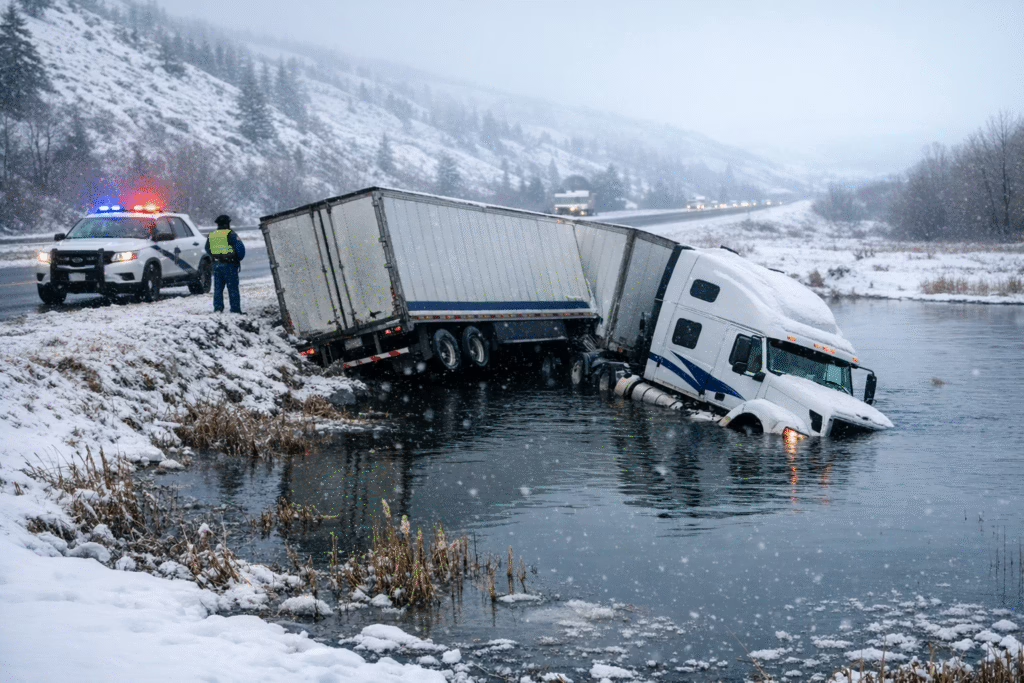
A recent I-90 semi truck crash near Ellensburg drew attention after a fully loaded double semi left the roadway near milepost 107 and came to rest roughly 50 feet off the highway in three to four feet of water. Early public information attributed the incident to distracted driving, while later reporting indicated the driver disputed that explanation.
When a commercial truck leaves the roadway—whether due to distraction, fatigue, a medical issue, or something else—the legal questions for injured people are often the same: who was negligent, what evidence proves it, and what compensation is available under Washington law?
Note: This article is general information, not legal advice for your specific situation.
What “negligence” means after a truck crash in Washington
In injury cases, negligence generally means a failure to use reasonable care under the circumstances. In the trucking context, “reasonable care” can include basics like staying in your lane, maintaining a safe speed for conditions, avoiding distractions, and operating the vehicle safely given its size and load.
Even when there’s a dispute about the “why” (distraction vs. medical event), the key civil claim questions are:
- Duty: Did the driver (and potentially the trucking company) owe a duty to operate safely?
- Breach: Did someone fail to meet that duty?
- Causation: Did that failure cause the crash and your injuries?
- Damages: What did it cost you—medical bills, lost wages, pain and suffering, future care, etc.?
How Washington’s “Negligent Driving 2nd Degree” can show up in crash investigations
RCW 46.61.525 (negligent driving—second degree)
Washington’s negligent driving in the second degree is a traffic infraction (not a crime) and involves operating a vehicle negligently in a way that endangers or is likely to endanger people or property. The statute also defines “negligent” as failing to use ordinary care.
A citation is not the same thing as civil liability—but it can become relevant evidence. Insurance companies often look at:
- The investigating agency’s conclusions
- The collision report narrative
- Any citations issued
- Witness statements and scene diagrams
Distracted driving and electronics (RCW 46.61.672)
If distraction is tied to electronic device use, Washington has a specific rule restricting use of personal electronic devices while driving, with defined exceptions.
What if the truck driver claims a medical issue caused the crash?
In some crashes, a driver may say a sudden medical event (like loss of consciousness) explains why the vehicle crossed lanes or left the roadway. In civil cases, that type of claim usually leads to evidence-driven questions, such as:
- Did the driver have warning signs and keep driving anyway?
- Was the driver fit for duty under company policies and DOT-related medical requirements?
- Does the driver’s timeline match dashcam, ECM (“black box”) data, and witness accounts?
- What do medical records show (and what is legally obtainable)?
These cases can turn on details. A commercial driver’s split-second decisions, condition, and compliance history can matter.
Who can be responsible besides the truck driver?
In a commercial truck case, there may be multiple potentially responsible parties, such as:
- The trucking company (employer liability): If the driver was working, the employer may be responsible for negligent acts within the scope of employment.
- Maintenance providers: Poor brakes, tires, or inspections can contribute to roadway departures.
- Load/dispatch entities: Overloading or unsafe securement can affect handling and stopping, especially in winter conditions.
- Other drivers: A separate vehicle may have forced evasive action or contributed to a chain of events.
Identifying all responsible parties matters because commercial claims often involve multiple insurance layers.
Comparative fault in Washington: you can still recover damages
Washington follows a pure comparative fault system. That means your compensation can be reduced by your percentage of fault, but you are not automatically barred from recovery just because you share some blame.
This comes up frequently in winter I-90 crashes (visibility, speed for conditions, following distance). The defense may argue you contributed—your attorney’s job is to push back with facts and expert support when appropriate.
Deadlines matter: Washington’s 3-year limitation period (often)
Many injury claims in Washington are subject to a three-year filing deadline. Missing the deadline can end the case, even if liability is clear.
Because evidence in trucking cases can disappear quickly (dash footage overwritten, records lost, vehicles repaired), it’s smart to act early.
What to do if you were injured in a crash involving a semi-truck
If you or a family member is hurt:
- Get medical care immediately and follow up—gaps in treatment get used against you.
- Document everything: photos, names, witnesses, symptoms, missed work.
- Don’t give a recorded statement to the trucking insurer until you get legal advice.
- Preserve evidence: ask that dashcam/ECM data and driver logs be preserved.
- Talk to counsel early—commercial cases move fast and are defended aggressively.
Call to Action
Contact Blanford Law today at ken@blanfordlaw.com or 253-720-9304 for guidance on your legal matter.
Additional Resources
- Truck Accident in Kittitas County: A Tale of Survival and Heroism — A local truck-crash story highlighting how quickly conditions can turn dangerous and why safety and accountability matter.
https://blanfordlaw.com/truck-accident-in-kittitas-county-a-tale-of-survival-and-heroism/ - Washington Fatal Accidents — An overview of fatal crash issues in Washington, including liability considerations and what families should know after a tragic loss.
https://blanfordlaw.com/washington-fatal-accidents/ - WAC 204-24-050: Traction Devices — Washington rules on traction devices (chains/approved alternatives), often relevant to winter driving on mountain passes and I-90.
https://blanfordlaw.com/wac-20424-050-traction-devices/ - RCW 46.61.672 Distracted Driving Law: Washington Hands-Free Rules Explained — A breakdown of Washington’s hands-free and electronic device restrictions and how citations can arise.
https://blanfordlaw.com/rcw-46-61-672-distracted-driving/?utm_source=chatgpt.com - I-90 Trailer Fire Kittitas Truck Crash – Victims & Negligence — Discusses negligence concepts and injury options after serious commercial-truck incidents on the I-90 corridor.
https://blanfordlaw.com/i90-trailer-fire-kittitas-truck-crash/?utm_source=chatgpt.com