
Introduction
Washington’s Infraction Rules for Courts of Limited Jurisdiction (IRLJ) set the procedures for how infraction cases—such as traffic tickets and other minor violation matters—are handled in district and municipal courts. One critically important rule in this set is IRLJ 2.6 scheduling of hearings, which governs how hearings are calendared once a defendant responds to a notice of infraction.
In this article, we’ll explain what IRLJ 2.06 means, how it affects your case, and key timelines and requirements you should know.
What Is IRLJ 2.6 – Scheduling of Hearings?
IRLJ 2.6 scheduling of hearings establishes mandatory deadlines and procedures that courts must follow when setting hearings in response to a defendant’s request after receiving a notice of infraction. It ensures that defendants receive timely hearings and are informed of their rights and hearing details.
The rule applies once a person who received a notice of infraction files a response indicating they want a hearing—whether contested (challenging the infraction), mitigation (explaining circumstances), or another permitted response.
Key Components of Scheduling Under IRLJ 2.6
1. Contested Hearings
When a defendant asks for a contested hearing under IRLJ 2.6:
- The court must schedule the hearing to determine if the defendant committed the infraction.
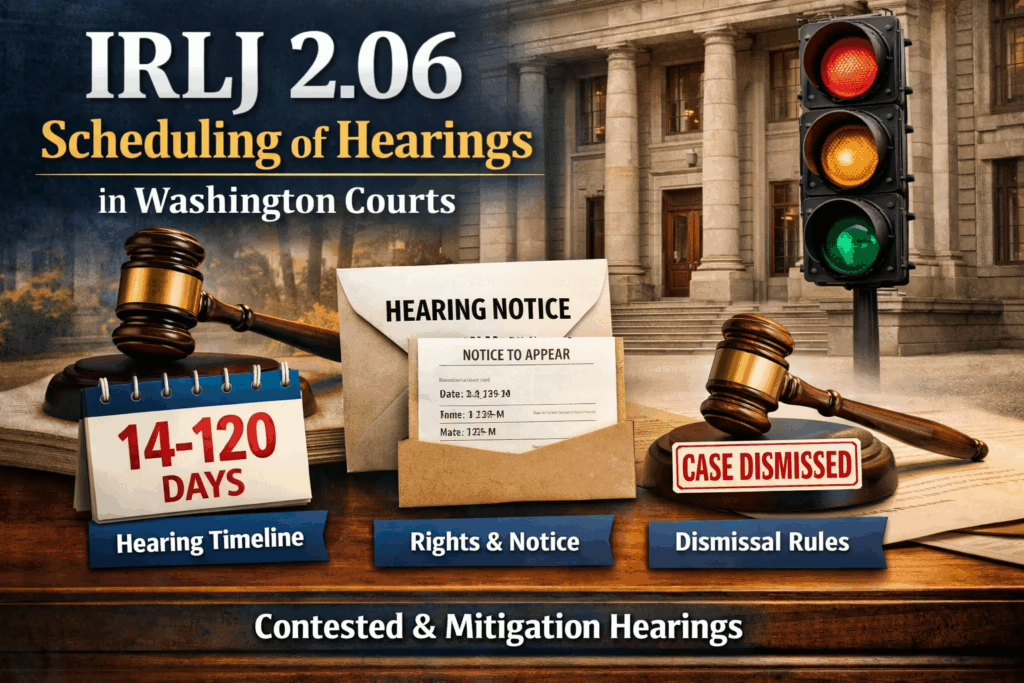
- This hearing must be set no sooner than 14 days and no later than 120 days from either the notice of infraction or the date a default judgment is set aside.
- If a pre‑hearing conference is allowed by local rule, that conference must also fall within specific scheduling windows, and the contested hearing follows either after the pre‑hearing or after its waiver.
The rule also requires written notice of the date, time, and place of the hearing to be sent within 21 days of the requestfor a hearing. That notice must inform the defendant of their rights, how to subpoena witnesses, and the consequences of failure to appear (including possible arrest or suspension of driving privileges in traffic cases).
2. Mitigation Hearings
Mitigation hearings—where a defendant does not dispute responsibility but requests leniency due to circumstances—are scheduled under similar rules:
- The hearing must also be between 14 and 120 days after the written notice is sent or default judgment reset.
- Notice must similarly explain the time, place, and rights of the defendant.
3. Written Statements
Some courts adopt rules allowing decisions based on written statements submitted by mail or email. If so, the court reviews these in accordance with other IRLJ procedures.
4. Objections and Delays
Under IRLJ 2.6, a defendant may challenge a hearing date if it does not comply with the rule’s timeline, but must file a written motion within 10 days of the hearing notice. If no motion is filed, any objection to the timing is waived.
Delays that result from the defendant or their attorney do not justify dismissing the hearing for lateness, and failure to schedule a timely hearing can lead to dismissal of the infraction with prejudice—meaning the case cannot be brought again.
Why IRLJ 2.6 Matters to You
The scheduling rule matters because:
- It creates clear deadlines that protect your right to a timely hearing.
- It ensures you receive notice of your rights, including the ability to subpoena witnesses.
- If the court fails to follow its own scheduling requirements, your case may be dismissed.
Understanding scheduling can help you prepare your defense or mitigation strategy more effectively and avoid unnecessary defaults or adverse outcomes.
Call to Action
If you’re facing an infraction in Washington’s courts of limited jurisdiction and need help navigating IRLJ 2.06 scheduling of hearings or any other court rule, contact Blanford Law today at ken@blanfordlaw.com or 253‑720‑9304 for guidance on your legal matter.
Additional Resources
- IRLJ 2.1 Notice of Infraction – Explains the formal notice process in Washington infractions, including what information must be included on a citation.
https://blanfordlaw.com/irlj-2-1-notice-of-infraction/ - Understanding IRLJ 1.1 Infractions – Introduces the Washington IRLJ rules and distinguishes infractions from criminal charges.
https://blanfordlaw.com/understanding-irlj-1-1-infractions/ - IRLJ 1.2 Infraction Rule: Purpose and Construction – Details the rule’s intent to ensure fairness, simplicity, and due process in infraction proceedings.
https://blanfordlaw.com/irlj-1-2-infraction-rule/ - IRLJ 1.3 Infraction Rules: Application of Other Rules – Discusses how other Washington court rules apply to infractions under IRLJ.
https://blanfordlaw.com/irlj-1-3-infraction-rules/ - Traffic Infraction Defense in Washington – Overview of legal options, procedures, and defense strategies for traffic infractions in Washington State.
https://blanfordlaw.com/areas-of-practice/traffic-infraction/