
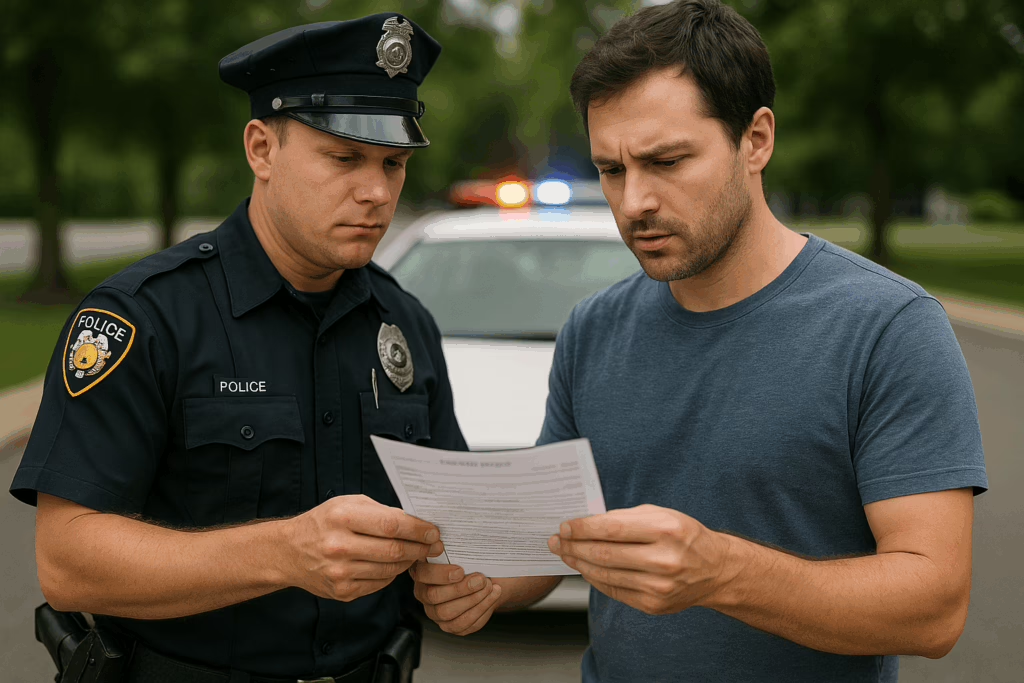
If you’ve received a traffic ticket or civil infraction in Washington, your next steps are crucial. The court rule IRLJ 2.4sets out your legal obligations for responding to a notice of infraction. Whether you plan to pay the fine, request a hearing, or claim financial hardship, failing to act within the timeframe can lead to bigger consequences.
Here’s what you need to know about your rights, responsibilities, and options under IRLJ 2.4.
Time Limits for Responding
Under IRLJ 2.4(a), the law gives you a strict deadline:
- 30 days to respond if the notice was personally served
- 33 days if the notice was served by mail
Missing this deadline can result in a default judgment and additional penalties.
Your Options Under IRLJ 2.4(b)
Washington law provides multiple ways to respond to an infraction notice. You can:
1. Pay the Penalty
Paying the ticket is an admission of the infraction. The court will enter a judgment against you, and the case will be closed.
2. Contest the Infraction
If you believe you didn’t commit the infraction, you can request a contested hearing. You’ll get a court date to present your defense.
3. Request a Mitigation Hearing
If you agree you committed the infraction but have circumstances you want the court to consider (e.g., medical emergency, road conditions), you can ask for a mitigation hearing. The judge may reduce the fine but won’t dismiss the charge.
4. Submit Written Statements (if allowed)
Some courts allow you to submit your case in writing under IRLJ 3.5—either to contest or mitigate—without appearing in person. This option must be authorized by local court rule.
5. Admit and Claim Financial Hardship
You can admit responsibility but declare that you cannot afford to pay the fine in full. In this case:
- The court must provide information on how to submit financial documents.
- You’ll learn how to request a payment plan or alternative resolution.
- You’ll be warned that failure to pay or follow the plan may lead to wage garnishment or collections.
How to Respond: In Person, Mail, or Email
Per IRLJ 2.4(c), your response can be submitted:
- In person
- By mail
- By email, if your local court allows it
The response must be postmarked or emailed by midnight of the due date to be considered timely.
Why This Rule Matters
Failing to respond properly and on time can lead to:
- A default judgment
- Higher fines
- Suspension of your driver’s license
- Referral to collections
By understanding IRLJ 2.4, you ensure your rights are protected and avoid unnecessary penalties.
Contact Blanford Law today at ken@blanfordlaw.com or 253‑720‑9304 for guidance on your legal matter.
Additional Resources
Helpful related articles and practice areas to support your understanding of infraction responses and related Washington law:
- Admissibility of Intercepted Communication in Washington — Explains when intercepted communications can and cannot be used as evidence in civil or criminal cases under Washington law.
🔗 https://blanfordlaw.com/admissibility-of-intercepted-communication/ - IRLJ 2.1 – Notice of Infraction Explained — Breaks down the requirements and contents of a valid notice of infraction under Washington’s Infraction Rules for Courts of Limited Jurisdiction.
🔗 https://blanfordlaw.com/irlj-2-1-notice-of-infraction/ - Understanding IRLJ 1.1 – Infractions in Washington — Provides an overview of what constitutes an infraction and how infractions differ from misdemeanors or felonies under Washington law.
🔗 https://blanfordlaw.com/understanding-irlj-1-1-infractions/ - IRLJ 1.2 – Infraction Rule Definitions — Covers key definitions used throughout the Infraction Rules for Courts of Limited Jurisdiction, essential for interpreting how infraction proceedings work.
🔗 https://blanfordlaw.com/irlj-1-2-infraction-rule/ - Traffic Infraction Practice Area – Blanford Law — An overview of the firm’s traffic infraction legal services, including defense strategies and representation options in Washington.
🔗 https://blanfordlaw.com/areas-of-practice/traffic-infraction/