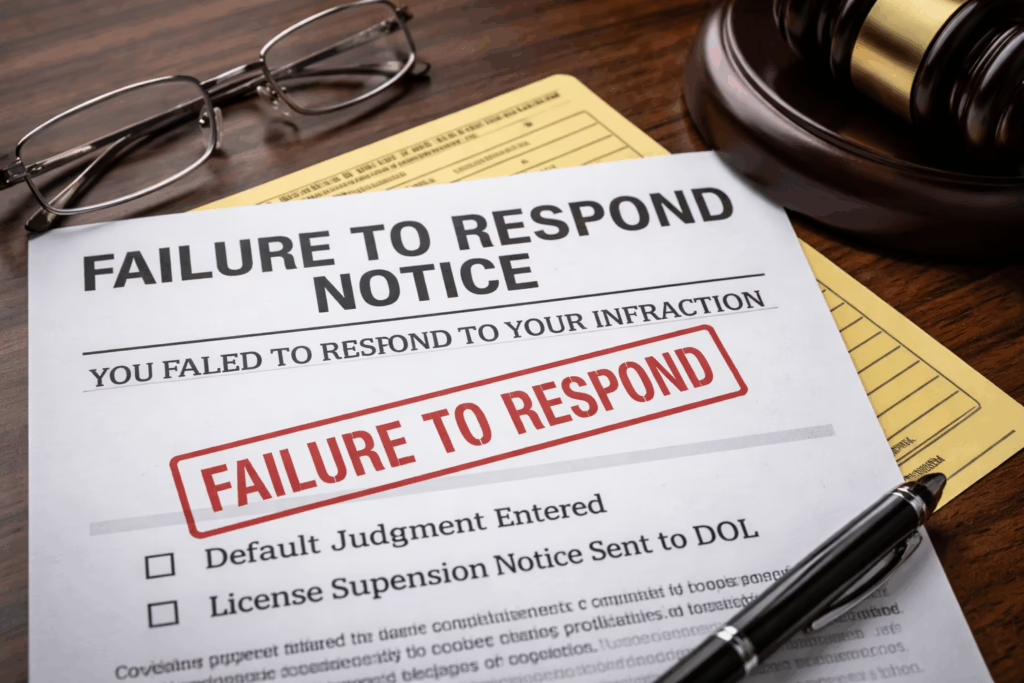
In Washington State, the Infraction Rules for Courts of Limited Jurisdiction (IRLJ) govern how minor civil infractions—such as traffic tickets—are handled in district and municipal courts. One crucial part of these rules is IRLJ 2.5, which addresses what happens when a person does not respond to a notice of infraction. You can read the full rule here:
👉 Link to the official rule: https://www.courts.wa.gov/court_rules/pdf/IRLJ/CLJ_IRLJ_02_05_00.pdf
What IRLJ 2.5 Says
IRLJ 2.5 – Failure to Respond explains that:
- If a person (the defendant) doesn’t file a response to a notice of infraction,
- The court must enter an order finding that the person committed the infraction,
- The court will impose any monetary penalties allowed by law, and
- For traffic infractions, the court must notify the Washington State Department of Licensing (DOL) of the failure to respond in accordance with RCW 46.20.270, which can affect your driving record.
In simple terms, failing to respond to a traffic ticket or other infraction is not a neutral act—by law, the court treats that failure as an admission that the infraction occurred and moves directly to judgment against you.
Why This Rule Matters
1. You Lose Your Opportunity to Contest the Charge
Responding within the specified time period gives you the chance to request a hearing, argue your case, or explain mitigating circumstances. If you don’t respond at all, you effectively give up those rights.
2. Automatic Financial Penalties Apply
Once a court enters an order based on your failure to respond, it can impose fines and fees without the need for a hearing. These penalties can be costly and sometimes include administrative fees on top of the base fine.
3. Impact on Your Driving Privilege
Traffic infractions differ from other civil infractions because the court must report your failure to the Department of Licensing as required under RCW 46.20.270. That reporting can lead to license suspension, additional fees, or other administrative actions by DOL.
How to Avoid the Consequences of IRLJ 2.5
Respond in Time
Under IRLJ 2.4, a defendant must respond to a notice of infraction typically within:
- 30 days if personally served, or
- 33 days if served by mail.
Failing to do so puts you squarely within the circumstances addressed by IRLJ 2.5.
Know Your Options
When responding, you generally have three choices:
- Pay the fine: Acknowledge responsibility and resolve the matter.
- Request a mitigation hearing: Admit the infraction but explain circumstances to reduce penalties.
- Contest the infraction: Ask for a contested hearing to argue your case.
Responding on time is essential to preserving these options.
What Happens After a Failure to Respond
If no response is filed:
- The court enters a default order finding you committed the infraction.
- Penalties are assessed immediately.
- For traffic cases, the court notifies the Department of Licensing, which will take administrative action.
At this point, you may have to file a motion to set aside the default judgment, which can be more complicated and difficult than simply responding on time.
Protect Your Rights with Legal Help
If you’ve already missed the deadline to respond—or if you’re facing a traffic or other infraction—you don’t have to navigate the process alone. An experienced Washington attorney can help you understand your options, determine whether you can reopen your case, and advocate for the best possible outcome in your situation.
📞 Contact Blanford Law Today
Facing an infraction or dealing with a default judgment due to a missed response deadline can have serious consequences. Contact Blanford Law today at ken@blanfordlaw.com or 253-720-9304 for guidance on your legal matter.
Additional Resources
- RCW 47.36.250: Winter Traction Requirements in Washington
Understand how Washington law governs the use of traction devices like chains and snow tires in winter driving conditions.
🔗 https://blanfordlaw.com/rcw-4736250-winter-traction/ - Snoqualmie Pass Chain Requirements: What Drivers Need to Know
Learn about mandatory chain requirements for Snoqualmie Pass and how non-compliance can lead to fines or infractions.
🔗 https://blanfordlaw.com/snoqualmie-pass-chain-requirements/ - IRLJ 2.1: Notice of Infraction in Washington State
This article explains what a Notice of Infraction includes and why timely response is essential under Washington law.
🔗 https://blanfordlaw.com/irlj-2-1-notice-of-infraction/ - Understanding IRLJ 1.1: What Is an Infraction?
An overview of IRLJ 1.1 and how it defines and categorizes civil infractions in Washington courts.
🔗 https://blanfordlaw.com/understanding-irlj-1-1-infractions/ - IRLJ 1.2: Infraction Rules and Court Authority
Explore how IRLJ 1.2 outlines the application of rules for infractions and the court’s authority over them.
🔗 https://blanfordlaw.com/irlj-1-2-infraction-rule/