
When you receive a notice of infraction in Washington State — for example, a traffic ticket — you are legally required to respond to it within a specified period. If you fail to respond at all, there’s a rule that tells the court what must happen next. That rule is IRLJ 2.5, part of the Infraction Rules for Courts of Limited Jurisdiction (IRLJ). It applies when someone doesn’t respond to a notice of infraction, including parking, traffic, or other civil infractions.
What IRLJ 2.5 Says
Under IRLJ 2.5:
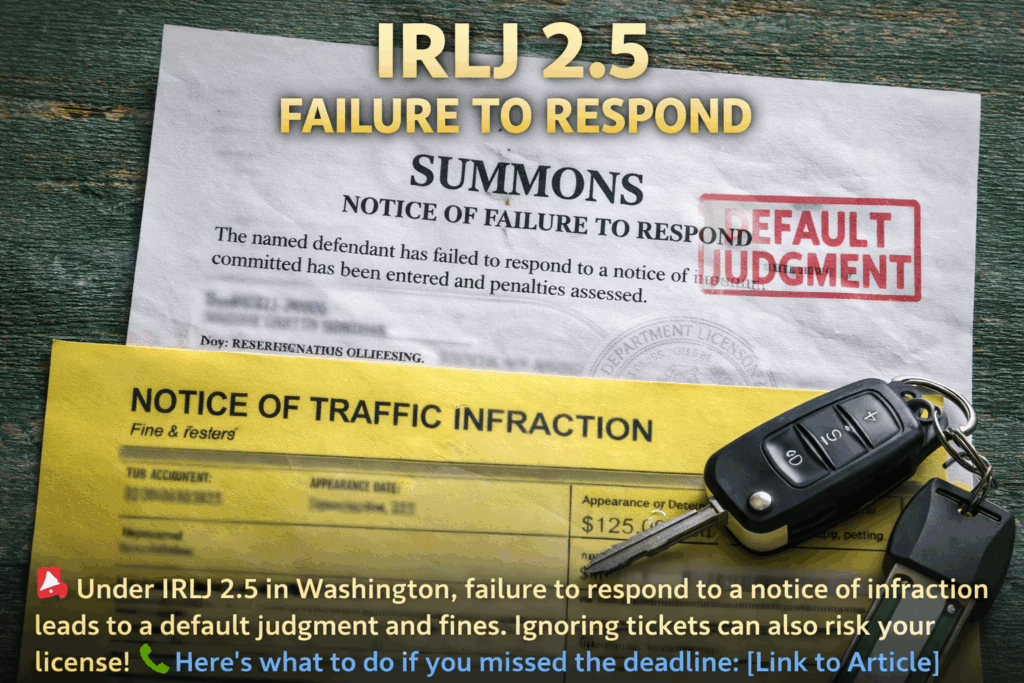
If the defendant fails to respond to a notice of infraction, the court shall enter an order finding that the defendant has committed the infraction, shall assess any monetary penalties provided for by law, and, in the case of a traffic infraction, shall notify the Department of the defendant’s failure to respond in accordance with RCW 46.20.270.
In plain language, this means:
- If you don’t respond to a notice of infraction, the court will assume you committed it.
- The court will enter a finding against you.
- The court will assess any fines or penalties that apply by law.
- If it’s a traffic infraction, the court must tell the Washington Department of Licensing about your failure to respond.
What “Failure to Respond” Means
A “response” to a notice of infraction typically means one of the following actions, depending on the type of infraction and local court rules:
- Paying the fine.
- Requesting a hearing to contest the infraction.
- Explaining mitigating circumstances (asking for reduction or leniency).
- Submitting a written statement or other authorized form of response.
If none of these are submitted within the legal time frame, the rule kicks in and the default judgment process begins. Though IRLJ doesn’t itself state the exact number of days to respond, prior rules (IRLJ 2.4) generally require responses within 15 days (or 30+ days for traffic infractions depending on service method).
Consequences of a Default Finding
Monetary Penalties
Once a court enters a finding under IRLJ 2.5, it will assess all applicable penalties allowed by law. That usually includes:
- The base statutory fine for the infraction.
- Any mandatory court or administrative fees.
- Potential additional enforcement fees (like collections).
Because the statute directs the court to assess penalties “provided for by law,” the specific amounts and options for reductions or payment plans may vary by county and type of infraction.
Department of Licensing Notification
For traffic infractions, the court must report your failure to respond to the Washington Department of Licensing (DOL) under RCW 46.20.270. This can result in:
- Suspension of your driver’s license if other conditions are met.
- Denial of license renewal until the matter is resolved.
Not all infractions affect your license, but many moving violations do — especially if you ignore them entirely.
How This Rule Fits Into the Broader Infraction Process
IRLJ 2.5 is part of a series of rules that govern how diversion, responses, hearings, and judgments work in Washington courts:
- IRLJ 2.1–2.4 explain how an infraction starts and how to respond.
- IRLJ 2.6 covers scheduling hearings.
- Other rules handle hearings, appeals, and post‑judgment procedures.
This structured system ensures that people cited for infractions get notice and an opportunity to respond — but also that the court has a clear path to resolve cases when defendants do nothing.
Practical Tips for People Cited with Infractions
Respond Promptly
Always respond to a notice of infraction within the time period allowed — whether you intend to pay or contest it — to avoid a default finding under IRLJ 2.5.
Understand Your Options
You usually have choices: pay the penalty, request a hearing, or explain mitigating circumstances. Each has legal consequences and deadlines.
Seek Legal Help if Needed
If you’re unsure how to proceed — especially in complex cases or when penalties involve your driver’s license — contacting a traffic attorney can help you understand your rights and defenses.
Call to Action
If you’ve been cited for an infraction and aren’t sure how to respond — or if you’ve already missed your deadline — Contact Blanford Law today at ken@blanfordlaw.com or 253‑720‑9304 for guidance on your legal matter.
Additional Resources
- Washington Traffic Infraction Rules Guide – Overview of infraction process and rules.
https://blanfordlaw.com/washington-traffic-infraction-rules - What Happens If You Ignore a Traffic Ticket in WA – Consequences of failure to respond.
https://blanfordlaw.com/ignore-traffic-ticket-wa - Understanding Traffic Hearings in Washington – How to request and prepare for a hearing.
https://blanfordlaw.com/traffic-hearings-wa - Paying and Contesting Infraction Penalties in WA – Options for resolution.
https://blanfordlaw.com/paying-contesting-penalties-wa - Driver’s License Consequences After Infractions – How infractions affect your DOL record.
https://blanfordlaw.com/license-consequences-infractions