
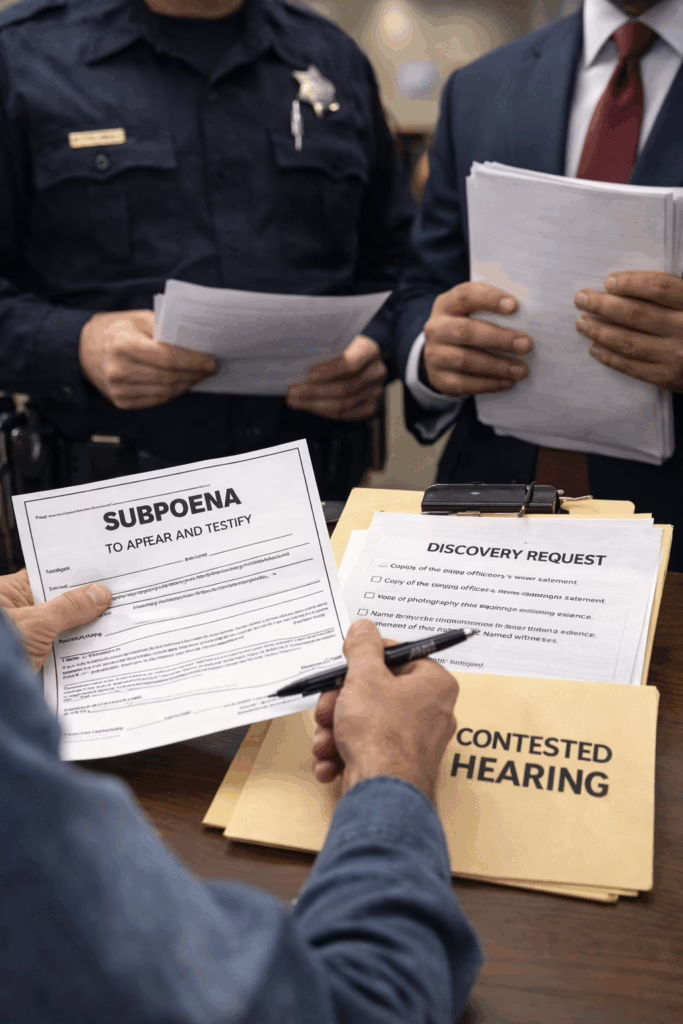
If you’ve received a traffic infraction in Washington and have chosen to contest it, IRLJ 3.1 governs the preliminary procedures leading up to your contested hearing. This rule outlines what both defendants and prosecutors must do to prepare, including how subpoenas are handled, what discovery you’re entitled to, and how notices of infraction may be amended.
Here’s what you need to know if you’re preparing for a contested hearing under Washington’s Infraction Rules for Courts of Limited Jurisdiction (IRLJ).
Subpoenas: Getting Witnesses to Court
Under IRLJ 3.1(a), both the defendant and the prosecutor have the right to subpoena witnesses. Key points include:
- Subpoenas should be served at least 7 days before the hearing.
- A judge, court clerk, or attorney can issue subpoenas.
- If issued by an attorney, the subpoena must be filed with the court and the prosecuting authority on the same day it is sent out.
- Subpoenas can be served by peace officers or sent via first-class mail, which is deemed complete 3 days after mailing.
- Subpoenas for witnesses outside the county must be approved by a judge.
Discovery: What Evidence Must Be Disclosed
IRLJ 3.1(b) gives defendants the right to request certain materials, but only if they submit a written request at least 14 days before the hearing. Once properly requested, the prosecutor must provide, at least 7 days before the hearing:
- The citing officer’s sworn statement
- Any video or photographic evidence (or a website where it can be viewed)
- Names of any additional witnesses
If any part of the discovery is provided late, it may only be suppressed if the delay prejudices the defendant. If nothing is provided by the day of the hearing without a valid excuse, the evidence is automatically suppressed.
Important: Discovery requests must be filed as a separate pleading.
Amending the Notice of Infraction
Under IRLJ 3.1(c), a court may allow an amendment to the notice of infraction as long as it doesn’t add a new chargeand the defendant’s substantial rights aren’t harmed. If more time is needed to respond to the amended notice, the defendant is entitled to a continuance.
Sufficiency of the Notice
Lastly, IRLJ 3.1(d) clarifies that a notice of infraction will not be considered invalid due to minor errors or omissions unless they prejudice the defendant’s rights. This prevents technicalities from interfering with the fairness of a hearing.
Why IRLJ 3.1 Matters
Whether you’re handling your case pro se or working with an attorney, understanding IRLJ 3.1 can help you:
- Properly serve subpoenas
- Secure critical discovery evidence
- Respond to procedural changes without sacrificing your defense
Missing a deadline or misfiling a request can hurt your chances in court. Knowing your rights and procedural requirements can make or break your case.
Need Help Preparing for a Contested Hearing?
Blanford Law helps clients navigate Washington traffic infractions and contested hearings. We’ll make sure your rights are protected and that you’re prepared for every stage of the process.
Contact us today at ken@blanfordlaw.com or 253-720-9304 to schedule a consultation.
Additional Resources
- IRLJ 2.1 – Notice of Infraction – Learn what must be included in a legally sufficient traffic citation. https://blanfordlaw.com/irlj-2-1-notice-of-infraction/
- Why Will My Attorney Not Give Me My Discovery? – Find out how to access discovery and what to do if you’re being denied access. https://blanfordlaw.com/why-will-my-attorney-not-give-me-my-discovery-how-can-i-get-a-copy-of-the-discovery-on-my-case/
- Traffic Infraction Legal Services – Explore how Blanford Law can help with your traffic violation case. https://blanfordlaw.com/areas-of-practice/traffic-infraction/
- Understanding IRLJ 1.1 – Infractions – A primer on Washington’s infraction system and how it differs from criminal charges. https://blanfordlaw.com/understanding-irlj-1-1-infractions/
- IRLJ 2.5 – Failure to Respond – Understand the consequences of ignoring a notice of infraction. https://blanfordlaw.com/irlj-2-5-failure-to-respond/