
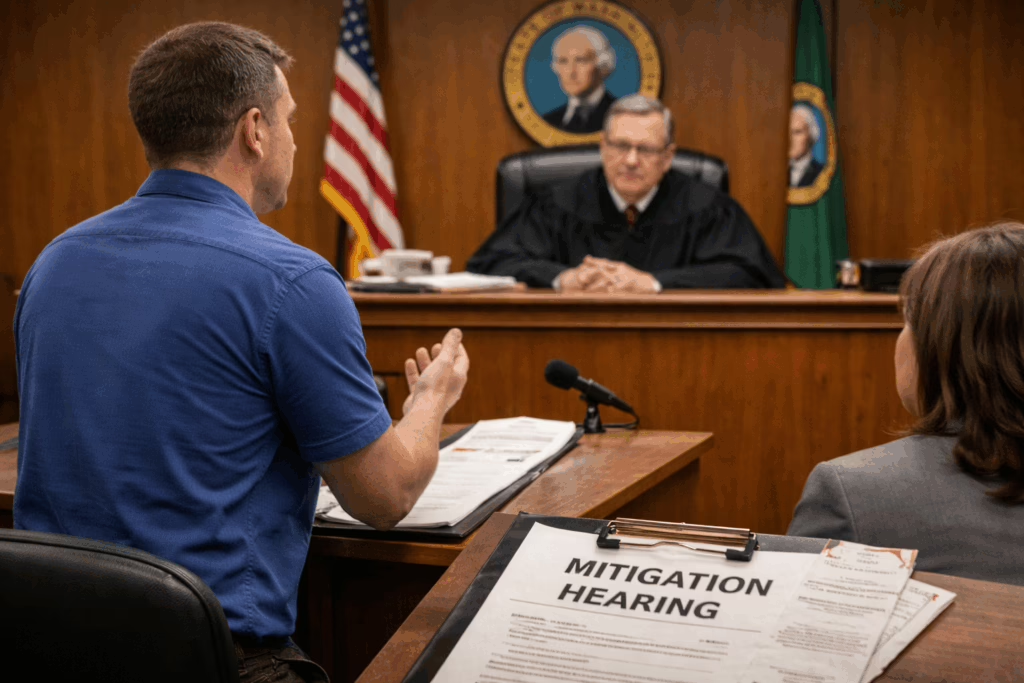
If you’ve received a traffic infraction in Washington but admit to the violation and want to explain your situation, a mitigation hearing under IRLJ 3.4 may offer some relief. This Washington court rule outlines how these hearings are conducted and how judges may reduce penalties based on your explanation. Here’s what you need to know.
What Is a Mitigation Hearing?
A mitigation hearing is not about whether you committed the infraction—it is assumed that you did. Instead, it provides an opportunity to explain the circumstances and request a reduction of the penalty. Under IRLJ 3.4, these hearings must be conducted in accordance with applicable law.
Informal Hearing Structure
IRLJ 3.4(b) establishes that mitigation hearings are informal and not governed by formal Rules of Evidence. This allows the judge to consider a wider range of evidence, including:
- Personal testimony from the defendant
- Statements from witnesses (who cannot be compelled to appear)
- Any other relevant and trustworthy evidence available
Both the plaintiff and the defendant may be represented by lawyers, though legal representation is not required. This relaxed structure makes the hearing more accessible for those without legal training.
How the Court Decides
During a mitigation hearing, the judge reviews the explanation and evidence to decide whether it justifies a reduction in the monetary penalty. Under IRLJ 3.4(c), the court:
- Must enter an order finding that the infraction occurred
- May impose a monetary penalty not exceeding the legal maximum
- May choose to:
- Waive or reduce the penalty
- Offer payment plans
- Substitute community restitution as permitted by law
Additionally, the court may retain jurisdiction for up to one year to supervise the outcome.
Benefits of a Mitigation Hearing
If you’re not disputing the infraction but want to reduce the financial impact, this type of hearing can be highly beneficial. For example, explaining financial hardship, lack of intent, or extenuating personal circumstances may persuade the judge to lower the fine or offer alternatives like community service.
Call to Action
Need help navigating a mitigation hearing in Washington? An experienced attorney can help present your case effectively and advocate for reduced penalties.
Contact Blanford Law today at ken@blanfordlaw.com or 253-720-9304 for guidance on your legal matter.
Additional Resources
- Understanding IRLJ 1.1: Infractions
Learn the basics of what constitutes an infraction under Washington law and how these rules apply in court.
https://blanfordlaw.com/understanding-irlj-1-1-infractions/ - Unprofessional Conduct by Bail Recovery Agents
A look at common issues involving misconduct by bail enforcement agents and related legal implications.
https://blanfordlaw.com/unprofessional-conduct-bail-recovery/ - Bail Bond vs. Agency Bond in Washington
Clarifies the difference between traditional bail bonds and agency-issued bonds in Washington cases.
https://blanfordlaw.com/bail-bond-agency-bond-washington/ - Bail Bond Regulation in Washington
Overview of the key rules and statutes that regulate the bail bond industry throughout Washington State.
https://blanfordlaw.com/bail-bond-regulation-washington/ - IRLJ 2.6: Scheduling of Hearings
Explains how hearing dates are set in traffic infraction cases and your rights regarding court scheduling.
https://blanfordlaw.com/irlj-2-06-scheduling-of-hearings/