
In Washington, traffic infraction cases don’t always require an in-person court appearance. Thanks to IRLJ 3.5, defendants have the option to contest or mitigate their infractions through written statements. This article explains how these hearings work and what you should know before choosing this route.
What Is IRLJ 3.5?
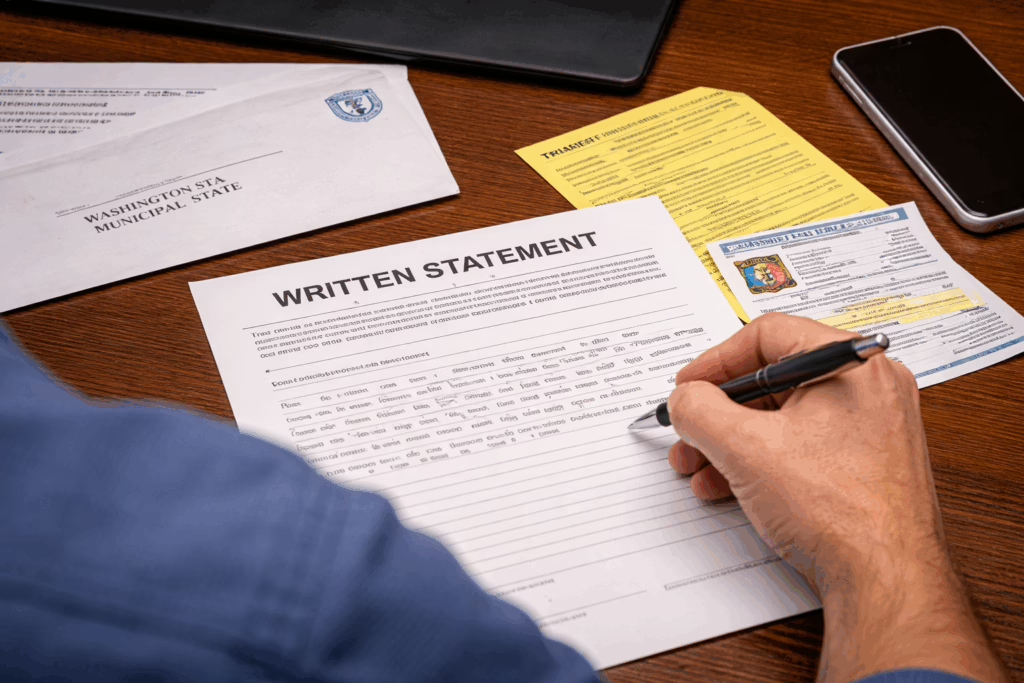
IRLJ 3.5 allows local courts in Washington to decide traffic infractions based solely on written statements. These rules apply to both contested hearings (where you deny the infraction) and mitigation hearings (where you admit the infraction but seek leniency).
Court-Approved Forms Required
Under IRLJ 3.5(1), each court must provide an official form for submitting your statement. This form:
- Must be available online and upon request
- Includes space for your explanation or defense
- Lets you indicate financial hardship and request a payment plan
- Informs you of potential consequences for failing to pay
- Requires certification and a valid signature per court standards
Using this form properly ensures your written statement is accepted by the court.
Contested Hearings by Written Statement
Under IRLJ 3.5(2), the judge will review:
- The officer’s sworn report
- Your written defense and any attached documents
This review occurs in chambers (not open court) and must take place within 120 days of your response. The judge will determine if the infraction was committed using the preponderance of the evidence standard.
Mitigation Hearings by Written Statement
Per IRLJ 3.5(3), mitigation hearings may also be handled in chambers. You can explain your circumstances in writing, and the judge may choose to reduce your penalty. These too must be completed within 120 days.
What to Expect Afterward
As specified in IRLJ 3.5(4), the court must notify you in writing of the decision, including:
- The outcome of the hearing
- Any penalties assessed
This provides finality to your case without needing to attend court in person.
Important Limitation: No Appeal
IRLJ 3.5(5) clearly states: you cannot appeal the court’s decision if your case was decided on written statements. Choosing this option waives your right to further review.
Should You Choose a Written Statement Hearing?
This option is convenient and less time-consuming, especially for minor traffic infractions. But it comes with trade-offs: less opportunity to argue your case, and no right of appeal. If your infraction is more serious or if you’re unsure about how to present your defense effectively, consulting an attorney may be wise.
Call to Action
Considering submitting a written statement for your traffic infraction? Make sure you understand the process, limitations, and how to best present your side.
Contact Blanford Law today at ken@blanfordlaw.com or 253-720-9304 for guidance on your legal matter.
Additional Resources
- IRLJ 2.1: Notice of Infraction
Learn what constitutes proper notice for a traffic infraction in Washington and your rights upon receiving one.
https://blanfordlaw.com/irlj-2-1-notice-of-infraction/ - IRLJ 3.1: Contested Hearing Overview
Understand how contested hearings are scheduled and processed under Washington traffic infraction rules.
https://blanfordlaw.com/irlj-3-1-contested-hearing/ - IRLJ 3.2: Failure to Appear
Explore the consequences and procedures if you fail to appear for a scheduled traffic hearing.
https://blanfordlaw.com/irlj-3-2-failure-to-appear/ - IRLJ 3.3: Procedure at Contested Hearing
A deeper look at the rules governing how contested infraction hearings are conducted.
https://blanfordlaw.com/irlj-3-3-contested-hearing/ - IRLJ 2.6: Scheduling of Hearings
Review the requirements for timely and proper scheduling of infraction hearings in Washington.
https://blanfordlaw.com/irlj-2-06-scheduling-of-hearings/