
Understanding IRLJ 6.2 Monetary Penalties in Washington Traffic Infractions
In Washington State, many traffic and civil infractions carry specific monetary penalties set by court rules. One of the most important rules governing these fines is Infraction Rule for Courts of Limited Jurisdiction (IRLJ) 6.2, which establishes the monetary penalty schedule for many infractions handled in district and municipal courts.
Understanding IRLJ 6.2 monetary penalties can help drivers and individuals cited for infractions better understand how fines are determined and what options may exist when responding to an infraction.
What Is IRLJ 6.2?
IRLJ 6.2 is a Washington court rule that provides a standardized penalty schedule for many state infractions, including numerous traffic violations. The rule helps ensure consistency in fines across courts throughout Washington.
Under this rule, the base penalty for certain infractions is set by the statewide schedule, and local courts generally cannot change those base amounts through local rules.
However, judges still retain discretion in certain situations and may impose a lower penalty in individual casesdepending on the circumstances.
Purpose of the IRLJ 6.2 Monetary Penalty Schedule
The penalty schedule established by IRLJ 6.2 serves several important functions within Washington’s traffic infraction system.
Ensuring Consistency Across Courts
Because Washington has many municipal and district courts, a statewide schedule helps ensure that penalties remain consistent regardless of where a citation is issued.
Providing Predictable Penalties
Drivers cited for infractions can understand the likely penalty associated with specific violations. This transparency allows individuals to make informed decisions when responding to an infraction.
Supporting the Administration of Justice
Standardized penalties help courts process infractions efficiently while maintaining fairness across the judicial system.
How Infractions Are Penalized Under IRLJ 6.2
The rule establishes base penalties for many infractions. These base penalties do not include additional statutory assessments or court fees that may apply.
For example, the schedule includes penalties for violations such as:
- Second-degree negligent driving
- Driving the wrong way on a freeway
- Backing on a limited access highway
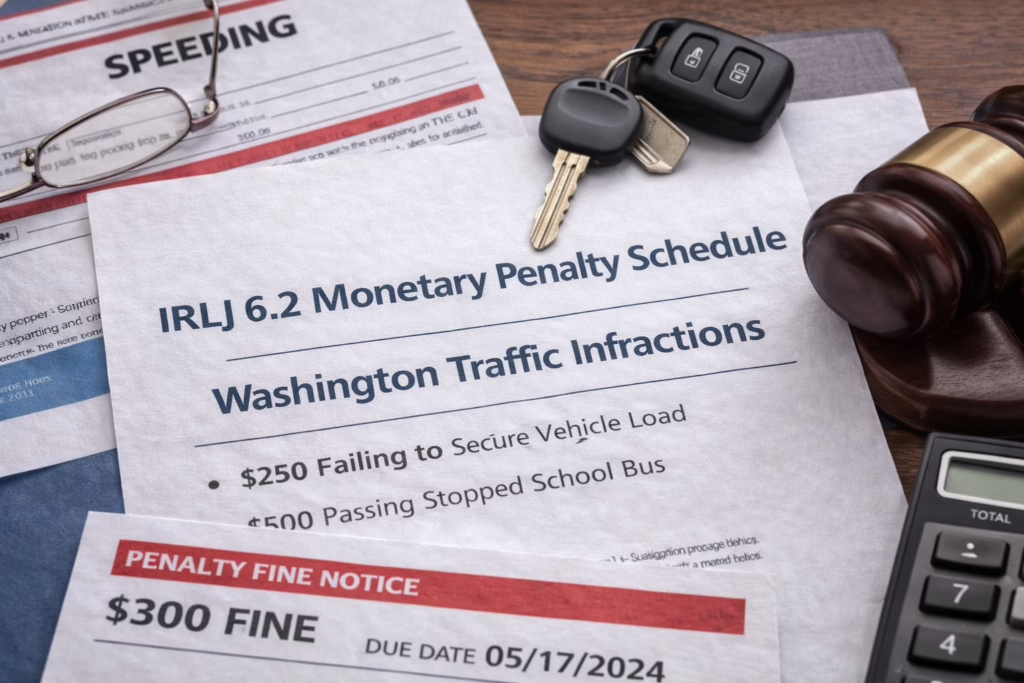
- Failing to secure a vehicle load
- Throwing debris onto a highway
- Disobeying a school patrol
- Passing a stopped school bus
Each violation has a designated base penalty that courts generally follow.
Once mandatory statutory assessments are added, the total fine may be significantly higher than the base penalty listed in the schedule.
Unscheduled Infractions Under IRLJ 6.2
Not every possible infraction is listed in the penalty schedule. When an infraction is not included in the schedule, IRLJ 6.2 provides guidance on how the penalty is determined.
For these unscheduled infractions, the rule sets a default base penalty of $48, not including additional statutory assessments.
Local courts may adopt different penalties for unscheduled infractions through local rules.
Infractions Not Covered by the Schedule
IRLJ 6.2 does not apply to every type of infraction.
For example, the rule does not govern penalties for certain parking, standing, stopping, or pedestrian infractionsestablished by municipal or county ordinances.
Instead, those penalties are typically set by local statutes or municipal codes.
Why the Base Penalty May Differ From the Final Fine
Many drivers are surprised when the fine they must pay is higher than the penalty listed in the rule.
This happens because the base penalty listed in IRLJ 6.2 monetary penalties does not include mandatory statutory assessments. These assessments may include:
- Public safety education assessments
- Judicial information system fees
- Additional statutory surcharges
As a result, the total amount owed can be significantly higher than the base penalty amount listed in the schedule.
What to Do After Receiving a Traffic Infraction
If you receive a traffic infraction in Washington, you typically have several options:
- Pay the fine and accept the infraction
- Request a mitigation hearing
- Request a contested hearing to challenge the citation
Each option has different consequences, including potential impacts on insurance and driving records.
Understanding the penalties associated with the alleged violation can help determine the best course of action.
Contact Blanford Law for Guidance on Traffic Infractions
Traffic infractions and court procedures can be confusing, particularly when penalties, court rules, and hearings are involved. If you have received a traffic citation or need guidance regarding a Washington traffic infraction case, experienced legal assistance may help you better understand your options.
Contact Blanford Law today at ken@blanfordlaw.com or 253-720-9304 for guidance on your legal matter.
Additional Resources
IRLJ 2.06 – Scheduling of Hearings
Learn how Washington courts schedule mitigation and contested hearings for traffic infractions under IRLJ 2.06.
Understanding IRLJ 1.1 – Infractions
This article explains the basic definition of infractions under Washington law and how they differ from criminal offenses.
IRLJ 2.1 – Notice of Infraction
Explore the legal requirements for issuing a notice of infraction in Washington, including the information that must be included on the citation.
IRLJ 1.3 – Infraction Rules
This guide discusses the scope and purpose of the Washington Infraction Rules for Courts of Limited Jurisdiction and how they govern infraction proceedings.