
What Is IRLJ 6.5 Rules Superseded?
IRLJ 6.5 Rules Superseded is a transition rule within Washington’s Infraction Rules for Courts of Limited Jurisdiction (IRLJ). The rule clarifies which procedural rules govern traffic infractions depending on when the offense occurred.
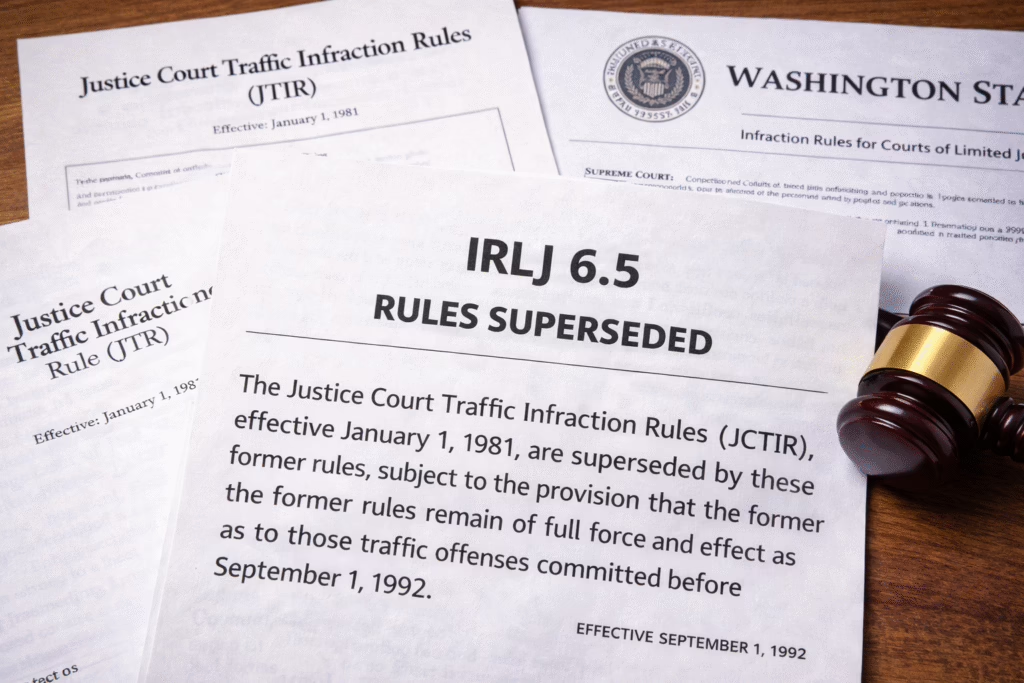
Specifically, IRLJ 6.5 provides that the former Justice Court Traffic Infraction Rules (JCTIR)—effective January 1, 1981—are superseded by the IRLJ framework. However, those older rules continue to apply to traffic offenses committed before September 1, 1992.
In other words, the rule ensures procedural clarity during the shift from the older justice court system to the modern IRLJ structure.
Why IRLJ 6.5 Matters
At first glance, IRLJ 6.5 appears purely administrative. However, transition rules like this are legally important because they prevent confusion over which procedural framework governs a case.
Without a rule like IRLJ 6.5:
- Courts could face disputes over which procedural rules apply.
- Parties might argue improper procedure.
- Appeals could arise based on rule misapplication.
By specifying a clear cutoff date—September 1, 1992—the Washington Supreme Court ensured a clean procedural transition.
The Historical Context Behind IRLJ 6.5 Rules Superseded
Before the adoption of the current IRLJ framework, Washington traffic infractions were governed by the Justice Court Traffic Infraction Rules (JCTIR).
As Washington’s court system evolved, the Supreme Court adopted the Infraction Rules for Courts of Limited Jurisdiction to standardize procedures across:
- District Courts
- Municipal Courts
IRLJ 6.5 formally acknowledges that change and preserves application of the former rules only for offenses predating the new framework.
Practical Impact Today
For modern traffic cases, IRLJ 6.5 rarely affects day-to-day litigation because:
- Nearly all current cases involve offenses committed well after September 1, 1992.
- The IRLJ framework now uniformly governs contested hearings, motions, and evidence procedures.
However, IRLJ 6.5 remains part of the rules because it defines the legal transition point between two procedural systems.
In rare situations involving very old cases or archival matters, this rule could still be relevant.
Relationship to Other IRLJ Rules
While IRLJ 6.5 is a transitional rule, other IRLJ provisions govern:
- Contested hearings (IRLJ 3.1 and 3.3)
- Written evidence procedures
- Speed measuring device certification (IRLJ 6.6)
Understanding the structure of the IRLJ framework helps clarify how Washington traffic infraction procedure operates today.
Why Procedural Rules Matter in Traffic Cases
Even in traffic infraction cases—which are civil rather than criminal—procedural rules determine:
- How hearings are conducted
- What evidence may be submitted
- Deadlines and filing requirements
- Appeal rights
Although IRLJ 6.5 Rules Superseded addresses historical transition, it is part of the broader procedural architecture that governs Washington traffic courts.
Contact Blanford Law
If you have questions about Washington traffic infraction procedures or are contesting a citation, understanding the applicable court rules is essential.
Contact Blanford Law today at ken@blanfordlaw.com or 253-720-9304 for guidance on your legal matter.
Additional Resources
RPC 3.4: Fairness to Opposing Party and Counsel in Washington
Explains the ethical obligations attorneys must follow regarding evidence, discovery, and fairness in Washington legal proceedings.
https://blanfordlaw.com/rpc-3-4-fairness-to-opposing-party-and-counsel-in-washington/
Understanding IRLJ 1.1 Infractions
Provides an overview of IRLJ 1.1 and how Washington defines and categorizes traffic infractions.
https://blanfordlaw.com/understanding-irlj-1-1-infractions/
IRLJ 1.2 Infraction Rule
Discusses the scope and applicability of Washington’s Infraction Rules for Courts of Limited Jurisdiction.
https://blanfordlaw.com/irlj-1-2-infraction-rule/
IRLJ 1.3 Infraction Rules
Explains the construction and interpretation of infraction rules in Washington courts.
https://blanfordlaw.com/irlj-1-3-infraction-rules/
IRLJ 3.3 Contested Hearing
Analyzes evidentiary procedures and presentation of testimony during contested traffic infraction hearings.
https://blanfordlaw.com/irlj-3-3-contested-hearing/