
What Is IRLJ 6.6 Speed Certification?
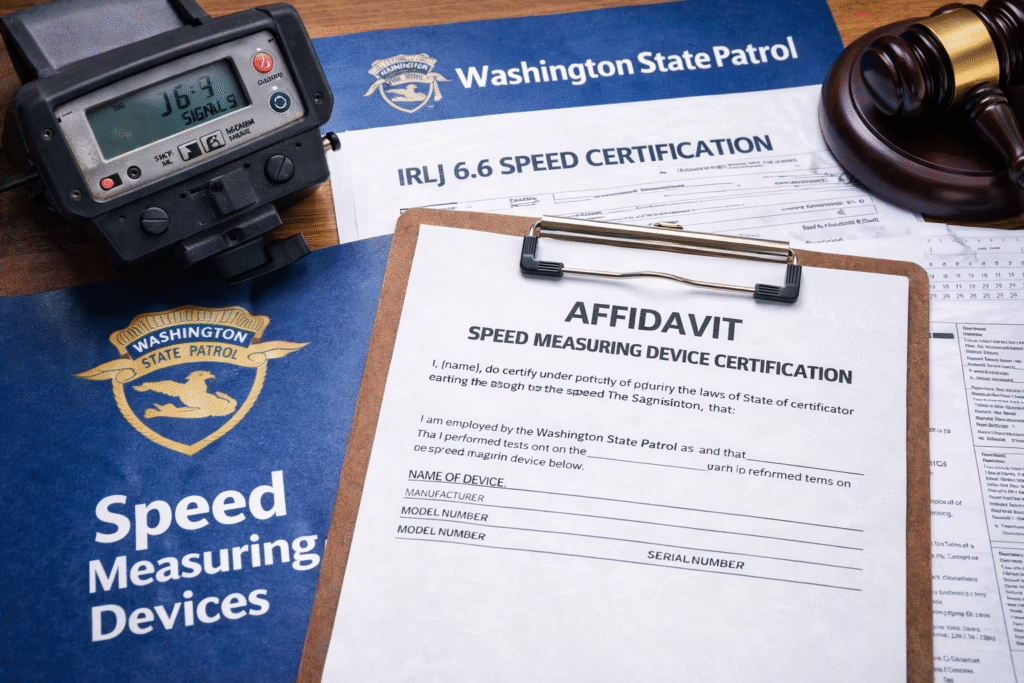
IRLJ 6.6 Speed Certification is a Washington court rule that governs how the State proves the design, construction, and certification of speed measuring devices (SMDs) and weight measuring devices in contested traffic infraction hearings.
In most Washington speeding cases, law enforcement relies on:
- Radar
- LIDAR
- Other electronic speed measuring devices
Rather than requiring live expert testimony about the engineering and reliability of those devices in every contested hearing, IRLJ 6.6 permits the State to introduce a properly executed certification affidavit as foundational evidence.
This rule significantly streamlines speeding prosecutions in courts of limited jurisdiction across Washington State.
The Role of the Washington State Patrol
The Washington State Patrol (WSP) is the agency responsible for maintaining and issuing the standardized IRLJ 6.6 certification materials for speed measuring devices.
WSP oversees:
- Speed Measuring Device (SMD) approvals
- Certification affidavits used in court
- Training materials related to SMD operation
- Technical documentation regarding device design and construction
These certification documents are commonly referred to as IRLJ 6.6 affidavits and are routinely submitted in contested hearings to establish the reliability of radar and LIDAR devices.
Information about Speed Measuring Devices and related materials is maintained by the Washington State Patrol and can be accessed through WSP’s official website:
https://wsp.wa.gov
Because WSP acts as the keeper of these materials, defense attorneys often review WSP certification records when evaluating whether the State’s documentation complies with IRLJ 6.6.
How IRLJ 6.6 Speed Certification Works in Court
Under IRLJ 6.6:
- The State may introduce a certificate establishing the design and construction of the speed measuring device.
- The certificate must substantially follow the format set out in the rule.
- The certificate serves as evidence without requiring live expert testimony.
Importantly, this rule applies only in contested hearings.
If a driver simply pays the ticket or requests mitigation, IRLJ 6.6 is typically not implicated. It becomes relevant only when the accuracy or admissibility of speed measurement evidence is challenged.
Certification of Weight Measuring Devices
IRLJ 6.6 also applies to weight measuring devices, such as scales used in commercial vehicle enforcement.
In overweight vehicle cases, the State may submit certification documentation showing that:
- The scale meets required standards.
- The device was properly constructed.
- The equipment was certified as accurate.
As with radar and LIDAR, this documentation can replace live expert testimony unless properly challenged.
Can a Driver Challenge IRLJ 6.6 Certification?
Yes.
Although IRLJ 6.6 allows certification in lieu of live testimony, defendants may still:
- Examine whether the certificate substantially complies with the rule.
- Challenge whether the correct device is identified.
- Review calibration and maintenance records.
- Question whether the officer operated the device properly.
A defective certification affidavit or incomplete documentation may affect admissibility.
Because the Washington State Patrol maintains the official SMD materials, reviewing WSP-issued documentation can be a key part of evaluating a contested speeding case.
Why IRLJ 6.6 Matters in Washington Speeding Cases
Nearly every contested speeding case involving radar or LIDAR relies on IRLJ 6.6 certification.
Without this rule, courts would require:
- Technical experts,
- Device engineers,
- Detailed engineering testimony in routine infraction hearings.
Instead, the certification process creates a streamlined evidentiary foundation while preserving the defendant’s right to object.
For drivers, this means:
- The State’s case often hinges on paperwork.
- Careful review of SMD certification documents is critical.
- Technical compliance with IRLJ 6.6 can influence case strategy.
Strategic Considerations in a Contested Hearing
If you are contesting a speeding ticket in Washington:
- Obtain the IRLJ 6.6 certification affidavit.
- Confirm it substantially follows the required format.
- Review Washington State Patrol SMD documentation.
- Examine calibration and maintenance records.
- Assess whether the officer’s operation of the device was proper.
While IRLJ 6.6 simplifies proof for the prosecution, it does not eliminate evidentiary challenges.
Contact Blanford Law
If you are contesting a speeding ticket and questions arise about radar or LIDAR certification under IRLJ 6.6, experienced legal guidance can make a difference.
Contact Blanford Law today at ken@blanfordlaw.com or 253-720-9304 for guidance on your legal matter.
Additional Resources
RPC 3.4: Fairness to Opposing Party and Counsel in Washington
Explains a lawyer’s ethical duties regarding evidence, discovery, and fairness in Washington legal proceedings.
https://blanfordlaw.com/rpc-3-4-fairness-to-opposing-party-and-counsel-in-washington/
Radar Speed Measuring Device Certificates Admissibility in Washington State
A detailed look at how radar and speed measuring device certificates are admitted under Washington law, including foundational requirements.
https://blanfordlaw.com/radar-speed-measuring-device-certificates-admissibility-in-washington-state/
IRLJ 3.1 Contested Hearing
Outlines procedures governing contested infraction hearings in Washington courts of limited jurisdiction.
https://blanfordlaw.com/irlj-3-1-contested-hearing/
IRLJ 3.3 Contested Hearing
Discusses evidentiary procedures and presentation of testimony during contested infraction hearings.
https://blanfordlaw.com/irlj-3-3-contested-hearing/
Bellevue v. Lightfoot: The Importance of Authenticating Radar Evidence
Examines how authentication of radar evidence affects admissibility and case outcomes in Washington speeding cases.
https://blanfordlaw.com/bellevue-v-lightfoot-the-importance-of-authenticating-radar-evidence/