What Is IRLJ 6.7 Identity Challenges?
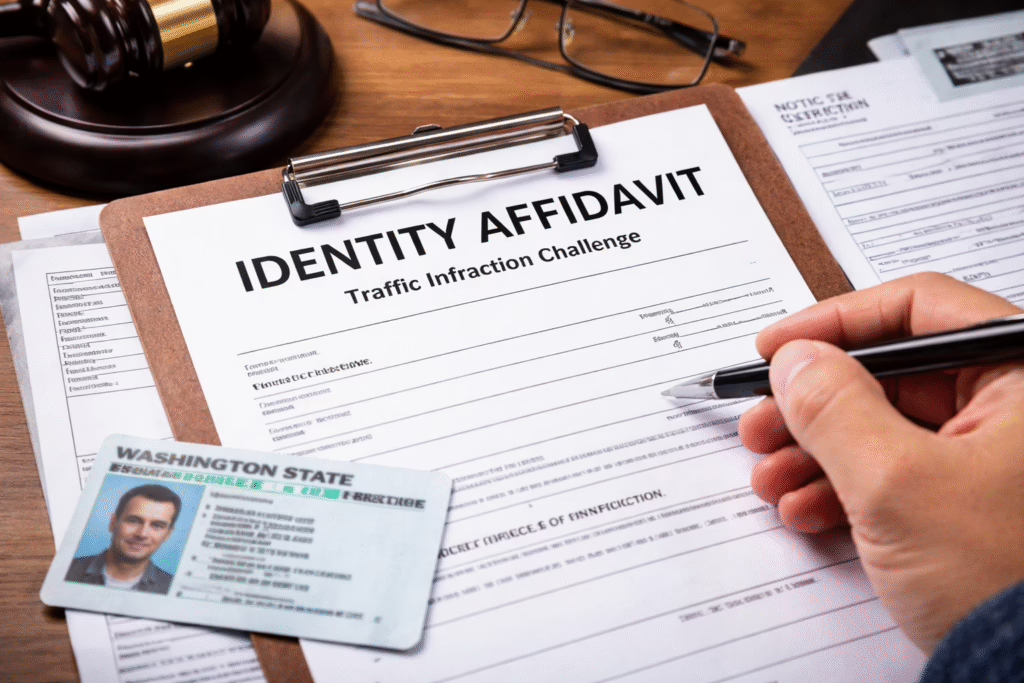
IRLJ 6.7 Identity Challenges is a rule under Washington’s Infraction Rules for Courts of Limited Jurisdiction that provides a pathway for people to ask a court to vacate a default judgment entered after they failed to respond to a traffic infraction notice — specifically because they were mistakenly identified as the person who committed the infraction.
This rule ensures that people who did not actually commit an infraction — or were not properly served — have a formal mechanism to correct the record.
When IRLJ 6.7 Applies
You may invoke IRLJ 6.7 when:
- You received a notice of infraction (such as a speeding or parking ticket).
- You did not respond within the time required.
- A judgment was entered against you.
- You believe you were not the person identified in the notice (e.g., wrong driver, identity theft, or clerical error).
Under these circumstances, IRLJ 6.7 allows you to seek relief from a judgment based on mistaken identity.
How to File an Identity Challenge
To start the process under IRLJ 6.7, the defendant must file an identity affidavit or certification with:
- The court where the infraction was adjudicated, and
- The prosecuting authority’s office assigned to that court.
The affidavit must:
- Provide a factual basis establishing that you were not the person who committed the alleged infraction, and
- State that you were not served with the notice of infraction.
This statement initiates the identity challenge process.
What Happens After the Identity Affidavit Is Filed
Once the identity affidavit is filed:
Court May Set Aside Default Judgment
The court may set aside the default judgment while the identity hearing is pending.
Hearing Must Be Scheduled Within a Specific Time
An identity hearing must be scheduled:
- No sooner than 14 days, and
- No later than 120 days after the identity affidavit is filed,
unless you and the court agree to a different timeline.
The court must send you written notice of the hearing’s time, place, and date within 28 days of receiving the affidavit.
What Happens at the Identity Hearing
At the identity hearing:
- The court may require you to appear in person, and
- Identity can be established through evidence other than direct in-court identification.
This means the court may consider documentation, testimony, or other proofs that verify whether you are — or are not — the correct person cited in the infraction.
Possible Outcomes of an Identity Challenge
After the hearing, the court may determine:
- You were the correct person identified:
- The original infraction judgment remains in place, or
- It may be re-adjudicated as committed.
- You were not the correct person identified:
- The court may vacate the judgment, clearing your record of the infraction.
This process protects people from being wrongly penalized due to mistaken identity, clerical errors, or even identity theft.
Why IRLJ 6.7 Matters
A default judgment from failing to respond to a notice of infraction can lead to:
- Traffic fines and fees,
- Reports to the Department of Licensing,
- License holds or suspensions,
- Negative impacts on insurance and driving records.
IRLJ 6.7 gives wrongly cited individuals a chance to correct that outcome without having to restart from square one. It’s an important safeguard in Washington’s infraction system.
When to Get Legal Help
Challenging an infraction judgment under IRLJ 6.7 can involve:
- Drafting an accurate and persuasive identity affidavit,
- Gathering supporting evidence,
- Presenting a case at the identity hearing.
An attorney experienced with Washington infraction procedures can help ensure your rights are protected throughout the process.
Contact Blanford Law
If you received a judgment on a traffic infraction you did not commit or were misidentified, legal guidance can help you pursue relief under IRLJ 6.7.
Contact Blanford Law today at ken@blanfordlaw.com or 253-720-9304 for guidance on your legal matter.