
State v. Damon Restraints Decision Explained
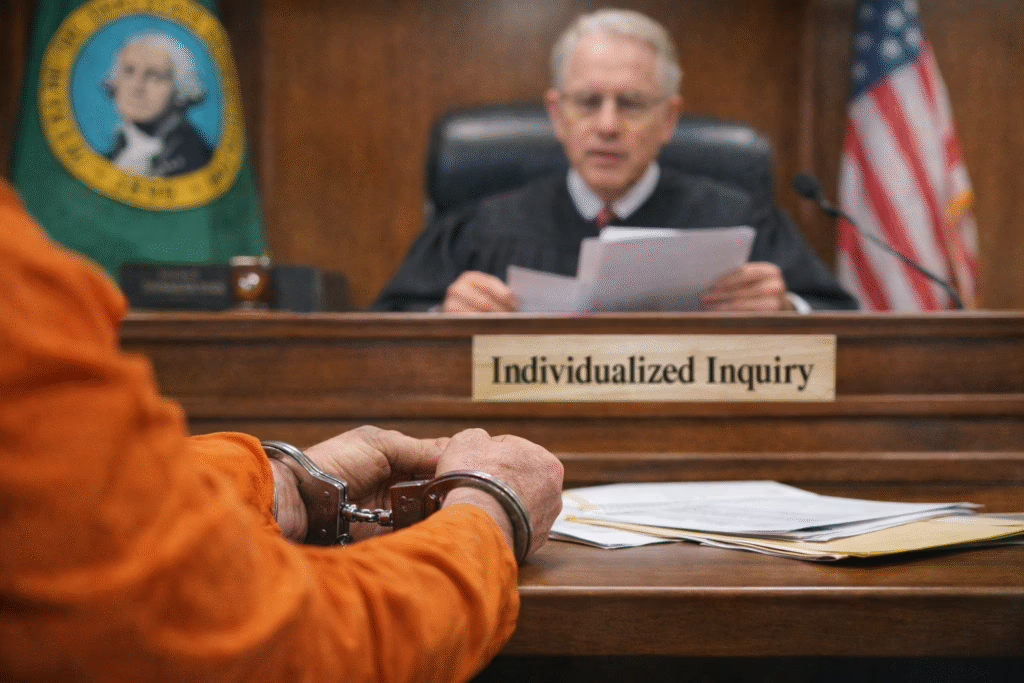
In State v. Damon, 144 Wn.2d 686 (2001), the Washington Supreme Court reaffirmed a fundamental principle of criminal procedure: a defendant has the right to appear in court free from restraints unless the trial court makes an individualized determination that restraints are necessary.
This case remains one of the leading Washington authorities governing the use of shackles, handcuffs, or other physical restraints in criminal proceedings. It is frequently cited alongside later decisions such as State v. Jackson when courts evaluate whether a defendant’s constitutional rights were violated.
Why Courtroom Restraints Matter
Visible restraints in front of a jury are inherently prejudicial. They may:
- Undermine the presumption of innocence
- Suggest dangerousness or guilt
- Interfere with the defendant’s ability to participate in their defense
Because of these concerns, Washington courts have long required trial judges to exercise discretion carefully before allowing restraints.
The Legal Issue in State v. Damon
In Damon, the issue before the Washington Supreme Court was whether the trial court erred by allowing the defendant to be restrained without conducting an adequate, individualized inquiry.
The Court emphasized several critical principles:
1. Defendants Have a Right to Appear Free of Restraints
The Court reaffirmed that the use of restraints is disfavored. A defendant is entitled to appear before the jury without shackles unless there is a specific reason to justify them.
2. An Individualized Inquiry Is Required
Trial courts must make a case-specific determination on the record. This means:
- Considering the defendant’s behavior
- Evaluating any history of violence or escape attempts
- Assessing courtroom security concerns
- Making findings supported by evidence
A generalized concern for safety or a routine jail policy is not enough.
3. Blanket Security Policies Are Insufficient
The Court rejected the idea that standard procedures or jail policies automatically justify restraints. Judicial discretion must be exercised independently.
The responsibility lies with the judge—not law enforcement—to decide whether restraints are necessary.
Constitutional Foundations
The decision in State v. Damon is grounded in:
- The Fourteenth Amendment Due Process Clause
- The defendant’s right to a fair trial
- Washington constitutional protections
Visible shackling can violate due process if not justified by essential state interests specific to the defendant.
The Court’s reasoning aligns with longstanding precedent recognizing that courtroom dignity and fairness require restraint decisions to be narrowly tailored.
What This Means for Washington Trial Courts
After Damon, Washington trial courts must:
- Conduct an individualized assessment before imposing restraints
- Place findings on the record
- Use the least restrictive means necessary
- Avoid automatic or blanket policies
Failure to follow these procedures can result in appellate reversal.
This case continues to influence litigation involving courtroom security, particularly where visible restraints are used in front of a jury.
Why State v. Damon Still Matters Today
Even decades later, State v. Damon restraints principles remain central in Washington appellate decisions.
Defense attorneys often rely on Damon when:
- A defendant appears in shackles without explanation
- The trial court defers to jail policy
- There is no record showing necessity
Courts continue to cite Damon as controlling authority when evaluating whether visible restraints violated a defendant’s right to a fair trial.
Protecting Your Rights in Washington Criminal Cases
Courtroom procedures can significantly impact the fairness of a trial. If a defendant is improperly restrained, it may raise serious constitutional issues and provide grounds for appeal.
Understanding decisions like State v. Damon is essential to protecting your rights throughout the criminal process.
Review our client resources here
Contact us anytime for your urgent legal needs.
About Blanford Law:
We are no-nonsense, relentless, fair, and honest. We are great listeners instead of fast talkers, that is just who we are. More than 20 years ago, Ken began practicing law with a deeply-seeded belief that every person has the right to the best legal representation available. He built his law firm on that belief. Another belief that he strongly adheres to is his fundamental belief that clients deserve respect, with no assumptions or preconceived notions. If you or someone you know is accused of a crime or injured as a result of the negligence of another, please have them call us at 253-720-9304 or email us info@blanfordlaw.com
Additional Resources
Washington Supreme Court In-Court Holding Cell Ruling
An analysis of a Washington Supreme Court decision addressing whether placing defendants in holding cells during trial violates constitutional protections.
https://blanfordlaw.com/washington-supreme-court-in-court-holding-cell-ruling/
Cruel and Unusual Punishment – Williams Decision
Examines how Washington courts interpret the prohibition against cruel and unusual punishment under the state and federal constitutions.
https://blanfordlaw.com/cruel-and-unusual-punishment-williams/
Washington Bail for Felonies
Explains how bail is determined in felony cases in Washington, including judicial discretion and public safety considerations.
https://blanfordlaw.com/washington-bail-for-felonies/
Washington Supreme Court Upholds Public Trial Rights – Landmark Courtroom Closure Decision
Discusses a key Washington Supreme Court ruling protecting the constitutional right to a public trial.
https://blanfordlaw.com/washington-supreme-court-upholds-public-trial-rights-landmark-decision-on-courtroom-closure/
Washington Bail Bond Agent Licensing
Provides an overview of licensing requirements and regulatory standards for bail bond agents in Washington State.
https://blanfordlaw.com/washington-bail-bond-agent-licensing/