
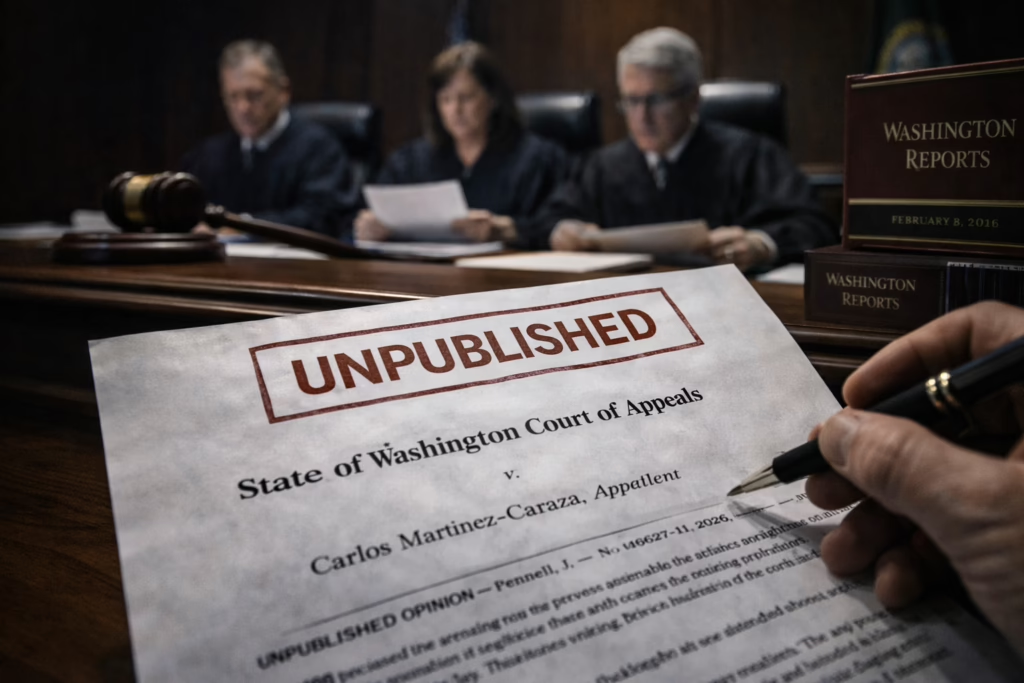
In State v. Martinez-Caraza, No. 40627-0-III (Wash. Ct. App. Feb. 26, 2026) (unpublished), Division III of the Washington Court of Appeals affirmed a conviction for second degree assault with a deadly weapon enhancement. Although this case was issued as an unpublished Washington Court of Appeals opinion, it provides useful insight into how appellate courts analyze claims of judicial comment on the evidence and prosecutorial misconduct — particularly when objections were not preserved at trial.
Because this opinion is unpublished, it does not establish binding precedent. However, it illustrates how Washington courts apply well-settled constitutional and procedural principles.
Background of the Case
The conviction arose from a violent altercation between neighbors in Klickitat County. Evidence at trial showed that the defendant struck the victim multiple times in the head with an object described by witnesses as a pole or pickaxe-like tool. The victim sustained significant head injuries and required hospital treatment.
The State charged the defendant with second degree assault and alleged he was armed with a deadly weapon during the offense. At trial, the identity of the exact object used was disputed, and forensic testing did not conclusively link the admitted pickaxe to the victim through DNA evidence. Despite that uncertainty, the jury convicted and returned a deadly weapon finding.
On appeal, the defendant raised two primary arguments:
- The trial judge improperly commented on the evidence.
- The prosecutor committed misconduct during closing argument.
The Court of Appeals rejected both arguments and affirmed the conviction.
Judicial Comment on the Evidence
Constitutional Prohibition in Washington
Article IV, section 16 of the Washington Constitution prohibits judges from commenting on the evidence in a manner that conveys their personal opinion about the credibility, weight, or truth of that evidence.
The defendant argued that the trial court violated this rule when the judge warned jurors that certain photographs were graphic and might show blood before they were displayed.
The Court of Appeals disagreed. It concluded that the judge’s comment was merely cautionary and administrative in nature — not an expression of opinion regarding the strength of the evidence. Importantly, no objection was made at trial.
Because the issue was unpreserved, the appellate court applied the “manifest constitutional error” standard under RAP 2.5(a). The court determined there was no manifest constitutional violation warranting reversal.
Prosecutorial Misconduct Claims
The defendant also alleged the prosecutor improperly vouched for witnesses and argued facts not in evidence.
Alleged Vouching
Improper vouching occurs when a prosecutor places the prestige of the government behind a witness or suggests special knowledge of credibility. The Court of Appeals found that the prosecutor’s statements were based on testimony presented at trial and did not constitute improper vouching.
Alleged Facts Outside the Record
The defendant further argued that the prosecutor speculated that the weapon could have been wiped clean before police arrived. The court held that this was a permissible inference based on evidence about the timing of events and was not misconduct.
Because no objections were raised during closing argument, the defendant was required to show both improper conduct and resulting prejudice that could not have been cured by an instruction. The court concluded he failed to meet that burden.
What Makes This an Unpublished Washington Court of Appeals Opinion?
A key feature of this case is that it was issued as an unpublished Washington Court of Appeals opinion.
What “Unpublished” Means in Washington
Under RCW 2.06.040 and General Rule (GR) 14.1:
- Unpublished Court of Appeals opinions have no precedential value.
- They generally may not be cited as binding authority in Washington courts.
- They are publicly available but are not published in the Washington Appellate Reports.
How Citation Works
GR 14.1 provides that unpublished opinions of the Court of Appeals “are not binding precedent and may not be cited as authority.” There are limited procedural circumstances where reference may be permitted, but they cannot be relied upon as controlling law.
In contrast, published opinions establish binding precedent within the state.
For attorneys and defendants, this distinction matters. While unpublished opinions can illustrate how courts apply existing law, they cannot substitute for published authority in briefs or motions.
Why This Case Still Matters
Even though it is an unpublished Washington Court of Appeals opinion, Martinez-Caraza reinforces important practical lessons:
- Objections must be preserved at trial to avoid heightened appellate standards.
- Not every judicial remark constitutes a prohibited comment on the evidence.
- Prosecutors are permitted to argue reasonable inferences from the record.
For defendants facing felony charges, the case highlights how difficult it can be to obtain reversal when alleged errors were not properly preserved.
Protecting Your Rights on Appeal
Appellate outcomes often turn on procedural preservation. Failing to object can significantly limit available relief.
If you are considering an appeal or believe legal errors occurred during trial, experienced appellate counsel is critical.
Contact Blanford Law today at ken@blanfordlaw.com or 253-720-9304 for guidance on your legal matter.
Additional Resources
1. Appealing a Criminal Conviction in Washington
Explains the appellate process and standards of review in Washington criminal cases.
https://www.blanfordlaw.com/criminal-appeals-washington/
2. What Is Manifest Constitutional Error?
Discusses RAP 2.5(a) and when unpreserved issues may be reviewed on appeal.
https://www.blanfordlaw.com/manifest-constitutional-error/
3. Prosecutorial Misconduct in Washington Criminal Trials
Analyzes how courts evaluate improper argument claims.
https://www.blanfordlaw.com/prosecutorial-misconduct-washington/
4. Courtroom Restraints at Sentencing in Washington
Explains constitutional protections during sentencing proceedings.
https://blanfordlaw.com/courtroom-restraints-at-sentencing-washington/
5. Why Unpublished Opinions Cannot Be Cited in Washington State Courts
A discussion of GR 14.1 and citation limits for unpublished decisions.
https://blanfordlaw.com/why-unpublished-opinions-cannot-be-cited-in-washington-state-courts/