
What Is a Virtual Court Hearing?
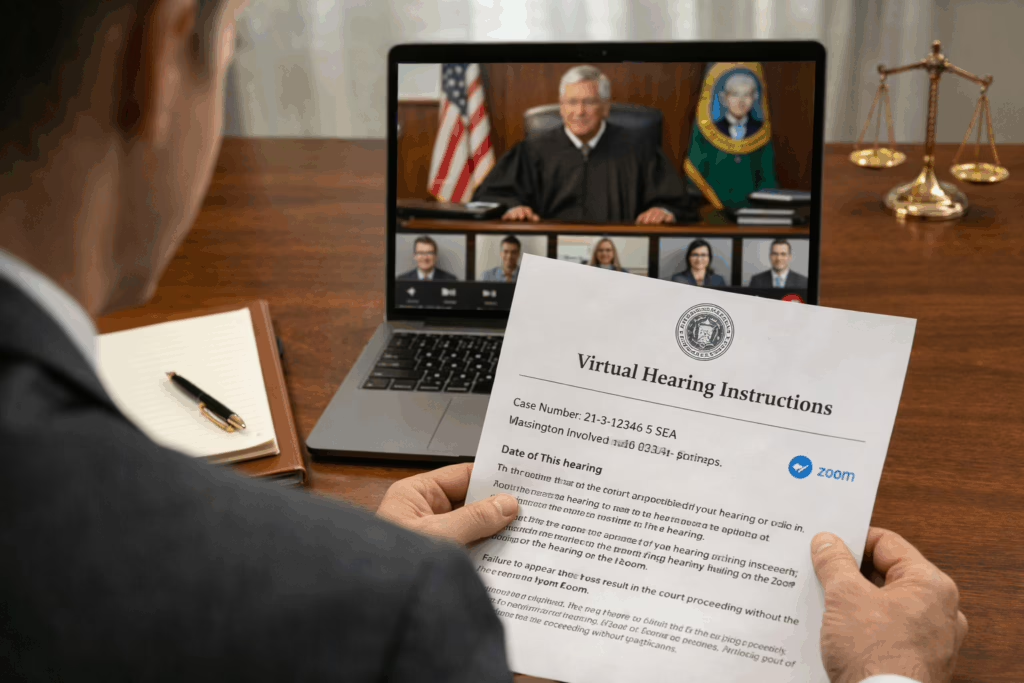
A virtual court hearing allows participants to attend court remotely via video or telephone. In Washington State, many courts conduct hearings on platforms like Zoom or WebEx, especially for civil, family, and some criminal matters.
These hearings function just like in-person sessions—participants must appear on time, dress appropriately, and follow all court rules. The judge, attorneys, witnesses, and interpreters may all be present remotely.
How to Know If Your Hearing Is Virtual
You’ll typically receive a notice from the court—either by email or mail—specifying:
- The date and time of your hearing
- Whether it will be in-person, remote, or hybrid
- The link, meeting ID, and/or dial-in number if it is virtual
If you are unsure, contact the clerk’s office in your county or the court handling your case.
Where to Find Virtual Court Information
Washington Courts maintain a public Virtual Court Directory: 👉 Washington Courts Virtual Directory
You can search by:
- County or jurisdiction
- Court type (e.g., District Court, Superior Court)
- Virtual calendar links and contact info
Each court has its own procedures, so always follow the specific instructions provided.
What Technology Do You Need?
To join a virtual court hearing, you’ll usually need:
- A device with camera and microphone (laptop, tablet, or smartphone)
- Internet connection or phone line
- The appropriate app (e.g., Zoom, WebEx)
- A quiet, distraction-free space
Test your setup in advance and have a backup plan (e.g., dial-in number).
Best Practices for Virtual Court
- Log in early (at least 15 minutes before your hearing)
- Use your full legal name on screen
- Mute your microphone when not speaking
- Dress as you would for court
- Avoid distractions and background noise
Judges may remove or reschedule participants who don’t follow protocol.
Need Help?
If you’re unsure about how to access your virtual hearing or need help preparing, contact your attorney or the court clerk. Many courts have self-help resources available.
Additional Resources
- Understanding Washington Rule of Evidence 501: A Guide to Privilege in Legal Proceedings
Learn how legal privilege applies in virtual and in-person court settings. - Interpreter Hearsay Rule in Washington
A look at how statements made through interpreters are treated in Washington courts. - Ensuring Justice for All: The Essential Role of Interpreters in Washington’s Legal System
Explains interpreter roles and legal protections in court proceedings. - RCW 5.60.060: Public Officer Privilege
Discusses protections and confidentiality rules for public officials in legal proceedings. - RCW 7.75.050: Ensuring Confidentiality and Privileged Communications in Dispute Resolution Centers in Washington
Covers privilege and confidentiality laws in Washington’s dispute resolution centers.
Review our client resources here
Contact us anytime for your urgent legal needs.
About Blanford Law:
We are no-nonsense, relentless, fair, and honest. We are great listeners instead of fast talkers, that is just who we are. More than 20 years ago, Ken began practicing law with a deeply-seeded belief that every person has the right to the best legal representation available. He built his law firm on that belief. Another belief that he strongly adheres to is his fundamental belief that clients deserve respect, with no assumptions or preconceived notions. If you or someone you know is accused of a crime or injured as a result of the negligence of another, please have them call us at 253-720-9304 or email us info@blanfordlaw.com