
A recent Washington Court of Appeals decision highlights how difficult it can be to overcome a CR 12(b)(6) motion to dismiss when federal immunity statutes apply. In Zimmerman v. King County, the Court of Appeals affirmed dismissal of multiple claims arising from the administration of a COVID-19 vaccine, concluding that the federal PREP Act barred most claims before the case could proceed to discovery.
The opinion is particularly important because it explains how Washington courts evaluate dismissal motions under CR 12(b)(6), federal statutory immunity, and petitions for mandamus relief.
What Is a Washington 12(b)(6) Dismissal?
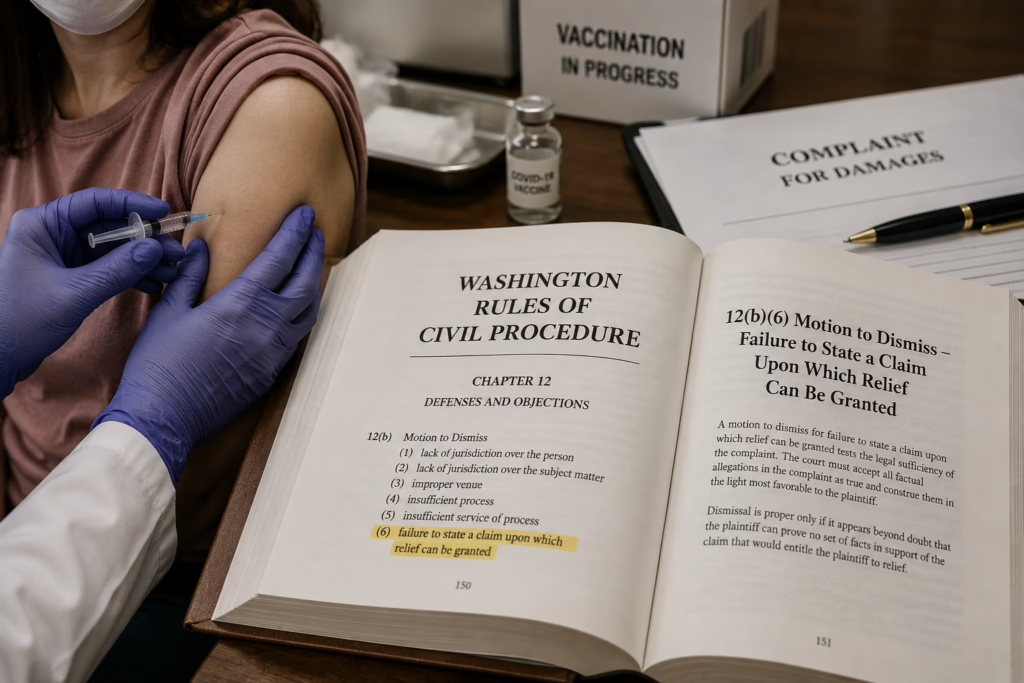
Under Washington Civil Rule 12(b)(6), a defendant may seek dismissal when the complaint fails to state a legally valid claim.
A court reviewing a CR 12(b)(6) motion generally assumes the plaintiff’s factual allegations are true. However, dismissal is still proper if the plaintiff cannot establish any set of facts that would justify legal recovery.
Washington appellate courts review CR 12(b)(6) dismissals de novo, meaning the appellate court independently reviews the legal sufficiency of the complaint.
Background of the Case
According to the opinion, Michelle Zimmerman received the Janssen COVID-19 vaccine at a vaccination clinic operated by Public Health – Seattle & King County in March 2021.
Zimmerman alleged she suffered severe physical reactions shortly after receiving the vaccine, including:
- Swelling and breathing difficulties
- Neurological symptoms
- Speech problems
- Memory loss
- Loss of mobility
- Permanent disability
She later sued King County, the City of Seattle, and public officials, asserting numerous claims including:
- Negligence
- Gross negligence
- Failure to obtain informed consent
- Intentional misrepresentation
- Negligent misrepresentation
- Failure to follow the standard of care
She also sought injunctive relief and a writ of mandamus related to vaccine reporting requirements.
Why the Court Upheld the 12(b)(6) Dismissal
The central issue involved immunity under the federal PREP Act.
PREP Act Immunity
The Public Readiness and Emergency Preparedness Act provides broad immunity to covered entities involved in administering certain medical countermeasures during public health emergencies.
The Court of Appeals concluded:
- The Janssen vaccine qualified as a covered countermeasure
- Public Health – Seattle & King County qualified as a covered entity
- The plaintiff’s claims arose from administration of the vaccine
- The PREP Act broadly barred “claims for loss” connected to vaccine administration
Because the statute applied, the court determined dismissal under CR 12(b)(6) was proper.
The Court Emphasized the Broad Scope of Immunity
One major takeaway from the opinion is how broadly courts may interpret federal immunity statutes.
Zimmerman argued immunity should not apply because the vaccine allegedly was administered improperly and certain disclosures allegedly were not provided.
The court rejected that argument.
Instead, the court explained that claims involving:
- Failure to warn
- Alleged misinformation
- Disclosure failures
- Vaccine administration procedures
still fell within the PREP Act’s broad immunity protections because they were directly related to administration of the vaccine.
The appellate court repeatedly emphasized that Congress intended the PREP Act to provide sweeping immunity during public health emergencies.
The Mandamus Claim Survived Immunity Analysis — But Still Failed
The court reached a different conclusion regarding the plaintiff’s request for mandamus relief.
Zimmerman sought orders requiring officials to:
- Submit a VAERS report
- Provide additional disclosures
- Correct reporting information
The Court of Appeals concluded those requests were not traditional “claims for loss” barred by PREP Act immunity because they sought equitable relief rather than monetary damages.
However, the mandamus claim still failed for another reason.
Why the Writ of Mandamus Failed
Washington courts treat mandamus as an extraordinary remedy.
To obtain a writ of mandamus, a plaintiff generally must prove:
- A clear legal duty to act
- No adequate legal remedy exists
- The plaintiff has a beneficial interest in the issue
The Court of Appeals concluded Zimmerman failed to establish those requirements.
No Clearly Defined Duty
The plaintiff relied on broad references to federal guidance, public health rules, and reporting obligations.
The court concluded those general references were insufficient to establish the precise, nondiscretionary duty required for mandamus relief.
Other Remedies Existed
The court also noted that alternative legal remedies potentially existed under Washington medical records statutes, which further undermined the mandamus request.
Because the mandamus standards were not satisfied, dismissal remained appropriate.
Why This Case Matters
This decision highlights several important litigation principles in Washington courts.
CR 12(b)(6) Can End Cases Early
When immunity statutes apply, courts may dismiss claims before discovery even begins.
Federal Immunity Statutes Are Powerful
The PREP Act provides broad protection to covered entities involved in vaccine administration.
Courts Strictly Apply Mandamus Standards
General allegations about regulatory duties usually are not enough to support extraordinary relief.
Legal Sufficiency Matters
Even serious factual allegations may not survive if the law does not provide a viable cause of action.
Understanding Unpublished Opinions in Washington
It is important to understand that Zimmerman v. King County is an unpublished Washington Court of Appeals opinion.
Under Washington court rules, unpublished opinions generally are not binding precedent. Courts are not required to follow unpublished decisions the same way they follow published appellate opinions.
However, unpublished opinions still provide valuable insight into:
- How Washington courts analyze CR 12(b)(6) motions
- PREP Act immunity litigation
- Mandamus standards
- Government liability claims
- Federal statutory immunity defenses
Attorneys often review unpublished opinions to better understand how courts are addressing emerging legal issues.
For readers interested in reviewing the court’s analysis directly, the full unpublished opinion in Zimmerman v. King County is available through the Washington Courts website: https://www.courts.wa.gov/opinions/pdf/876295.pdf
Contact Blanford Law Today
If you are involved in litigation concerning governmental immunity, civil procedure, or dismissal motions in Washington State, experienced legal representation is critical.
Contact Blanford Law today at ken@blanfordlaw.com or 253-720-9304 for guidance on your legal matter.
Additional Resources
Spousal Immunity Under Washington Law
Learn how Washington courts analyze spousal immunity issues and when certain claims between spouses may still proceed.
https://blanfordlaw.com/spousal-immunity-washington-law-rcw/
Regan v. McLachlan and Bail Forfeiture
This article examines a Washington case involving bail forfeiture procedures and post-judgment legal issues.
https://blanfordlaw.com/regan-v-mclachlan-bail-forfeiture/
Why Unpublished Opinions Cannot Be Cited in Washington State Courts
Review Washington’s rules regarding unpublished appellate decisions and their limited precedential value.
https://blanfordlaw.com/why-unpublished-opinions-cannot-be-cited-in-washington-state-courts/
State v. Gallaher and Deferred Sentencing
Learn how Washington courts addressed deferred sentencing issues and criminal procedure concerns in State v. Gallaher.
https://blanfordlaw.com/state-v-gallaher-deferred-sentencing/
State v. Teems and Speedy Trial Rights
This resource explains how Washington courts evaluate speedy trial violations and criminal case delays.
https://blanfordlaw.com/state-v-teems-speedy-trial/