
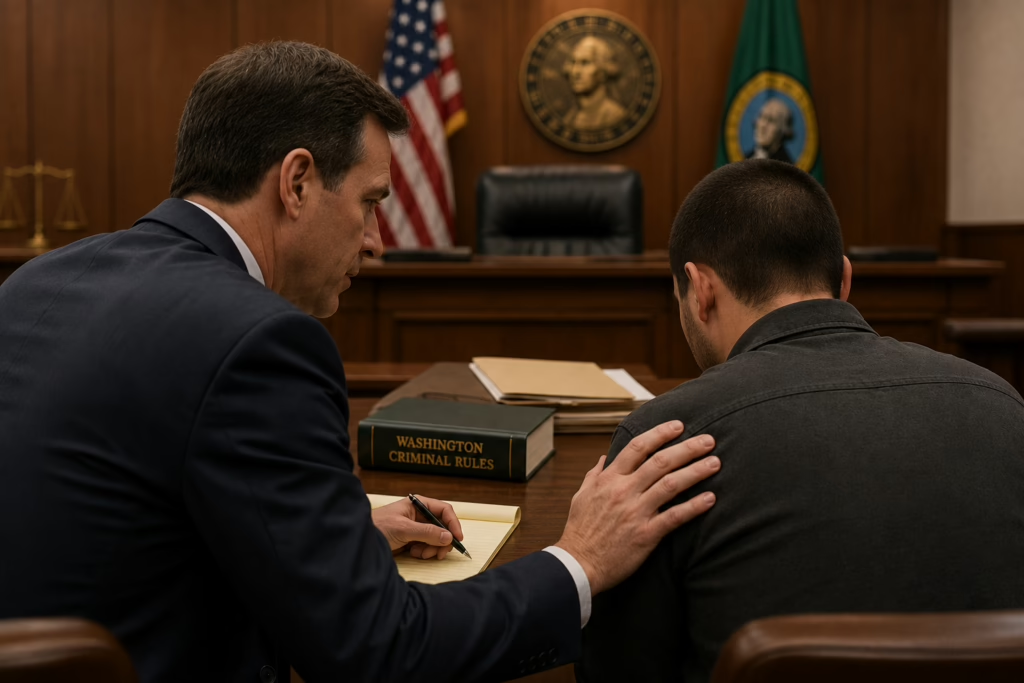
One of the most fundamental rights guaranteed to anyone accused of a crime is the right to legal representation. Both the Sixth Amendment to the United States Constitution and Article I, Section 22 of the Washington Constitutionprotect this right. In Washington, CrR 3.1 establishes when the right to a lawyer begins, when counsel must be appointed, and the responsibilities courts have to ensure defendants receive effective legal representation.
Whether someone is arrested for a misdemeanor or charged with a serious felony, Washington CrR 3.1 helps ensure that criminal defendants have meaningful access to legal counsel throughout the criminal justice process.
What Is Washington CrR 3.1?
Washington CrR 3.1 governs the right to counsel in Washington criminal proceedings. The rule addresses:
- When the right to an attorney attaches.
- When courts must appoint counsel.
- Financial eligibility for appointed counsel.
- The defendant’s right to communicate with an attorney after arrest.
- Withdrawal of defense counsel.
- Funding for investigators, expert witnesses, and other defense services.
The rule reflects Washington’s commitment to ensuring that every defendant receives a fair opportunity to defend against criminal charges.
Who Has the Right to a Lawyer?
Under CrR 3.1(a), the right to counsel applies in all criminal proceedings where a conviction could result in the loss of liberty.
This includes:
- Felonies.
- Gross misdemeanors.
- Misdemeanors that carry possible jail time.
The rule applies regardless of how the offense is labeled. If incarceration is a possible penalty, the defendant has the right to legal representation.
When Does the Right to Counsel Begin?
The Right Attaches Early
CrR 3.1 provides that the right to a lawyer begins as soon as reasonably possible after the earliest of three events:
- The defendant is taken into custody.
- The defendant appears before a judicial officer.
- Formal criminal charges are filed.
This means defendants do not have to wait until trial before requesting an attorney.
Early representation is often critical because important decisions—such as bail, questioning by law enforcement, and preservation of evidence—may occur shortly after arrest.
The Right Continues Throughout the Case
One of the most important aspects of Washington CrR 3.1 is that representation generally continues throughout the entire criminal case.
Counsel Must Remain Through All Critical Stages
Unless the court permits withdrawal and appoints substitute counsel, the attorney continues representing the defendant through:
- Arraignment.
- Pretrial hearings.
- Motion practice.
- Plea negotiations.
- Trial.
- Sentencing.
- Direct appeal.
- Certain post-conviction proceedings.
This continuity promotes effective representation and prevents unnecessary delays.
Appointment of Counsel for Indigent Defendants
Who Qualifies?
A court must appoint an attorney for any defendant who cannot afford one without causing substantial financial hardship to themselves or their family.
Importantly, CrR 3.1 makes clear that a defendant cannot be denied appointed counsel simply because:
- Family members could pay for an attorney; or
- The defendant posted bail.
Financial eligibility depends upon the defendant’s own ability to retain counsel—not the resources of friends or relatives.
Partial Payment May Be Required
Even if a defendant can contribute toward legal costs, the court may still appoint counsel.
Some counties require partial reimbursement under established repayment programs while still ensuring representation is provided.
Defendants Must Be Told About Their Rights
Advice After Arrest
CrR 3.1(c) requires officers to advise anyone taken into custody that:
- They have the right to a lawyer.
- If they cannot afford one, a lawyer will be appointed at no cost.
The warning must be communicated in language the person can reasonably understand.
Access to Counsel
A defendant who requests an attorney must also receive prompt access to:
- A telephone.
- Contact information for the public defender or appointing authority.
- Any other reasonable means necessary to communicate with counsel.
These protections help prevent unlawful interrogation and safeguard constitutional rights during the earliest stages of a criminal investigation.
Protection of Financial Information
When applying for appointed counsel, defendants often must provide financial information.
CrR 3.1 protects that information by providing that statements made to establish financial eligibility:
- Are given under oath; and
- Generally cannot be used by prosecutors against the defendant in the criminal case.
This encourages honest financial disclosures without forcing defendants to choose between exercising their right to counsel and protecting themselves from self-incrimination.
Standards for Public Defense
Washington has adopted statewide Standards for Indigent Defense designed to improve the quality of representation provided to individuals who cannot afford private counsel.
Before appointing counsel, courts must ensure that appointed attorneys comply with the Washington Supreme Court’s certification requirements for indigent defense representation.
These standards address issues such as:
- Attorney qualifications.
- Caseload limits.
- Continuing legal education.
- Effective representation.
The goal is not merely to appoint a lawyer, but to ensure defendants receive competent legal representation.
When Can a Lawyer Withdraw?
Once a criminal case has been scheduled for trial, defense counsel generally cannot withdraw without court approval.
The attorney must demonstrate good and sufficient cause, and the court must consent to the withdrawal.
This rule helps avoid unnecessary delays and protects defendants from losing legal representation shortly before trial.
Funding for Investigators and Expert Witnesses
More Than Just an Attorney
An effective defense sometimes requires additional professional assistance.
Under CrR 3.1(f), indigent defendants may request funding for:
- Private investigators.
- Forensic experts.
- Mental health experts.
- DNA specialists.
- Digital forensic analysts.
- Other necessary defense services.
Ex Parte Requests
To protect defense strategy, these requests are typically made ex parte, meaning prosecutors are not present.
If the court finds the requested services are necessary and the defendant cannot afford them, it may authorize payment.
This provision recognizes that meaningful representation often requires more than simply assigning an attorney.
Post-Conviction Representation
Recent amendments to CrR 3.1 expanded the right to counsel for certain incarcerated individuals seeking relief from convictions or sentences based upon statutes later declared unconstitutional or invalid.
In qualifying cases, individuals serving sentences may be entitled to appointed counsel during post-conviction proceedings, particularly where changes in Washington or federal law affect the legality of their conviction or offender score.
These amendments reflect Washington’s continuing effort to ensure fairness even after a conviction has become final.
Why Washington CrR 3.1 Matters
The right to counsel is often described as the foundation of a fair criminal justice system. Without legal representation, defendants may struggle to understand complex court procedures, constitutional rights, sentencing laws, and evidentiary rules.
Washington CrR 3.1 helps ensure that defendants receive legal assistance from the earliest stages of a case through sentencing, appeal, and, in some circumstances, post-conviction review. The rule also recognizes that an effective defense may require investigators, expert witnesses, and other resources—not just an attorney.
If you are under investigation, have been arrested, or have been charged with a crime, requesting an attorney immediately can help protect your rights and improve your ability to respond effectively to the allegations.
Contact Blanford Law
If you have been arrested or charged with a crime, understanding your rights under Washington CrR 3.1 is essential. Whether you qualify for appointed counsel or are considering retaining private representation, an experienced criminal defense attorney can protect your constitutional rights and guide you through every stage of the criminal process.
Contact Blanford Law today at ken@blanfordlaw.com or 253-720-9304 for guidance on your legal matter.
Additional Resources
Indigent Defense Caseload Limits in Washington
Learn how Washington’s public defense caseload standards are designed to ensure indigent defendants receive competent and effective legal representation.
https://blanfordlaw.com/indigent-defense-caseload-limits/
Right to Counsel Violations in Washington
Discover what happens when law enforcement or the court violates a defendant’s constitutional right to counsel and the legal remedies that may be available.
https://blanfordlaw.com/right-to-counsel-violation/
Washington Right to Counsel Case Law
Explore a significant Washington appellate decision addressing the scope of the constitutional right to counsel and its impact on criminal prosecutions.
https://blanfordlaw.com/washington-right-to-counsel-case/
Waiving the Right to Counsel in Washington
Understand when a defendant may choose to represent themselves, the legal requirements for a valid waiver of counsel, and the risks of proceeding without an attorney.
https://blanfordlaw.com/right-to-counsel-waiver-washington/
ER 706: Court-Appointed Expert Witnesses in Washington
Learn how Washington Evidence Rule 706 allows courts to appoint neutral expert witnesses and how expert testimony can affect criminal and civil proceedings.
https://blanfordlaw.com/er-706-washington-law/