
Will I Go to Jail After My First Court Appearance in Washington?
One of the first questions people ask after being arrested is simple: “Am I going to jail?” If you or a loved one has been arrested, your Washington first court appearance is one of the most important hearings in the entire criminal case. It is often the hearing where a judge decides whether you can go home while your case is pending or whether you must remain in custody.
Many people assume that everyone has to post bail to get out of jail. That is not true. Under Washington Criminal Rule (CrR) 3.2, the law actually begins with the presumption that most people charged with non-capital offenses should be released pending trial unless the court finds a legal reason to impose additional conditions or keep the person in custody.
Understanding how this hearing works can make a significant difference for defendants and their families.
What Is a Washington First Court Appearance?
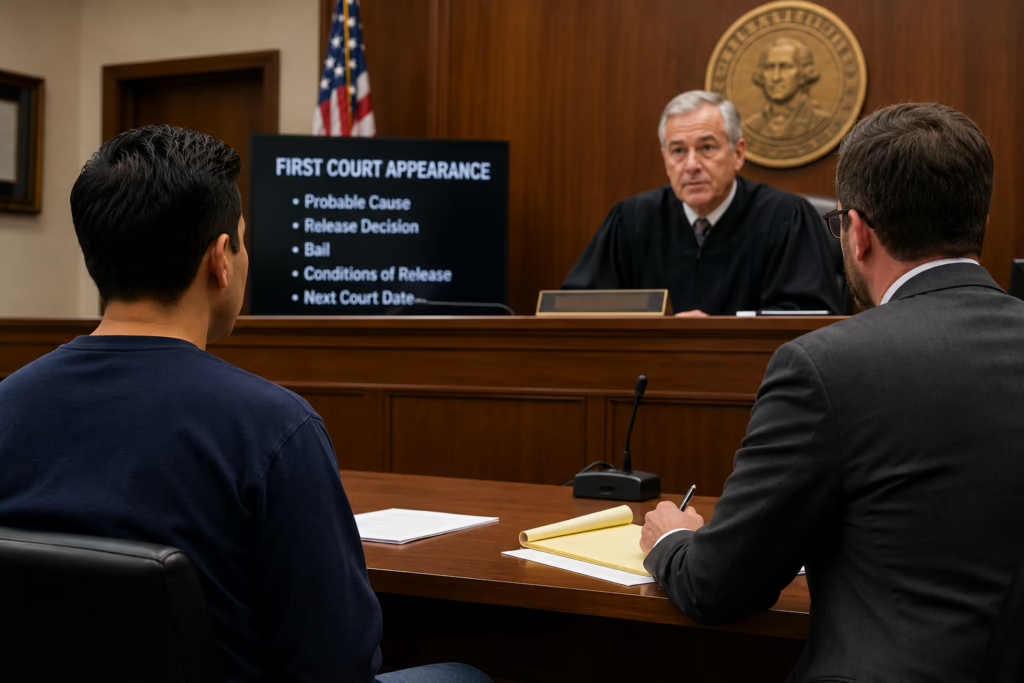
Your first court appearance usually occurs within a short time after your arrest. During this hearing, the judge is not deciding whether you are guilty or innocent.
Instead, the court focuses on questions such as:
- Was there probable cause for the arrest?
- Should you be released while the case is pending?
- Should bail be required?
- Are conditions needed to protect the public or alleged victims?
- When should your next court hearing be scheduled?
For many people, this hearing determines whether they sleep in their own bed that night or remain in jail.
Can I Be Released Without Paying Bail?
Yes.
One of the biggest misconceptions about Washington criminal law is that everyone must pay bail to leave jail. Under CrR 3.2, judges are instructed to begin with the assumption that a defendant should be released on personal recognizance, often called “PR release.”
Personal recognizance means you promise to return to court as ordered. No cash bail is required.
The judge may still impose conditions, but jail is not supposed to be the default option for most non-capital offenses.
What Does the Judge Look At?
When deciding whether someone should be released, the judge considers many different factors.
Will You Return to Court?
The court wants to know whether you are likely to appear for future hearings.
The judge may consider:
- Have you missed court before?
- Do you have a steady job?
- How long have you lived in the community?
- Do you have family nearby?
- Are you enrolled in school or treatment?
- Do you have a criminal history?
- Do you have people willing to support you?
Strong community ties often help demonstrate that someone is likely to return to court.
Is Anyone in Danger?
The judge must also consider public safety.
For example, the court may ask:
- Is this a violent offense?
- Has anyone been threatened?
- Is there a no-contact order?
- Is there evidence of witness intimidation?
- Is there a risk of additional criminal conduct?
If the judge believes someone presents a substantial danger, additional release conditions may be imposed.
What If the Judge Thinks I Might Not Come Back?
The judge does not automatically keep someone in jail.
Instead, Washington law requires the court to use the least restrictive conditions that will reasonably ensure the defendant returns to court.
Possible conditions include:
- Personal recognizance
- Cash bail
- Bond through a bail company
- Electronic home monitoring
- Curfews
- Travel restrictions
- Drug or alcohol restrictions
- Reporting to pretrial services
- No-contact orders
The goal is to use the least restrictive option that still protects the court process and public safety.
Five Things That Can Improve Your Chances of Being Released
Although every case is different, several factors often help at a release hearing.
1. Stable Employment
A steady job shows the court you have ties to the community and responsibilities waiting for you.
2. Family Support
Family members who attend court or can provide housing may strengthen your request for release.
3. A Stable Residence
Judges want confidence that they know where you will be living while your case is pending.
4. A History of Appearing in Court
People who have consistently appeared for previous court hearings generally receive more favorable consideration.
5. Early Legal Representation
An experienced criminal defense attorney can present information the judge might not otherwise hear, including employment records, family support, medical concerns, and other factors supporting release.
What If I Cannot Afford Bail?
Many families panic after hearing a large bail amount.
Fortunately, the first bail decision is not always the final one.
Under CrR 3.2, defendants may request a bail review hearing. During that hearing, the judge may consider:
- Financial resources
- Employment
- Housing
- Family obligations
- Medical conditions
- Community support
- Compliance with previous court orders
If circumstances justify it, the court may reduce bail or modify the conditions of release.
What Families Should Do Immediately
If someone you care about has been arrested, there are practical steps you can take before the first appearance.
Gather information showing the person:
- Has a job
- Has stable housing
- Has family support
- Has transportation
- Has medical needs requiring treatment
- Has complied with previous court orders
Providing this information to the defense attorney before the hearing can make a meaningful difference.
Common Questions About Getting Out of Jail
How soon will I see a judge?
Most defendants appear before a judge within a short time after arrest, although the exact timing depends on when the arrest occurred and court scheduling.
Can I be released the same day?
Yes. Many defendants are released immediately after the first appearance if the judge orders personal recognizance or if bail is promptly posted.
What happens if I miss court?
Missing court can result in a bench warrant, forfeiture of bail, and additional criminal consequences. Always appear unless the court excuses your appearance.
Can the judge change my bail later?
Yes. Either side may ask the court to review and modify release conditions if circumstances change.
Why Criminal Rule 3.2 Matters
Washington Criminal Rule 3.2 protects the principle that people charged with crimes are presumed innocent until proven guilty. Rather than requiring everyone to remain in jail, the rule directs judges to carefully balance community safety with the defendant’s right to pretrial release.
Every case is unique. Factors such as criminal history, community ties, prior court appearances, and the nature of the charges all influence the judge’s decision. Understanding how these factors work can help defendants and their families prepare for one of the most important hearings in the criminal justice process.
Contact Blanford Law for Help
If you or someone you love has been arrested, the decisions made during the first court appearance can have lasting consequences. An experienced defense attorney can advocate for release, challenge unnecessary conditions, and seek bail reductions when appropriate.
Contact Blanford Law today at ken@blanfordlaw.com or 253-720-9304 for guidance on your legal matter.
Additional Resources
To learn more about bail, release conditions, offender scores, and related areas of Washington criminal law, explore these additional resources from Blanford Law:
- Washington Bail and Recognizance Law
Learn how Washington courts determine bail, when defendants may qualify for release on personal recognizance, and the legal principles governing pretrial release. - RCW 10.19.090 – Forfeiture of Recognizance
Understand when a recognizance or bail bond may be forfeited if a defendant fails to appear in court or violates the conditions of release. - RCW 10.19.110 – Recognizances in Washington
Explore Washington law governing recognizances, the obligations imposed after release, and the consequences of failing to comply with court orders. - RCW 10.19.060 – Recording Bail with the Clerk’s Office
Learn why Washington law requires bail to be promptly recorded with the court clerk and how this process protects the integrity of the criminal justice system. - Out-of-State Bail Bond Agents in Washington
Find out how out-of-state bail bonds work, what to expect if a defendant is arrested away from home, and how a bail bond agent may assist in the release process.