
Understanding Washington Hit and Run Duties
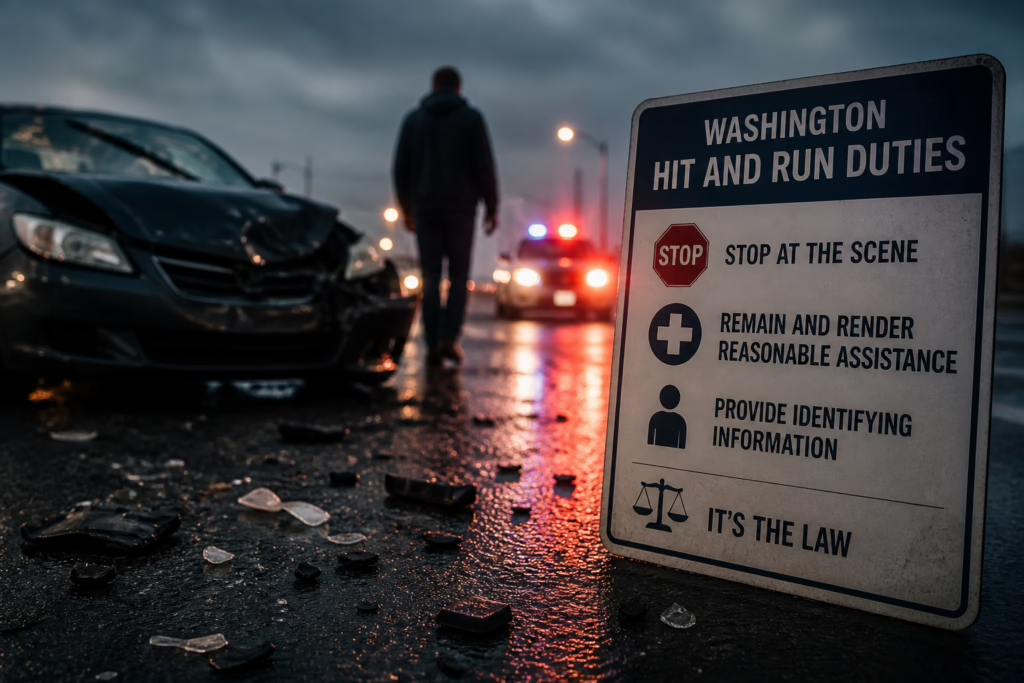
Under Washington hit and run duties, drivers involved in an accident must stop, remain at the scene, and provide reasonable assistance to anyone injured. These obligations apply even in chaotic or emotional situations.
The Washington Court of Appeals reinforced these rules in State v. Oya (2016), showing that leaving the scene without fulfilling these duties can lead to criminal conviction—even if the driver disputes how the accident occurred.
What Are Your Legal Duties After an Accident?
Washington Hit and Run Duties Explained
Washington law requires drivers to:
- Immediately stop at the scene
- Remain until obligations are fulfilled
- Provide identifying information
- Render reasonable assistance to injured persons
Failing to meet any of these duties may result in a hit and run charge.
What Happened in State v. Oya?
Failure to Stop and Assist
In Oya, the defendant struck a pedestrian during an argument and then left the scene without providing assistance. The victim suffered visible injuries.
The defendant later challenged his conviction, arguing that the evidence was insufficient.
How the Court Applied Washington Hit and Run Duties
Leaving the Scene Is Enough
The Court of Appeals upheld the conviction. It focused on whether the defendant:
- Failed to remain at the scene
- Failed to provide aid
The court found that:
- The victim showed clear signs of injury
- The defendant did not stay or help
That was enough to satisfy the elements of hit and run under Washington law.
What Counts as “Reasonable Assistance”?
More Than Just Stopping
Drivers must do more than briefly stop. Reasonable assistance may include:
- Calling emergency services
- Checking on the injured person
- Taking steps to ensure medical help is provided
Simply leaving—even if the situation is confusing or emotional—can result in criminal liability.
Additional Charges Can Make Things Worse
Eluding and Endangerment
In Oya, the situation escalated when the defendant later attempted to elude police, and a passenger was endangered during that pursuit.
While separate from the hit and run charge, this shows how quickly legal consequences can grow after leaving an accident scene.
Key Takeaways on Washington Hit and Run Duties
- You must stop and remain at the scene
- You must provide reasonable assistance to injured persons
- Visible injury increases your legal obligation
- Leaving the scene—even briefly—can lead to criminal charges
- State v. Oya confirms courts strictly enforce these duties
What Should You Do After an Accident?
If you are involved in an accident:
- Stay at the scene
- Call 911 if anyone may be injured
- Exchange information
- Cooperate with authorities
Taking these steps can protect both safety and your legal rights.
Contact Blanford Law
Contact Blanford Law today at ken@blanfordlaw.com or 253-720-9304 for guidance on your legal matter.
Additional Resources
State v. Vela – Hit and Run in Washington
A case analysis explaining how Washington courts apply hit and run laws in real situations.
https://blanfordlaw.com/state-v-vela-hit-and-run/
RCW 46.52.020 – Washington Hit and Run Law
Breakdown of the statute that defines driver duties after an accident in Washington.
https://blanfordlaw.com/rcw-46-52-020-washington-law/
Leaving Children in Cars Under Washington Law
Explains legal responsibilities and potential criminal liability when safety is at risk.
https://blanfordlaw.com/leaving-children-in-cars-washington-law/
Pretextual Traffic Stops in Washington (Orphaned Content – Used)
Discusses when law enforcement can stop a driver and how traffic violations lead to criminal investigations.
https://blanfordlaw.com/when-an-officer-stops-someone-for-a-traffic-infraction-with-the-intent-of-investigating-a-crime-is-that-a-pretextual-stop/
Elderly Driver Responsibility After a Crash (Orphaned Content – Used)
Explores liability and legal responsibilities following accidents involving older drivers.
https://blanfordlaw.com/elderly-driver-responsibility-crash/