
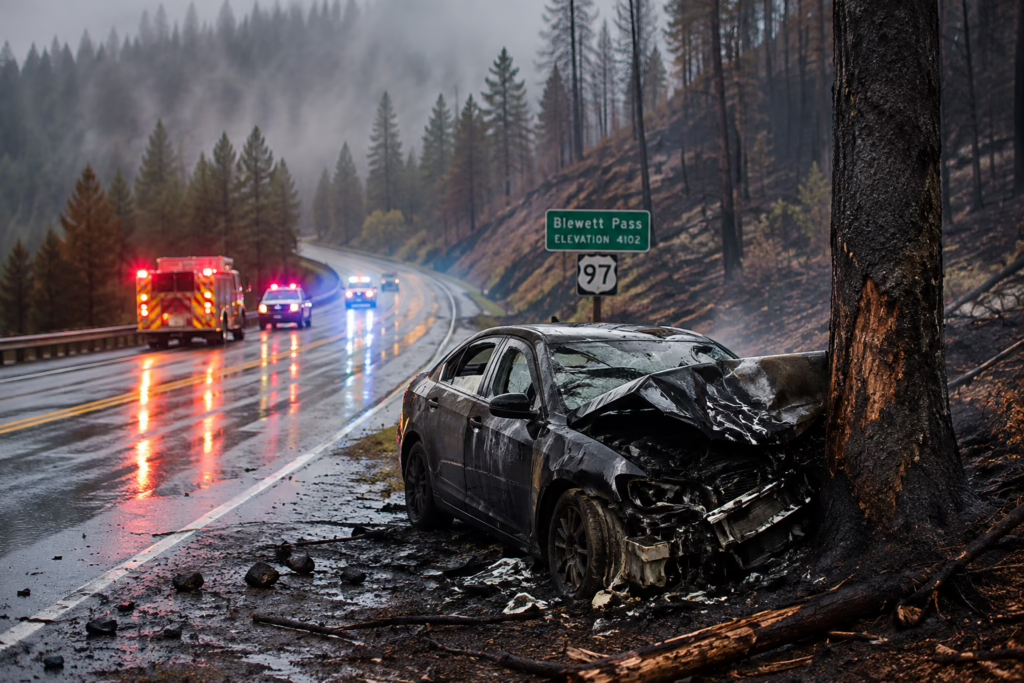
A recent crash on U.S. Highway 97 near Blewett Pass has drawn significant attention after authorities reported that a vehicle struck a tree, caught fire, and ignited a wildfire that burned approximately 35 acres and temporarily closed the highway. According to the Washington State Patrol, the 18-year-old driver is expected to face a charge of second-degree negligent driving.
While every case depends on its own facts, this incident provides an opportunity to understand what Washington negligent driving means and what legal consequences may follow after a serious crash.
What Is Washington Negligent Driving?
Under Washington law, negligent driving occurs when a person operates a motor vehicle in a manner that is both negligent and endangers or is likely to endanger another person or property.
Second-degree negligent driving is generally considered a traffic infraction rather than a criminal misdemeanor. Unlike reckless driving, prosecutors do not have to prove the driver intentionally disregarded safety. Instead, they must show the driver’s conduct failed to exercise ordinary care.
Examples may include:
- Driving too fast for road conditions.
- Losing control on curves.
- Distracted driving.
- Failing to maintain proper lane control.
- Other careless driving behaviors that create a safety risk.
Each case depends on the specific facts investigated by law enforcement.
How Is Negligent Driving Different From Reckless Driving?
Washington Negligent Driving vs. Reckless Driving
Washington law distinguishes between negligent driving and reckless driving based largely on the driver’s mental state and the seriousness of the conduct.
Negligent driving generally involves careless behavior that creates a danger.
Reckless driving requires evidence that the driver operated the vehicle with willful or wanton disregard for the safety of others.
Because reckless driving is a criminal offense, the potential penalties are substantially more severe than those associated with second-degree negligent driving.
Can a Driver Face Additional Liability After a Crash?
Yes.
Even if a driver receives only a traffic infraction, a collision can still lead to significant legal consequences.
Potential issues may include:
- Property damage claims.
- Personal injury lawsuits.
- Insurance disputes.
- Increased insurance premiums.
- Liability for damage to public property.
- Potential reimbursement claims for emergency response costs in certain circumstances.
When a collision causes a wildfire or other widespread damage, the financial consequences can become much larger than the traffic citation itself.
Does Causing a Wildfire Automatically Mean Criminal Charges?
No.
Simply causing a wildfire does not automatically result in criminal charges beyond any applicable traffic violations.
Investigators examine factors such as:
- Whether laws were violated.
- The driver’s actions before the collision.
- Road and weather conditions.
- Mechanical failures.
- Evidence of impairment.
- Whether the conduct was merely negligent or rose to criminal recklessness.
According to public reports, the Washington State Patrol stated there was no indication the driver was impaired, but second-degree negligent driving charges are pending. As with any pending matter, the driver is presumed innocent unless and until the allegations are proven.
Why Legal Representation Matters
Even traffic infractions can have lasting consequences.
A citation may affect:
- Driving record.
- Insurance rates.
- Future employment opportunities.
- Commercial driving privileges.
- Civil litigation arising from the same incident.
An experienced Washington traffic attorney can evaluate the evidence, explain available options, and help protect your legal rights.
Contact Blanford Law
If you have been cited for negligent driving or are facing legal issues after a motor vehicle accident in Washington, understanding your rights is essential.
Contact Blanford Law today at ken@blanfordlaw.com or 253-720-9304 for guidance on your legal matter.
Additional Resources
Swauk Fire Near Cle Elum: Legal Issues and Liability
Learn about the legal implications that can arise when a wildfire is linked to human activity, including potential civil and criminal consequences under Washington law.
https://blanfordlaw.com/swauk-fire-cle-elum/
Negligent Driving in Washington State
This guide explains Washington’s negligent driving laws, the differences between first- and second-degree negligent driving, and the potential penalties drivers may face.
https://blanfordlaw.com/negligent-driving-washington-state/
Negligent Driving in Bellevue
Although focused on Bellevue, this article provides practical information about negligent driving citations, legal defenses, and what drivers can expect in Washington courts.
https://blanfordlaw.com/negligent-driving-bellevue/
State v. Travis: Washington Analysis of Negligent Driving and Resisting Arrest
Explore how the Washington Court of Appeals analyzed negligent driving and resisting arrest in State v. Travis, offering insight into how courts interpret these offenses.
https://blanfordlaw.com/state-v-travis-washington-analysis-for-negligent-driving-and-resisting-arrest/
State v. Amurri: Reckless Driving Case Analysis
Read about State v. Amurri and how Washington courts distinguish reckless driving from lesser traffic offenses such as negligent driving.
https://blanfordlaw.com/state-v-amurri-reckless-driving/