
Being arrested is stressful, but many people are surprised to learn they are not automatically required to post bail before being released. Under Washington release on personal recognizance rules found in Criminal Rule (CrR) 3.2, the law begins with the presumption that most people charged with a crime should be released while their case is pending.
However, that presumption is not absolute. During a defendant’s first court appearance, a judge must decide whether release without bail is appropriate or whether additional conditions are necessary to protect the community or ensure the defendant returns to court. Understanding this process can help defendants and their families prepare for one of the most important hearings in a criminal case.
What Happens at a First Appearance?
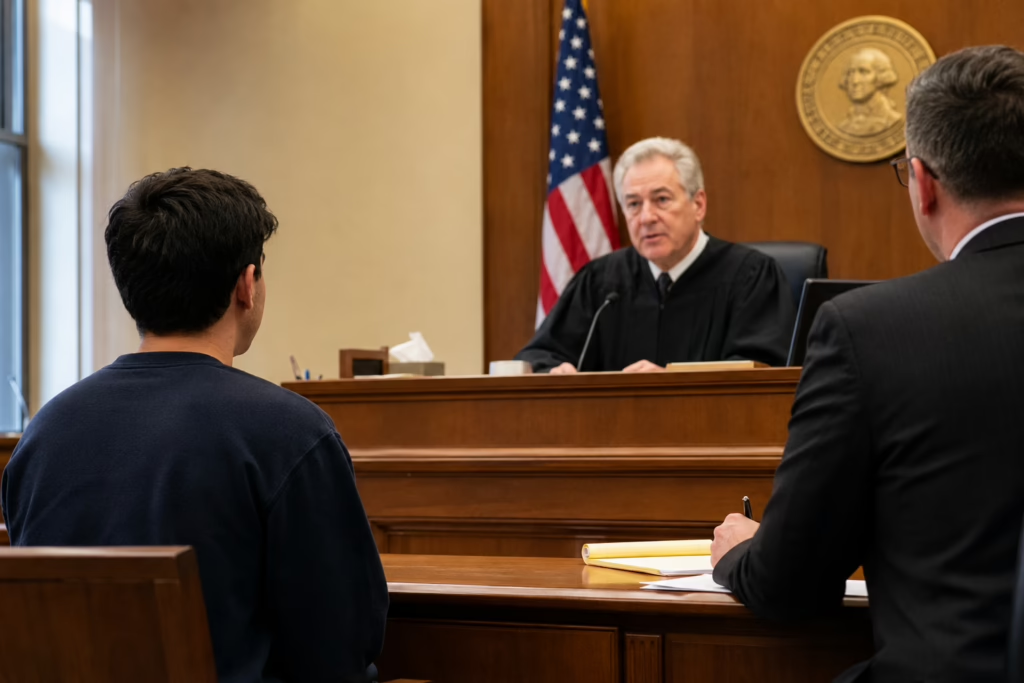
A first appearance—sometimes called an initial appearance or preliminary appearance—is typically the first time a defendant appears before a judge after an arrest.
At this hearing, the court addresses several important issues, including:
- Whether probable cause exists for the arrest
- Whether the defendant should be released pending trial
- Whether bail should be imposed
- Whether conditions of release should be ordered
- Scheduling future court dates
For many defendants, this hearing determines whether they return home while their case is pending or remain in custody.
Washington Release on Personal Recognizance Under CrR 3.2
CrR 3.2 creates a strong presumption that defendants charged with non-capital offenses should be released on their personal recognizance, often called “PR release.”
Release on personal recognizance means the defendant signs a promise to return to court when required. No cash bail is posted, and no bond is necessary unless the judge determines additional conditions are appropriate.
The rule reflects an important principle of Washington law: individuals are presumed innocent until proven guilty. Detention before trial is intended to be the exception rather than the rule.
When Can a Judge Require Bail?
Although release is presumed, the court may impose bail or other conditions if it finds either:
The Defendant May Not Return to Court
A judge may conclude that personal recognizance alone will not reasonably assure the defendant’s future appearance.
When making that decision, the court considers factors such as:
- Prior failures to appear
- Employment history
- Family and community ties
- Length of residence in Washington
- Criminal history
- Participation in school or treatment programs
- Overall reliability
Rather than immediately imposing high bail, CrR 3.2 requires judges to use the least restrictive conditions that will reasonably ensure future appearances.
The Defendant May Present a Safety Risk
The court may also impose conditions if prosecutors demonstrate a substantial danger that the defendant may:
- Commit a violent offense
- Threaten or intimidate witnesses
- Contact alleged victims
- Tamper with evidence
- Violate a protection order or no-contact order
Again, the rule encourages judges to use the least restrictive conditions necessary to protect public safety.
Conditions a Judge May Order Instead of Jail
Many people assume the only choices are jail or bail. CrR 3.2 provides many alternatives.
Depending on the circumstances, a judge may order:
- Electronic home monitoring
- Travel restrictions
- No-contact orders
- Firearm restrictions
- Drug or alcohol restrictions
- Supervision by a pretrial services agency
- Reporting requirements
- Curfews
- Unsecured or secured bonds
These conditions are designed to balance public safety with the defendant’s constitutional rights.
What If Bail Is Set Too High?
Families are often shocked by the amount of bail ordered at a first appearance. Fortunately, that decision is not always final.
Under CrR 3.2, a defendant who remains in custody because bail cannot be posted may request a bail review hearing. At that hearing, both sides may present additional information about:
- Employment
- Financial resources
- Family responsibilities
- Community ties
- Compliance with previous court orders
- Other circumstances supporting release
If appropriate, the court may reduce bail or modify the conditions of release.
Why Experienced Legal Representation Matters
The first appearance often occurs within hours of an arrest. Decisions made during that hearing can affect the entire criminal case.
An experienced criminal defense attorney can present information showing that a client has strong community ties, stable employment, family support, and other factors favoring release. Counsel can also challenge unnecessarily restrictive conditions or excessive bail when appropriate.
For many defendants, effective advocacy at the beginning of the case can mean the difference between preparing a defense from home or remaining in custody while awaiting trial.
Understanding Your Rights Under CrR 3.2
Washington’s criminal rules recognize that pretrial detention should not be automatic. CrR 3.2 begins with the presumption that individuals charged with most crimes should be released unless the court finds specific reasons to impose additional restrictions.
Every case is different. The court must evaluate the facts presented, the defendant’s background, and any public safety concerns before deciding the appropriate conditions of release.
Understanding how this process works allows defendants and their families to better prepare for one of the earliest—and often most important—stages of a criminal prosecution.
Call to Action
Contact Blanford Law today at ken@blanfordlaw.com or 253-720-9304 for guidance on your legal matter.
Additional Resources
If you’d like to learn more about bail, recognizance, and related Washington laws, these articles provide additional information:
- Washington Bail and Recognizance LawLearn the fundamentals of Washington’s bail and recognizance laws, including when a court may release a defendant without requiring cash bail.
- RCW 10.19.090 – Forfeiture of RecognizanceUnderstand when a recognizance or bail bond may be forfeited if a defendant fails to comply with court-ordered conditions or misses a required court appearance.
- RCW 10.19.110 – Washington Bail ProceduresExplore how Washington law governs the enforcement and administration of bail obligations after a defendant has been released.
- RCW 10.19.110 – Recognizances in WashingtonRead a detailed discussion of Washington’s recognizance statute and how it applies to defendants released pending trial.
- RCW 10.19.060 – Recording Bail with the Clerk’s OfficeLearn why Washington law requires law enforcement officers to promptly report and record bail with the clerk of the court and why this process protects defendants’ rights.