
Washington RPC 4.4: Respect for Rights of Third Persons
Attorneys have a duty to zealously represent their clients, but that duty has important ethical limits. Washington RPC 4.4 reminds lawyers that effective advocacy cannot come at the expense of the legal rights of others. The rule prohibits attorneys from using tactics intended solely to harass or burden third parties and establishes ethical obligations when lawyers receive documents or electronic information that were sent by mistake.
As legal practice increasingly relies on electronic communications and digital evidence, understanding RPC 4.4 has become more important than ever.
What Is Washington RPC 4.4?
Washington Rule of Professional Conduct 4.4 contains two primary requirements.
First, a lawyer may not:
- Use methods that have no substantial purpose other than to embarrass, delay, or burden another person.
- Obtain evidence through methods that violate the legal rights of third parties.
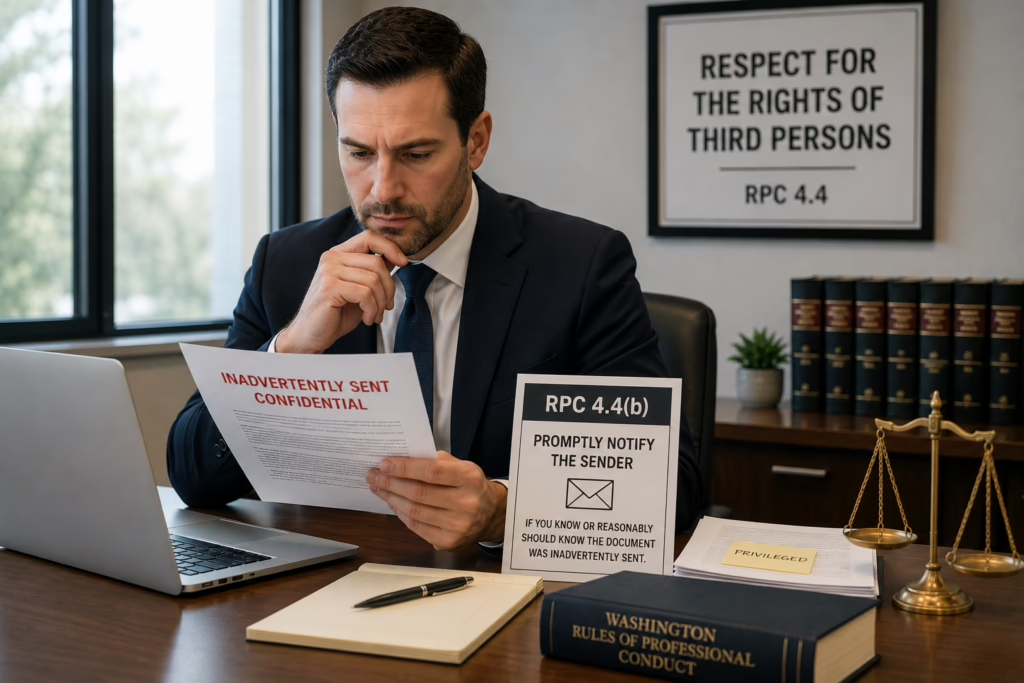
Second, if a lawyer receives a document or electronically stored information (ESI) that was inadvertently sent, the lawyer must promptly notify the sender once the lawyer knows—or reasonably should know—that the transmission was accidental.
These provisions promote fairness while protecting privacy, privilege, and the integrity of the legal process.
Lawyers Must Respect the Rights of Third Persons
Lawyers are expected to advocate vigorously, but advocacy does not justify abusive tactics.
Comment 1 explains that attorneys must subordinate many competing interests to those of their clients. However, that responsibility does not allow lawyers to ignore the legal rights of witnesses, opposing parties, employees, or other third persons.
Examples of improper conduct may include:
- Using discovery solely to harass someone.
- Repeatedly contacting a witness for the purpose of intimidation.
- Seeking evidence through unlawful or deceptive means.
- Interfering with privileged communications.
- Deliberately causing unnecessary expense or delay.
Every litigation strategy should serve a legitimate legal purpose.
Washington RPC 4.4 and Harassment
Legitimate Advocacy vs. Improper Conduct
Not every aggressive litigation tactic violates Washington RPC 4.4.
The rule focuses on conduct that has no substantial purpose other than embarrassing, delaying, or burdening another person.
For example, filing legitimate motions, conducting depositions, or requesting relevant discovery generally serves a valid legal purpose. By contrast, using legal procedures simply to increase costs, intimidate witnesses, or embarrass individuals may violate the rule.
Washington courts expect attorneys to distinguish between vigorous representation and unnecessary harassment.
Accidentally Received Documents and Electronic Information
One of the most significant portions of RPC 4.4 concerns mistakenly transmitted information.
Lawyers frequently exchange:
- Emails
- Contracts
- Discovery materials
- Medical records
- Financial records
- Electronic files
- Metadata embedded within documents
Mistakes happen. An email may be sent to the wrong recipient, confidential documents may be attached accidentally, or privileged metadata may be included in an electronic file.
When a lawyer knows or reasonably should know that material was sent inadvertently, RPC 4.4(b) requires prompt notification to the sender.
What Is Electronically Stored Information?
Comment 2 makes clear that “electronically stored information” (ESI) extends far beyond email.
Examples include:
- Word processing documents.
- PDF files.
- Spreadsheets.
- Text messages.
- Cloud-based files.
- Embedded metadata.
- Digital photographs.
- Other electronically readable information.
Metadata—the hidden information stored within electronic documents—may itself trigger the rule if the receiving lawyer knows it was inadvertently transmitted.
Does the Lawyer Have to Return the Documents?
RPC 4.4 requires prompt notice to the sender, but it does not answer every question.
The rule does not determine:
- Whether privileged information has been waived.
- Whether documents must be returned.
- Whether electronic files must be deleted.
- Whether a lawyer may review inadvertently received materials.
Those issues are generally governed by substantive law, court orders, or other applicable legal authority.
Comment 3 recognizes that some lawyers voluntarily return or delete mistakenly received information before reviewing it, even when the law does not require that result. Such decisions are matters of professional judgment.
Immigration-Related Intimidation
Washington includes an additional comment addressing immigration-related misconduct.
Comment 4 explains that a lawyer violates RPC 4.4(a) when the attorney raises or threatens to report a person’s immigration status for the purpose of:
- Intimidating a witness.
- Coercing a party.
- Discouraging participation in litigation.
- Obstructing the administration of justice.
For example, threatening to contact immigration authorities solely to pressure someone into abandoning a civil claim would generally violate the rule.
The Washington Supreme Court recognized the importance of preventing such conduct because it can interfere with the fair administration of justice and discourage individuals from participating in legal proceedings.
Respecting Privileged Relationships
Washington’s comments also address communications involving individuals assisted by Limited License Legal Technicians (LLLTs).
Although the LLLT program has since been sunset, Comment 5 emphasizes an important principle that remains relevant: lawyers must respect privileged professional relationships and avoid intruding upon confidential communications protected by law.
Practical Examples
Washington RPC 4.4 frequently applies during:
- Civil litigation.
- Discovery disputes.
- Electronic discovery (e-discovery).
- Business litigation.
- Employment cases.
- Personal injury matters.
- Family law proceedings.
- Government investigations.
As electronic communications become increasingly common, attorneys should implement procedures for identifying and responding appropriately to inadvertently received information.
Why Washington RPC 4.4 Matters
Professional advocacy requires more than pursuing a client’s objectives. It also requires respecting the legal rights of everyone involved in the legal process.
Washington RPC 4.4 promotes fairness by preventing lawyers from using abusive tactics, protecting privileged communications, and encouraging ethical handling of mistakenly transmitted information. These standards strengthen confidence in Washington’s legal system while helping attorneys balance zealous representation with professional responsibility.
Contact Blanford Law
If you have questions about Washington legal ethics, attorney conduct, or the Rules of Professional Conduct, contact Blanford Law today at ken@blanfordlaw.com or 253-720-9304 for guidance on your legal matter.
Additional Resources
- RCW 5.50.010 – Electronic Signatures in Washington – Learn how Washington law recognizes electronic signatures and electronic records in legal and business transactions.
- Washington RPC 1.18 Comments – Explore the ethical duties lawyers owe to prospective clients, including confidentiality and conflicts of interest before representation begins.
- Highway Message Ban 2026 – Review Washington’s 2026 restrictions on certain highway message displays and what the new law means for drivers and businesses.
- Kitsap Court ePortal Guide – Find step-by-step guidance for using the Kitsap County Court ePortal to access case information, file documents, and manage court records electronically.