
Washington Statute of Repose in RCW 4.16.350(3)
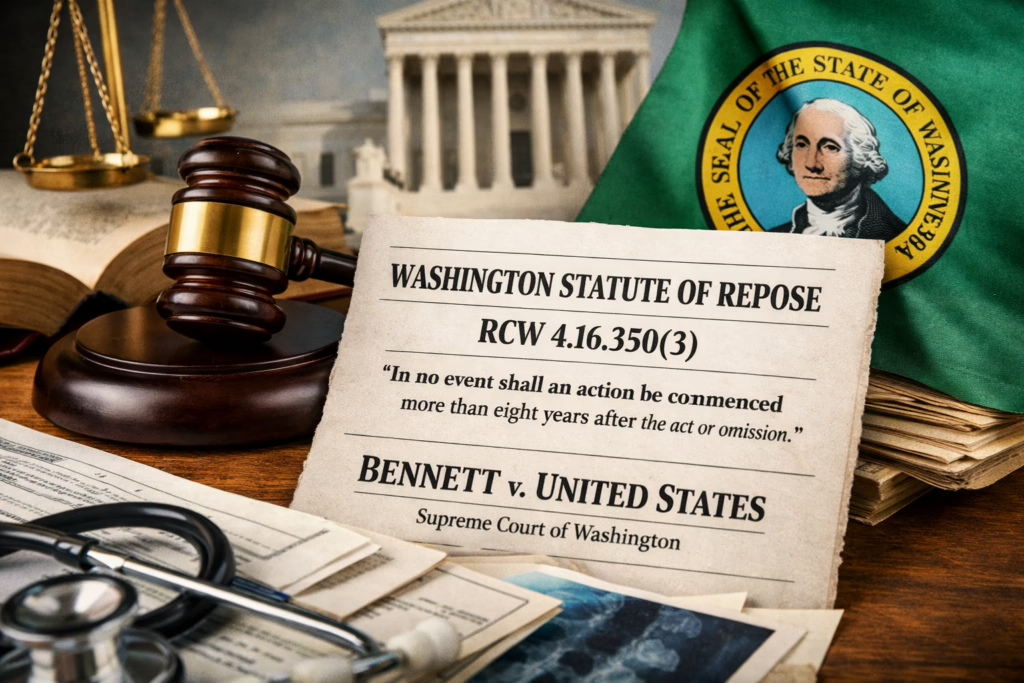
The Washington statute of repose for medical malpractice appears in RCW 4.16.350(3). The official Washington Legislature page is here: RCW 4.16.350. The RCW site describes the Revised Code of Washington as the compilation of Washington’s permanent laws now in force.
For years, RCW 4.16.350(3) set three timing rules for many medical malpractice claims. It used a three-year limitation period, a one-year discovery rule, and an outside eight-year cutoff. The Washington Supreme Court described that final cutoff as a statute of repose. The court explained that the statute said that “in no event” could an action be commenced more than eight years after the alleged act or omission.
That outside deadline created a serious problem for patients with delayed diagnoses. A statute of repose does not wait for a patient to discover the injury. It runs from the defendant’s act. Because of that structure, the law could erase a claim before the patient had a fair chance to bring it. The Washington Supreme Court focused on that problem in Bennett v. United States, filed on December 7, 2023.
How Bennett Changed the Washington Statute of Repose
In Bennett, the plaintiff alleged that medical negligence in 2009 caused a traumatic brain injury. According to the opinion, doctors did not diagnose the cause of her condition until 2017. By then, more than eight years had passed. The United States argued that RCW 4.16.350(3) barred the claim. The case reached the Washington Supreme Court on certified questions about the state constitution.
The court held that RCW 4.16.350(3)’s eight-year statute of repose for medical malpractice actions violates article I, section 12 of the Washington Constitution. The court did not reach the separate access-to-courts question because the article I, section 12 ruling resolved the issue. The Washington Courts opinion page lists Bennett v. United States, docket number 101,300-1, with a file date of December 7, 2023.
Why the Court Rejected RCW 4.16.350(3)
The court treated medical malpractice claims as common law negligence claims. It then asked whether the statute granted an immunity or burdened a fundamental right of state citizenship. The court concluded that the statute of repose did exactly that because it blocked some plaintiffs from pursuing common law claims while protecting certain defendants. It also found that the statute’s structure and exceptions did not satisfy Washington’s “reasonable ground” test under article I, section 12.
The court did not say the legislature lacks power to set deadlines. It said the legislature must do so within constitutional limits. That point matters. Washington can regulate filing periods, but it cannot extinguish a negligence claim in a way that violates the state constitution.
What Bennett Means for Medical Malpractice Claims
The Washington statute of repose no longer works as the old eight-year absolute bar described in Bennett. That matters most in cases involving latent injuries, delayed symptoms, or complex diagnoses. When a patient cannot reasonably discover the cause of an injury within eight years, the old statute could wipe out the claim before it truly existed. The court rejected that result.
Patients should not read Bennett as a reason to wait. Deadlines still matter in every malpractice case. Medical records can disappear. Witness memories can fade. Providers and insurers still defend these cases aggressively. Early review also helps a lawyer evaluate causation, damages, and expert support.
Washington Statute of Repose Issues Still Require Fast Action
Even after Bennett, medical malpractice timing issues remain technical. A claim may still face limitation defenses, procedural hurdles, or federal rules in the right case. For that reason, anyone who suspects medical negligence should get legal advice quickly. Fast action protects evidence and reduces avoidable risk.
Why This Decision Matters
Bennett matters because it puts constitutional fairness ahead of an arbitrary outer deadline. The court recognized a practical truth. Some injuries take years to connect to negligent care. When that happens, a rigid repose rule can shield a provider from suit before the patient learns what happened. The Washington Supreme Court held that article I, section 12 does not allow that result under RCW 4.16.350(3).
Call to Action
Contact Blanford Law today at ken@blanfordlaw.com or 253-720-9304 for guidance on your legal matter.
Internal Resources
- Estep v. Hamilton: Navigating the Complexities of Legal Agency in Malpractice Claims
https://blanfordlaw.com/estep-v-hamilton-navigating-the-complexities-of-legal-agency-in-malpractice-claims/
Explains how agency relationships can affect liability in Washington medical malpractice cases. - Washington Personal Injury Statute Overview
https://blanfordlaw.com/washington-personal-injury-statute/
Provides a breakdown of key deadlines and legal standards for personal injury claims in Washington. - Negligence Tolling and Amended Complaint Rules
https://blanfordlaw.com/negligence-tolling-amended-complaint/
Discusses how tolling doctrines and amended pleadings impact claim timing. - Childhood Abuse Statute of Limitations in Washington
https://blanfordlaw.com/childhood-abuse-statute-limitations/
Reviews extended timelines and exceptions for childhood abuse claims. (used) - Client Testimonials | Blanford Law
https://blanfordlaw.com/the-firm/testimonials/
Highlights real client experiences and case outcomes. (used)