
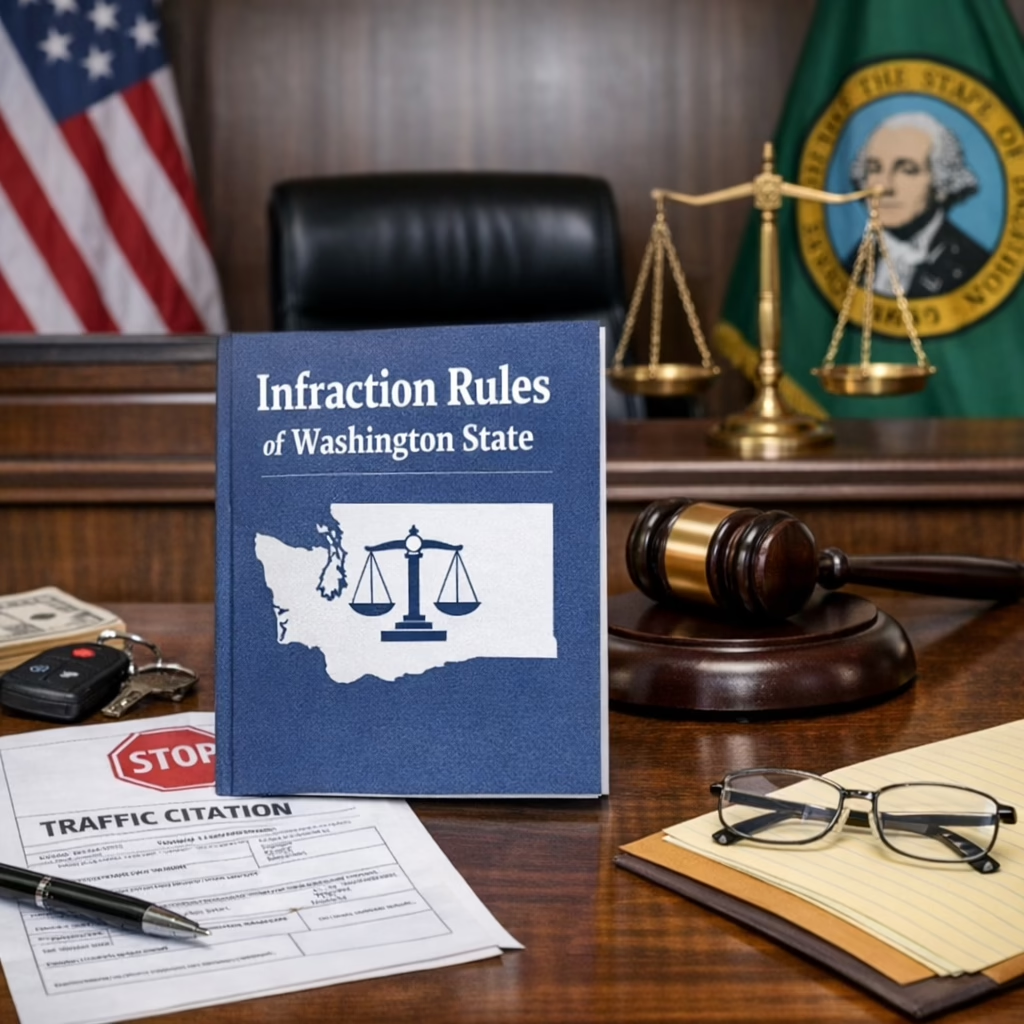
When you receive a traffic ticket in Washington State, the process that follows is governed by the Washington traffic infraction rules, formally known as the Infraction Rules for Courts of Limited Jurisdiction (IRLJ). These rules determine what happens after you are cited, how hearings are conducted, and what rights you have to challenge an infraction.
Understanding how these rules work can make the difference between simply paying a fine and protecting your driving record.
What Are Washington Traffic Infraction Rules?
Washington traffic infractions are governed primarily by:
Traffic infractions are civil violations, not criminal offenses. That means:
- No jail time
- No jury trial
- Lower burden of proof (preponderance of the evidence)
- Monetary penalties and license consequences instead
Courts of limited jurisdiction include municipal courts and district courts throughout Washington, including Pierce, King, Kittitas, and surrounding counties.
Responding to a Traffic Infraction in Washington
Under Washington traffic infraction rules, you generally have 15 days to respond to a citation. You have three options:
1. Pay the Fine
Paying the fine is treated as a finding that you committed the infraction.
This can:
- Add points to your driving record
- Increase insurance premiums
- Affect CDL holders more severely
2. Request a Mitigation Hearing
At a mitigation hearing:
- You admit the violation
- You explain the circumstances
- The judge may reduce the penalty
Important: The violation still appears on your driving record.
3. Request a Contested Hearing
A contested hearing is where you challenge the ticket.
At this hearing:
- The State must prove the infraction
- The standard is “preponderance of the evidence”
- Evidence often includes the officer’s sworn statement
- You may present evidence and legal defenses
For many drivers, this is where legal representation becomes valuable.
Discovery Rights Under Washington Traffic Infraction Rules
One of the most important parts of the IRLJ is the right to request discovery.
Under IRLJ 3.1:
- You can request the officer’s sworn statement
- You may obtain evidence the State intends to use
- You must request discovery within specific deadlines
Failure by the prosecution to provide proper discovery can result in dismissal in some cases.
This is often where experienced traffic attorneys identify procedural defects.
What Happens If You Ignore a Ticket?
If you fail to respond:
- The court can enter a default judgment
- Your license may be suspended
- Additional penalties and collections can occur
Washington courts take failure to respond seriously. Ignoring a citation can create much larger problems than the original ticket.
Can a Traffic Infraction Be Dismissed?
Yes — but not automatically.
Common grounds for dismissal include:
- Incomplete or defective officer statements
- Failure to provide timely discovery
- Officer nonappearance (in limited situations)
- Legal insufficiency of the evidence
Each case depends on facts and procedural compliance under the Washington traffic infraction rules.
How Infractions Impact Your Driving Record
Even though infractions are civil matters, they can have long-term consequences:
- Increased insurance premiums
- CDL employment consequences
- Accumulation toward license suspension
- Court collection actions
For commercial drivers or individuals with prior violations, a single infraction may have amplified impact.
When Should You Hire an Attorney?
You may want legal representation if:
- You hold a Commercial Driver’s License (CDL)
- The infraction could trigger a suspension
- You already have prior violations
- The ticket involves significant fines
- You believe the stop or citation was improper
An attorney understands procedural rules, evidentiary requirements, and dismissal strategies under Washington law.
Why Understanding Washington Traffic Infraction Rules Matters
Many drivers assume traffic tickets are minor and not worth fighting. However, infractions can carry long-term financial and licensing consequences.
Understanding your rights — and deadlines — under the Washington traffic infraction rules ensures you make informed decisions rather than automatic ones.
Call to Action
If you’ve received a traffic ticket and are unsure how to respond, legal guidance can protect your record and your driving privileges.
Contact Blanford Law today at ken@blanfordlaw.com or 253-720-9304 for guidance on your legal matter.
Additional Resources
1. What to Do After a Traffic Ticket in Washington
Explains immediate steps drivers should take after receiving a citation.
https://blanfordlaw.com/what-to-do-after-traffic-ticket-washington/
2. Washington Speeding Ticket Defense Strategies
Discusses common defenses used in contested speeding hearings.
https://blanfordlaw.com/washington-speeding-ticket-defense/
3. License Suspension in Washington State
Covers how infractions can lead to suspension and how to respond.
https://blanfordlaw.com/license-suspension-washington/
4. How Mitigation Hearings Work in Washington Courts
Explains what to expect when requesting mitigation.
https://blanfordlaw.com/mitigation-hearing-washington/
5. Failure to Appear Consequences in Washington
Details the risks of ignoring a citation or court date.
https://blanfordlaw.com/failure-to-appear-washington/