
What Is RCW 10.19.100?
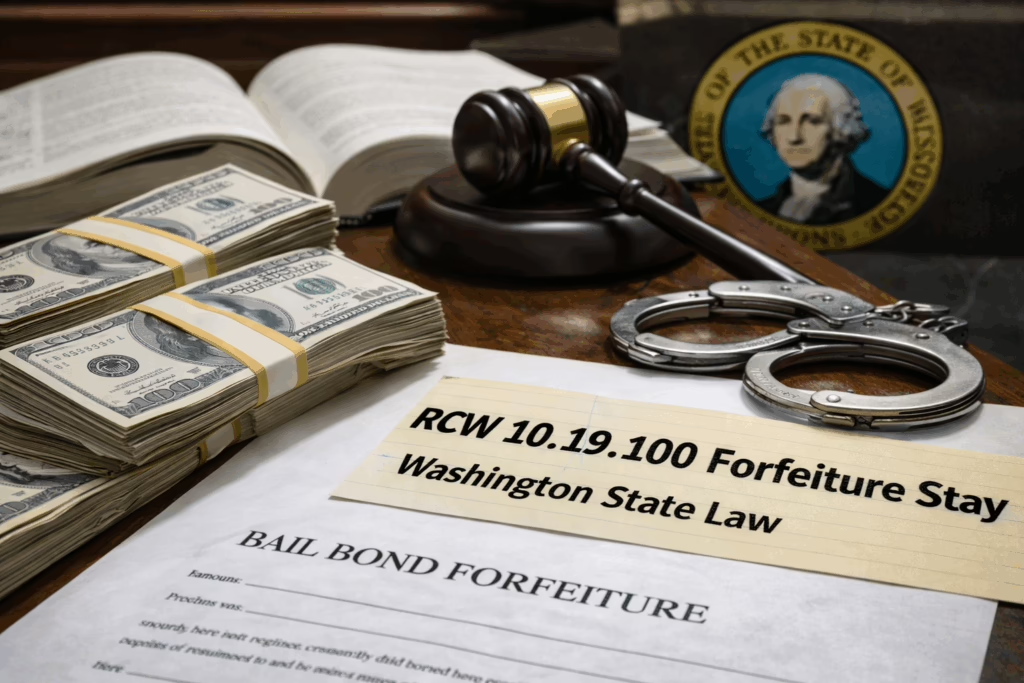
RCW 10.19.100 is a Washington statute that allows courts to stay (delay) the enforcement of a bond forfeiture judgment under specific conditions. It is primarily used by sureties or bond companies seeking to avoid immediate financial penalties when a defendant fails to appear.
When a court enters a forfeiture judgment against a surety (e.g., a bail bond company), the surety may ask the court to stay the execution of that judgment—meaning delay payment—while they attempt to locate and return the defendant to custody.
When Can a Stay Be Requested?
Under RCW 10.19.100, a court may grant a stay of execution on a forfeiture judgment if:
- The surety files a motion requesting the stay,
- The surety shows diligent efforts are being made to locate the defendant,
- The court believes staying the judgment serves the interests of justice.
The statute allows courts to grant one or more stays, provided the surety continues demonstrating active efforts to fulfill its obligations.
📖 Read RCW 10.19.100 on the Washington State Legislature site
Why Would a Surety Want a Forfeiture Stay?
When a defendant skips court, the bond is forfeited—a major financial loss for the surety. However, if the surety can find and return the defendant within a certain time frame, RCW 10.19.140 allows the bond to be returned (minus costs).
Requesting a forfeiture stay under RCW 10.19.100 gives the surety more time to:
- Track down and apprehend the defendant,
- Avoid paying the full forfeiture amount,
- Maintain client relationships and legal credibility.
This is a strategic legal tool for sureties working to reduce financial liability.
How Washington Courts Evaluate Stay Requests
Superior courts have discretion in deciding whether to grant a stay under RCW 10.19.100. They will consider:
- The length of time since forfeiture,
- The surety’s documented efforts to locate the defendant,
- Whether previous stays have been granted,
- Any potential prejudice to the court or prosecution.
A well-prepared motion should include detailed records, timelines, and communication logs that show active pursuit.
Financial Implications for Sureties
Delaying execution of a forfeiture judgment can provide temporary relief—but it doesn’t erase liability. If the defendant is not returned to custody within a statutory period (typically 12 months), the bond may still be permanently forfeited under RCW 10.19.140.
Sureties must stay vigilant and work within the legal timeline to avoid financial loss. Partnering with an attorney familiar with Washington forfeiture law can help protect your bottom line.
Review our client resources here
Contact us anytime for your urgent legal needs.
About Blanford Law:
We are no-nonsense, relentless, fair, and honest. We are great listeners instead of fast talkers, that is just who we are. More than 20 years ago, Ken began practicing law with a deeply-seeded belief that every person has the right to the best legal representation available. He built his law firm on that belief. Another belief that he strongly adheres to is his fundamental belief that clients deserve respect, with no assumptions or preconceived notions. If you or someone you know is accused of a crime or injured as a result of the negligence of another, please have them call us at 253-720-9304 or email us info@blanfordlaw.com
Additional Resources
- Vacating Forfeiture Judgments in Washington
Learn the legal process for vacating a forfeiture judgment and how sureties can request relief in Washington courts. - RCW 10.19.150: Surety Liability
Understand the limits of surety liability in Washington and what defenses may apply in bond forfeiture cases. - RCW 10.19.140: Bond Return to Surety
Discover when a forfeited bond can be returned to the surety after the defendant is apprehended or returns to court. - Stay of Forfeiture Judgment in Washington
A practical guide to requesting a stay of execution on bond forfeitures under Washington law. - RCW 19.72.040: Limiting Surety Liability
Explains how this statute can be used to formally limit a surety’s exposure under specific conditions.