
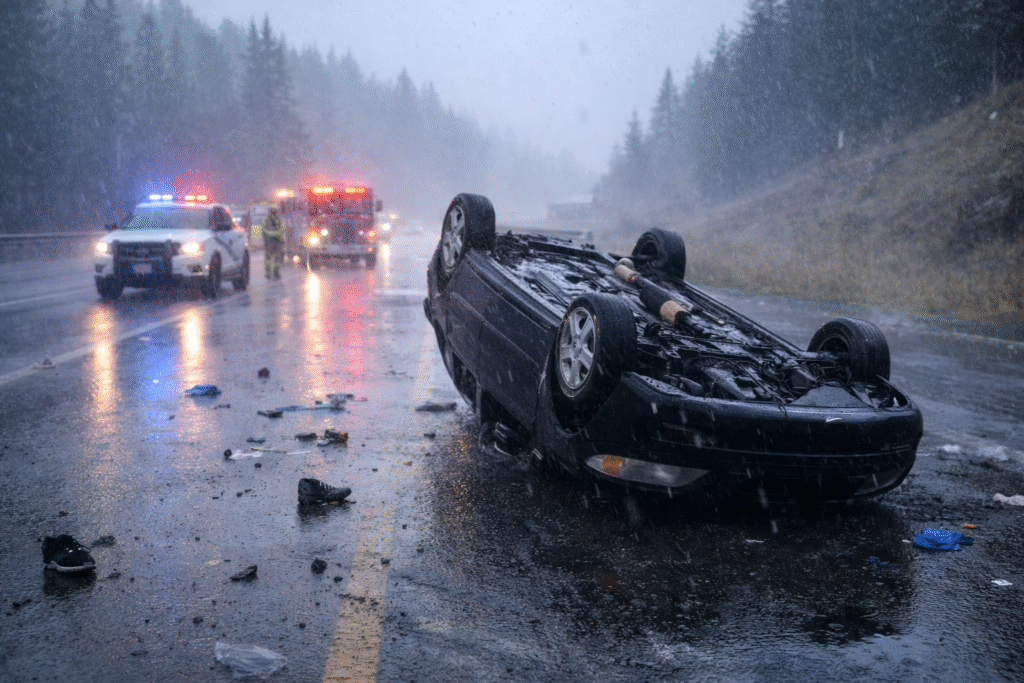
A rollover crash on Interstate 90 east of Roslyn has led to charges of DUI and vehicular assault against an Auburn man, with court records alleging the crash seriously injured his passenger (including a broken leg and multiple rib fractures). Reports describe heavy rain and standing water on the roadway, and investigators allege both occupants were ejected during the rollover.
While the criminal case will focus on whether the driver committed DUI and vehicular assault, a Roslyn DUI injury claim is about something different: how an injured person can obtain compensation for medical bills, lost income, pain and suffering, and long-term impacts. Below is a Washington-focused guide to the personal injury side of situations like this.
What the charges can mean for an injury case
Vehicular assault (RCW 46.61.522) and DUI (RCW 46.61.502)
In Washington, vehicular assault can be charged when someone drives (including while under the influence) and causes “substantial bodily harm” to another person.
Washington’s DUI law (including impairment by alcohol, cannabis, or other drugs) is set out in RCW 46.61.502, and it’s the standard referenced in multiple related legal contexts.
Personal injury takeaway: A criminal case can create helpful evidence (investigation reports, toxicology, witness statements), but the injured person typically still must prove civil liability and damages to recover compensation.
“Single-car crash” does not mean “no injury claim”
Even when no other vehicle is involved, an injured passenger can often pursue a claim against:
- The driver’s auto insurance (liability coverage)
- Their own PIP/MedPay (if available under their policy)
- UIM/UM coverage (if the driver is uninsured/underinsured)
If the driver was impaired, that may strengthen liability arguments—especially when the injuries are severe.
Seatbelts, ejection, and how insurers argue “fault” in Washington
Reports allege the occupants were not wearing seatbelts and were ejected. Insurers often try to turn seatbelt issues into a “you caused your own injuries” defense.
Washington’s seatbelt statute matters here: RCW 46.61.688(6) states that failure to wear a seatbelt does not constitute negligence and may not be admissible as evidence of negligence in a civil action.
Comparative fault still exists (but it’s evidence-driven)
Washington applies pure comparative fault: any fault attributed to the injured person reduces damages proportionally, but does not automatically bar recovery.
In practice, this means the details matter—medical causation, crash dynamics, and what evidence is legally admissible.
What damages can be claimed after a serious passenger injury
A passenger with a broken leg and rib fractures may face:
- ER care, surgery, hospital stays, rehab/PT
- Lost wages and diminished future earning capacity
- Pain, suffering, and loss of enjoyment of life
- Future care needs (follow-up procedures, chronic pain treatment)
In serious DUI-related collisions, a civil case may also explore whether punitive damages are available—but Washington generally does not allow punitive damages unless specifically authorized by statute (most injury cases are not). (This is one reason early case evaluation matters.)
Restitution vs. a civil claim: victims often need both
If the driver is convicted, the court may order restitution to the victim. Restitution can help, but it’s often limited and depends on the defendant’s ability to pay.
A civil injury claim is usually the primary path to recover the full range of damages (including future losses) through insurance and, when appropriate, other defendants.
Evidence that can make or break the claim
What you (or counsel) should preserve early
- Collision report, scene photos, and witness info
- Hospital records, imaging, treatment plans, and prognosis
- Wage documentation and work restrictions
- Any communications from insurers
Intoxication-related defenses
Washington has a specific rule for civil cases involving intoxication defenses (RCW 5.40.060) that ties the standard to the DUI statute and can affect how fault is argued when a claimant is alleged to be under the influence.
(That may or may not apply to a passenger—depending on the facts.)
Deadlines: the 3-year clock is real
Most Washington personal injury cases must be filed within three years under RCW 4.16.080.
Waiting risks losing evidence and, in the worst case, losing the claim entirely.
Crime victim benefits may be available in some cases
Some injured people may be eligible to apply for benefits through Washington’s Crime Victims Compensation Program(administered by L&I), depending on the circumstances and eligibility requirements.
This can be especially important when insurance coverage is limited.
Call to Action
Contact Blanford Law today at ken@blanfordlaw.com or 253-720-9304 for guidance on your legal matter.
Additional Resources
- Washington Personal Injury Law: Know Your Rights — A practical overview of injury claims, damages, and comparative fault in Washington.
https://blanfordlaw.com/washington-personal-injury-law/ - I-90 Semi Truck Crash Near Ellensburg: What Washington Negligence Law Means for Injury Claims — How negligence, evidence, and comparative fault often play out in serious I-90 collision cases.
https://blanfordlaw.com/i-90-semi-truck-crash-claims/ - Felony DUI Case in Ellensburg Highlights the Dangers of Negligent Driving — A DUI-focused breakdown of injury and accountability issues that can arise after impaired driving.
https://blanfordlaw.com/dui-accident-lawyer-ellensburg/ - Understanding Washington’s IRLJ 2.5 – Failure to Respond — Explains what happens when someone fails to respond to an infraction and why deadlines and court notices matter.
https://blanfordlaw.com/irlj-25-failure-to-respond/ - Blewett Pass Injury Claim: What to Know After a US 97 Single-Vehicle Crash — How “single-vehicle” crashes can still involve third-party liability, road hazards, and important evidence issues.
https://blanfordlaw.com/blewett-pass-injury-claim-guide/