
Introduction
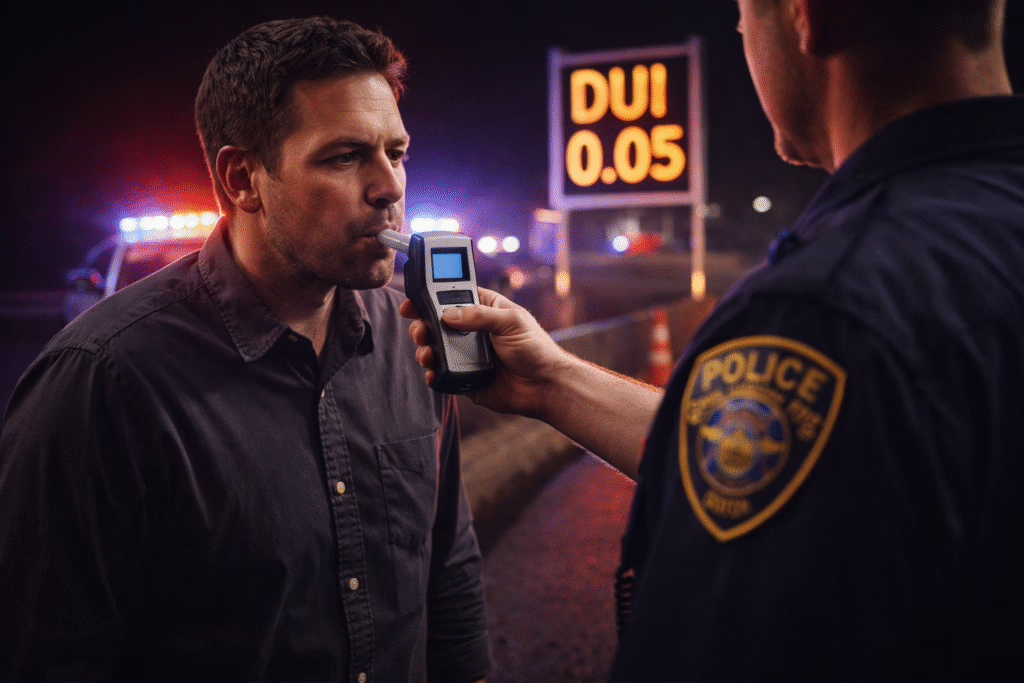
Washington Senate Bill 5067, often referred to as the Washington DUI bill 5067, is a proposed legislative change aimed at tightening the state’s impaired driving laws. Sponsored by Senators including John Lovick, Manka Dhingra, and Marko Liias, the bill would lower the per se blood alcohol concentration (BAC) limit for driving from the existing 0.08% threshold to 0.05% — a level already in place in many countries and in the U.S. only in Utah.
The bill reflects growing legislative concern over recent increases in traffic fatalities involving alcohol, and it represents one of the most significant changes to Washington’s DUI regime in years.
What SB 5067 Proposes
At its core, Senate Bill 5067 would revise the statutory language governing impaired driving to define a person as driving under the influence if their BAC is 0.05% or higher within two hours of operating a motor vehicle or watercraft.
If enacted, this would represent a substantial change from the traditional 0.08% limit — the long-standing standard throughout the United States. Washington Traffic Safety Commission requested the bill, reflecting state concerns over rising impaired-driving deaths.
Beyond lowering the BAC threshold, the bill includes several other components:
- A public education campaign led by the Washington Traffic Safety Commission to inform the public about the new standard and safe alternative behaviors for potential impaired drivers.
- A two-year evaluation by the Washington State Institute for Public Policy to assess the law’s impact on traffic safety, impaired driving arrests, crash outcomes, and broader socioeconomic effects.
These measures are designed to ensure that the transition to the new limit is both informed and monitored for effectiveness.
Why Lawmakers Are Supporting SB 5067
Supporters of the bill argue that current BAC standards are insufficient to prevent alcohol-related crashes. Washington experienced one of its deadliest years on record in 2023, with traffic fatalities reaching levels not seen since the early 1990s, and impaired driving being a major contributing factor.
National data indicate that a driver’s risk of being involved in a crash doubles at a BAC of 0.05% compared to a sober driver, and triples by 0.07%. Advocates point to these findings and the success of similar limits abroad — including Utah’s own 0.05% law — as evidence that lowering the threshold could significantly cut impaired driving fatalities.
Proponents also argue that lowering the BAC limit could help shift cultural norms around drinking and driving and align Washington with broader global safety standards.
Criticisms and Concerns
Despite its safety goals, SB 5067 has drawn opposition from some industry and civil liberty stakeholders. Critics argue that:
- Enforcement at 0.05% may criminalize lower-risk drinkers who would not be considered legally impaired under the current standard.
- Existing DUI laws already permit prosecution of visibly impaired drivers at BAC below 0.08% based on observed impairment, reducing the need for a lower per se limit.
- Hospitality and alcohol industries worry about potential economic impacts and compliance costs.
Lawmakers have listened to these concerns while steering the bill through committee hearings and legislative votes.
Legislative Status
As of early 2026, SB 5067 passed the Washington State Senate in a narrow vote of 26-23 and moved to the House of Representatives for further consideration.
The bill’s progression through the House and whether it will receive final approval from the legislature and the governor remains to be seen. If it passes both chambers and is signed, the law is anticipated to take effect July 1, 2026, giving law enforcement and the public time to adjust to the new standard.
What This Means for Washington Drivers
If enacted, Washington would join a small number of U.S. states with a 0.05% per se BAC law. The change would likely result in:
- An increase in DUI arrests and prosecutions based on the lower standard.
- Potential changes in business practices for hospitality, bartending, and service-industry training.
- Increased emphasis on public education about alcohol consumption and safe driving choices.
Drivers should stay informed of the bill’s progress and be aware that even if the law isn’t yet in effect, DUI enforcement and impairment prosecution practices already tolerate evidence of impairment below 0.08% under current law.
Conclusion
Senate Bill 5067 — the Washington DUI bill 5067 — represents a major policy shift aimed at improving road safety by lowering the BAC limit to 0.05%. The proposal has motivated debate among lawmakers, public safety advocates, and business groups, reflecting competing concerns over safety, enforcement, and personal freedom.
Whether SB 5067 becomes law will be determined by how the legislature balances these priorities in the weeks ahead.
Call Blanford Law – DUI Defense Call to Action
If You or Someone You Love Is Accused of DUI in Washington
A DUI charge can have life-altering consequences, including jail time, license suspension, increased insurance rates, and long-term damage to your record. With proposed changes like Senate Bill 5067, Washington’s DUI laws are becoming even more aggressive, and early legal guidance is critical.
If you or someone you love is accused of driving under the influence, do not assume the case is straightforward or unwinnable. DUI cases often involve complex legal issues, including traffic stops, chemical testing, eyewitness reliability, and evolving statutory standards.
Contact Blanford Law today at ken@blanfordlaw.com or 253-720-9304 for guidance on your legal matter.
An experienced Washington DUI defense attorney can help protect your rights and evaluate every available defense.
Additional Resources
- IRLJ 3.4 – Mitigation Hearings in Washington
Explains how mitigation hearings work under IRLJ 3.4 and when drivers can ask the court to reduce penalties without contesting the infraction.
https://blanfordlaw.com/irlj-3-4-mitigation-hearing/ - Single-Photo Identification in Washington Criminal Cases
An in-depth analysis of how Washington courts evaluate single-photo identification procedures and their due process implications.
https://blanfordlaw.com/single-photo-identification-washington/ - IRLJ 3.3 – Contested Hearings Explained
A practical guide to contested hearings under IRLJ 3.3, including how evidence is challenged and cases are argued in traffic court.
https://blanfordlaw.com/irlj-3-3-contested-hearing/ - Debunking 5 DUI Myths in Washington
Addresses common misconceptions about DUI arrests, testing, and defenses under Washington law.
https://blanfordlaw.com/debunking-5-dui-myths-in-washington/ - Blood Alcohol Content (BAC): Myths and Facts
Breaks down how BAC is measured, common testing myths, and what drivers should know about alcohol impairment evidence.
https://blanfordlaw.com/blood-alcohol-content-bac-myths-and-facts/