
What Is Washington RPC 3.6?
Washington RPC 3.6 governs trial publicity and regulates what lawyers may say publicly about pending or ongoing cases. The rule is designed to protect a defendant’s right to a fair trial while balancing the public’s interest in open judicial proceedings.
In high-profile criminal cases and significant civil litigation, media coverage can shape public opinion long before a jury is selected. Washington RPC 3.6 ensures that attorneys do not make statements that could materially prejudice the outcome of a proceeding.
This rule applies to lawyers participating in or associated with the investigation or litigation of a matter.
The Core Rule Under Washington RPC 3.6
Prohibition on Prejudicial Statements
Under Washington RPC 3.6, a lawyer must not make an extrajudicial statement (a statement made outside of court) that the lawyer knows or reasonably should know will be disseminated publicly and will have a substantial likelihood of materially prejudicing an adjudicative proceeding.
This includes statements made:
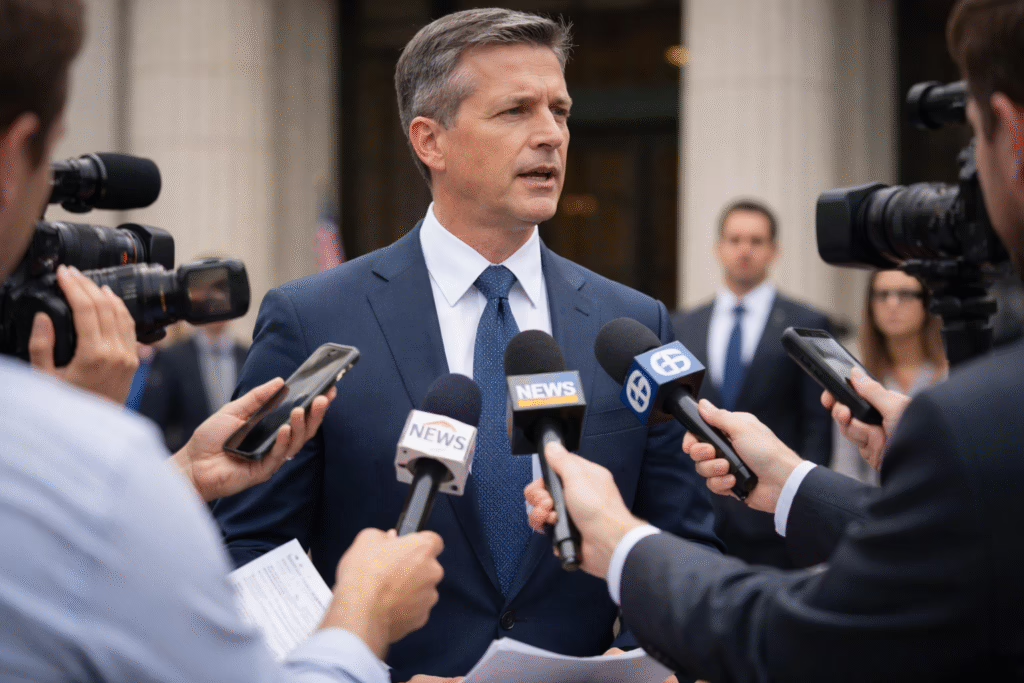
- At press conferences
- In media interviews
- On social media
- In public forums
- Through third parties acting on the lawyer’s behalf
The key legal standard is whether the statement poses a “substantial likelihood of material prejudice.”
Examples of Statements That May Be Improper
Washington RPC 3.6 identifies certain types of statements that are more likely to be prejudicial, particularly in criminal cases. These may include:
- Comments about a defendant’s prior criminal record
- Statements about confessions or admissions
- Opinions about guilt or innocence
- Discussion of inadmissible evidence
- Statements about the credibility of witnesses
Such comments can influence potential jurors before they ever enter a courtroom.
What Lawyers May Say Under Washington RPC 3.6
The rule also provides guidance on permissible public statements. Attorneys may generally state:
- The claim, offense, or defense involved
- Information contained in the public record
- That an investigation is ongoing
- Scheduling information
- Requests for assistance in obtaining evidence
In criminal cases, attorneys may also state basic identifying information about the accused and procedural developments such as arrests or charges filed.
The rule attempts to strike a careful balance: protecting fairness without silencing accurate, neutral information.
Special Considerations in Criminal Cases
Criminal proceedings are especially sensitive under Washington RPC 3.6 because of constitutional protections, including:
- The Sixth Amendment right to a fair trial
- The right to an impartial jury
- Due process protections
Pretrial publicity can complicate jury selection and, in extreme cases, may lead to:
- Motions to change venue
- Extensive voir dire
- Mistrials
- Appeals based on juror bias
Attorneys must exercise heightened caution when speaking publicly about criminal matters.
Relationship to Prosecutors and Law Enforcement
While RPC 3.6 applies to all attorneys, prosecutors have additional ethical responsibilities under other rules to ensure fairness. Statements made by law enforcement may also raise concerns, though they are governed by different standards.
Defense attorneys must also be careful not to respond to media attention in ways that compound potential prejudice.
The “Right of Reply” Provision
Washington RPC 3.6 allows limited responsive statements when necessary to mitigate recent adverse publicity not initiated by the lawyer or the lawyer’s client. However, the response must be narrowly tailored to counteract the prejudicial effect.
This prevents attorneys from escalating media battles under the guise of defense.
Consequences of Violating Washington RPC 3.6
Violations of Washington RPC 3.6 can result in:
- Professional discipline by the Washington State Bar Association
- Court sanctions
- Damage to a client’s case
- Potential reversal on appeal if prejudice is shown
In high-profile matters, ethical missteps in public statements can have long-lasting reputational and legal consequences.
Why Washington RPC 3.6 Matters
The justice system depends on decisions being made inside the courtroom—based on admissible evidence and legal standards—not public opinion.
Washington RPC 3.6 reinforces that attorneys must advocate in court, not in the media. By limiting prejudicial public commentary, the rule protects defendants, victims, and the integrity of Washington courts.
If you are involved in a criminal investigation or high-profile litigation, it is important to work with counsel who understands not only courtroom strategy but also the ethical limits of public communication.
Review our client resources here
Contact us anytime for your urgent legal needs.
About Blanford Law:
We are no-nonsense, relentless, fair, and honest. We are great listeners instead of fast talkers, that is just who we are. More than 20 years ago, Ken began practicing law with a deeply-seeded belief that every person has the right to the best legal representation available. He built his law firm on that belief. Another belief that he strongly adheres to is his fundamental belief that clients deserve respect, with no assumptions or preconceived notions.
If you or someone you know is accused of a crime or injured as a result of the negligence of another, please have them call us at 253-720-9304 or email us info@blanfordlaw.com.
Contact Blanford Law today at ken@blanfordlaw.com or 253-720-9304 for guidance on your legal matter.
Additional Resources
- The Impact of Social Media on Personal Injury Cases
Learn how social media posts can affect credibility, damages, and liability in Washington personal injury litigation.
https://blanfordlaw.com/the-impact-of-social-media-on-personal-injury-cases/ - ER 613 – Prior Statements of Witnesses
Understand how Washington Evidence Rule 613 governs the use of prior inconsistent statements to challenge a witness’s credibility.
https://blanfordlaw.com/er-613-prior-statements/ - Understanding RCW 5.68.010 – Protection from Compelled Disclosure
Explore how Washington law protects certain individuals from being compelled to disclose confidential communications.
https://blanfordlaw.com/understanding-rcw-5-68-010-protection-from-compelled-disclosure/ - RPC 1.7 – Conflict of Interest
Review how Washington RPC 1.7 addresses conflicts of interest and when an attorney must decline or withdraw from representation.
https://blanfordlaw.com/rpc-1-7-conflict-of-interest/ - RPC 1.16 – Attorney Withdrawal
Learn when and how a lawyer may or must withdraw from representation under Washington RPC 1.16.
https://blanfordlaw.com/rpc-1-16-attorney-withdrawal/