
A Seattle motorcycle hit-and-run collision in Queen Anne has left a 30-year-old motorcyclist dead and raised important questions about the rights of surviving family members after a fatal crash.
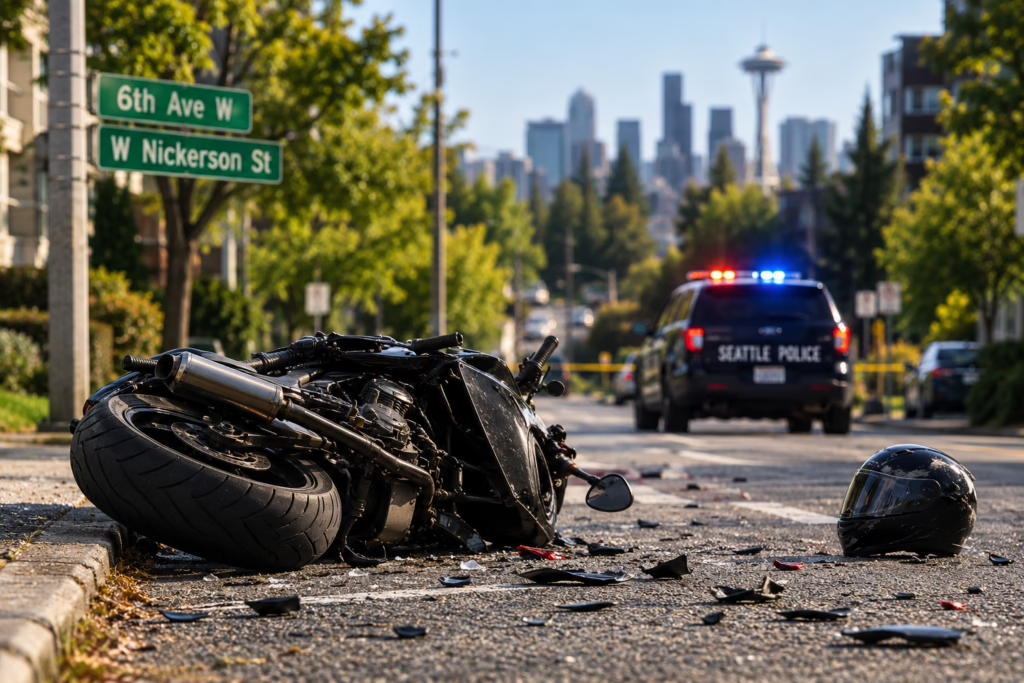
According to the Seattle Police Department, the collision happened at about 11:23 a.m. on Wednesday, August 26, 2026. A motorcycle and a car collided near 6th Avenue West and West Nickerson Street in Seattle. At the same time, bystanders flagged down a passing Seattle Fire Department engine and alerted firefighters to the injured rider.
Seattle Fire Department medics transported the motorcyclist to Harborview Medical Center. However, he died shortly afterward. Police reported that the driver of the car fled the scene and had not been located when SPD released its initial report.
Detectives with the Seattle Police Department Traffic Collision Investigation Squad are conducting the follow-up investigation. Anyone with information, including video footage, should contact the Seattle Police Violent Crimes Tip Line at 206-233-5000.
You can also visit the official Seattle Police Department website for department information and updates.
For the victim’s family, the police investigation is only one part of what may follow. A fatal collision may also raise important civil issues involving wrongful death, insurance coverage, damages, and the preservation of evidence.
Seattle Motorcycle Hit-and-Run Claims Under Washington Law
A Seattle motorcycle hit-and-run can involve both criminal and civil legal issues.
Washington law requires a driver involved in a collision resulting in injury or death to stop at the scene. The driver must also provide identifying and insurance information and render reasonable assistance when needed.
Under RCW 46.52.020, failing to stop and comply with those duties after a collision resulting in death can constitute a Class B felony.
However, the criminal investigation and a civil wrongful death claim are separate matters.
Police and prosecutors determine whether criminal charges are appropriate. In contrast, a civil claim focuses on whether another person or entity is legally responsible for the death and what damages may be available.
Importantly, the fact that police reported that a driver fled does not by itself establish who caused the collision. Investigators may need to examine witness statements, video, vehicle damage, roadway evidence, traffic controls, and other information before reaching conclusions about fault.
Wrongful Death Claims After a Fatal Motorcycle Crash
Washington law allows a wrongful death claim when a person’s death results from another person’s wrongful act, neglect, or default.
Under RCW 4.20.010, the personal representative of the deceased person’s estate may bring the action for qualifying beneficiaries.
RCW 4.20.020 identifies a surviving spouse, state registered domestic partner, children, and stepchildren as beneficiaries. If none of those beneficiaries exist, the deceased person’s parents or siblings may qualify.
A wrongful death claim may seek economic and noneconomic damages suffered by the beneficiaries. Depending on the facts, those damages may include lost financial support, lost services, loss of companionship, and other losses resulting from the death.
Washington also has survival statutes that may allow an estate to pursue certain claims belonging to the deceased person. Therefore, a lawyer reviewing a fatal motorcycle collision should consider both wrongful death and survival claims.
Why Evidence Matters After a Seattle Motorcycle Hit-and-Run
Evidence can disappear quickly after a Seattle motorcycle hit-and-run.
Nearby homes, businesses, apartment buildings, vehicles, or security systems may have captured the collision or the fleeing vehicle. Unfortunately, some video systems automatically erase footage after a short period.
Witness memories may also become less clear with time.
For that reason, an early civil investigation may focus on locating witnesses and preserving available evidence. That evidence may include:
- Police reports and investigative records
- 911 calls and dispatch information
- Witness statements
- Surveillance and security-camera footage
- Dash camera recordings
- Photographs and video from the collision scene
- Damage to the motorcycle and other vehicles
- Electronic vehicle data, when available
- Medical and emergency-response records
- Insurance policies and coverage documents
Preserving evidence does not mean that a lawsuit must immediately be filed. Instead, it can help protect information that may later be important when determining how the collision happened and who may bear legal responsibility.
What If the Hit-and-Run Driver Is Never Found?
A family’s legal options do not necessarily disappear simply because police have not identified the fleeing driver.
Insurance coverage may become especially important in a hit-and-run motorcycle case. However, motorcycle insurance presents issues that differ from ordinary automobile coverage.
Washington’s uninsured and underinsured motorist statute contains specific provisions involving motorcycles. In particular, a person should not assume that UIM coverage under an automobile policy automatically applies while that person is operating or occupying a motorcycle.
Washington law also requires insurers that sell motorcycle liability coverage to offer purchasers the opportunity to obtain uninsured and underinsured motorist coverage for the motorcycle or reject that coverage.
Therefore, an attorney evaluating a Seattle motorcycle hit-and-run should review the actual insurance policies rather than assume coverage exists.
Relevant documents may include the motorcycle policy, declarations pages, endorsements, exclusions, automobile policies, and any documents showing whether motorcycle UIM coverage was accepted or rejected.
If investigators later identify the fleeing driver, additional liability insurance may also become relevant.
Could Other Parties Be Responsible?
The fleeing driver may not necessarily be the only potential source of civil liability.
Depending on the evidence, an investigation may examine whether another driver, vehicle owner, employer, business, governmental entity, or other party contributed to the collision.
For example, an employer could become relevant if a driver was acting within the course and scope of employment. A vehicle owner could also become relevant under certain circumstances.
These possibilities depend heavily on the facts. Therefore, families should avoid assuming that the police investigation will identify every possible source of civil recovery.
Washington Deadlines for Wrongful Death Claims
Washington law places deadlines on civil claims.
RCW 4.16.080 generally establishes a three-year limitations period for certain actions involving injury to a person or injury to another person’s rights.
However, families should not interpret that deadline as a reason to delay an investigation.
Video can disappear within days or weeks. Vehicles can be repaired or destroyed. Witnesses may become difficult to locate. In addition, insurers may require timely notice of a claim.
As a result, acting promptly can protect evidence even when litigation does not begin immediately.
How a Seattle Personal Injury Lawyer Can Help
A fatal Seattle motorcycle hit-and-run can create a criminal investigation, insurance disputes, and potential wrongful death claims at the same time.
A Washington personal injury attorney can investigate the collision independently from law enforcement. An attorney can also preserve evidence, identify witnesses, review insurance policies, communicate with insurers, and determine whether wrongful death or survival claims may be available.
In addition, legal counsel can investigate other parties who may share responsibility for the collision.
For a grieving family, handling these issues alone can be difficult. Early legal guidance can help clarify what happened, what insurance coverage may exist, and what steps may be necessary to protect the family’s rights.
Contact Blanford Law today at ken@blanfordlaw.com or 253-720-9304 for guidance on your legal matter.
Additional Resources
- State v. Vela Hit and Run: Washington Case Explained — This article explains the Washington Court of Appeals decision in State v. Vela and how the case addressed a driver’s knowledge and legal duties after a hit-and-run collision.
- Oak Harbor Hit-and-Run: School Bus Collides with Stolen Car, Police Seek Driver — Learn about an Oak Harbor hit-and-run involving a school bus and a stolen vehicle, including the investigation and Washington legal issues raised by leaving a crash scene.
- Ellensburg Motorcycle Crash: Seattle Rider Killed in DUI I-90 Collision — This article examines a fatal I-90 motorcycle collision near Ellensburg and discusses wrongful death claims and the legal consequences that can follow a serious motorcycle crash.
- Ellensburg I-90 Motorcycle Crash Ends in Fatality — Read about another fatal motorcycle collision near Ellensburg and the potential wrongful death and legal issues families may face after a deadly Washington motorcycle crash.
- King County Jail Booking: Misdemeanor Changes for Seattle Police — This article explains changes to King County Jail booking policies affecting Seattle Police and provides