
A new Harvard Medical School study on album release traffic fatalities has uncovered a surprising connection between blockbuster music releases, increased streaming activity, and deadly crashes on U.S. roads. The findings do not prove that listening to new music causes collisions. Instead, researchers say the results point toward a familiar danger for drivers: distraction involving smartphones and in-vehicle technology.
Published in JAMA Network Open in August 2026, the study found that U.S. traffic fatalities increased significantly on the release dates of some of the country’s most-streamed albums. For Washington drivers, the research offers another reminder that even seemingly routine interactions with a phone or entertainment system can take attention away from the road.
What the Harvard Study Found About Album Release Traffic Fatalities
Researchers from Harvard Medical School and affiliated institutions examined traffic fatalities surrounding the release dates of 10 of the most-streamed albums between 2017 and 2022.
They compared fatality data on major album-release days with the 10 days before and after those releases. On release days, music streaming increased approximately 43%. At the same time, the risk-adjusted number of U.S. traffic fatalities increased from approximately 120.9 deaths on surrounding days to 139.1 deaths on album-release days.
That represents an increase of about 18 additional fatalities per release day, or 15.1%.
Researchers also found that the excess fatalities were more pronounced among younger drivers, male drivers, crashes involving a single occupant, crashes occurring during clear weather, and vehicles equipped with infotainment systems.
Those patterns led researchers to identify smartphone-enabled distraction as a possible explanation for the findings.
Correlation Does Not Automatically Mean Causation
An important limitation deserves emphasis: the researchers did not establish that a particular driver involved in a fatal collision was streaming an album or using a smartphone immediately before the crash.
The study therefore does not prove that new album releases directly cause crashes.
Instead, researchers identified a significant association between major release dates, unusually high streaming activity, and increased traffic fatalities. They concluded that smartphone use associated with online music streaming may be an important contributor to distracted-driving risks.
That distinction matters, particularly when discussing scientific research in the context of a personal injury claim. Every collision must still be evaluated based on the evidence surrounding the individual driver and crash.
Why Changing Music While Driving Can Become Dangerous
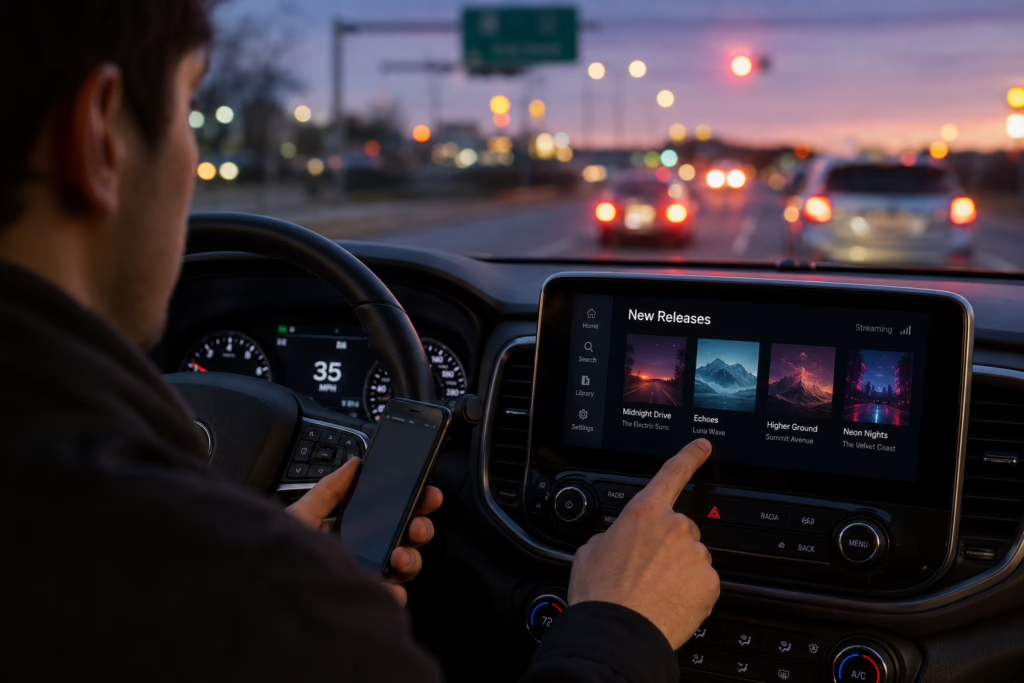
Drivers today can access millions of songs within seconds. But finding an album, opening an app, scrolling through songs, changing a playlist, adjusting playback, or responding to an on-screen notification may require a driver to look away from the road or interact with a device.
A few seconds can matter.
A driver traveling at highway speed covers a substantial distance while looking at a phone rather than traffic ahead. During that period, another vehicle may slow, traffic may stop, a pedestrian may enter the roadway, or road conditions may suddenly change.
The danger is not necessarily the music. The greater concern is the interaction required to select or control it.
Washington Law and Distracted Driving
Washington has specific restrictions on electronic-device use behind the wheel.
Under RCW 46.61.672, a driver generally may not hold a personal electronic device while driving or use a hand or finger to access, browse, view, or retrieve electronic data. Washington law permits limited interaction to activate, deactivate, or initiate a function, along with certain statutory exceptions.
Importantly, Washington’s definition of “driving” includes periods when a vehicle is temporarily stopped because of traffic, a traffic-control device, or another momentary delay. Pulling safely off the active roadway and stopping is treated differently.
Washington also has a separate dangerously distracted driving provision under RCW 46.61.673.
For drivers who want to listen to a newly released album, the safest approach is simple: select the music before beginning the trip, use appropriate hands-free features where possible, and pull over safely if more substantial interaction with a device becomes necessary.
Distracted Driving and Washington Personal Injury Claims
When distracted driving causes a collision, the driver’s conduct may become important evidence in a Washington personal injury case.
An injured person generally must establish that another party failed to exercise reasonable care and that this failure caused the injuries and losses at issue. Evidence that a driver was improperly interacting with a phone or other device may help establish negligence depending on the facts of the crash.
Evidence in a distracted-driving investigation can potentially include:
- Police reports and citations
- Witness statements
- Photographs or video from the collision scene
- Dash-camera or surveillance footage
- Vehicle and infotainment-system data when available
- Phone or electronic records when legally obtainable
- Statements made by the drivers involved
A traffic citation can be relevant, but a personal injury case requires an analysis of all available evidence and the specific circumstances surrounding the collision.
What If More Than One Driver Was at Fault?
Washington follows a comparative-fault system.
Under RCW 4.22.005, an injured person’s own percentage of fault can reduce the amount of compensation awarded but does not automatically prevent recovery.
For example, distracted driving allegations can become important not only in determining whether another driver was negligent, but also when insurance companies argue that multiple people contributed to a collision.
That is one reason preserving evidence quickly after a serious crash can be important.
What the Study Means for Washington Drivers
The Harvard research highlights how technology has changed the distracted-driving conversation.
For years, public safety campaigns have focused heavily on texting and phone calls. Streaming services, navigation systems, social media, podcasts, connected dashboards, and other applications now create additional opportunities for drivers to divide their attention.
The lesson from this study is not that Washington drivers should stop listening to music.
It is that drivers should make entertainment choices before the vehicle is moving whenever possible. Queue the album, set the playlist, adjust the navigation, and then concentrate on driving.
A favorite artist’s new release can wait a few minutes. A driver’s attention often cannot.
Injured by a Distracted Driver in Washington?
If another driver was looking at a phone, selecting music, interacting with an app, or otherwise distracted before causing a collision, determining what happened may require a detailed investigation.
Blanford Law represents people injured in motor vehicle collisions throughout Washington and can help evaluate potential sources of evidence, insurance coverage, fault, and available compensation.
Contact Blanford Law today at ken@blanfordlaw.com or 253-720-9304 for guidance on your legal matter.
Additional Resources
Distracted Driving Accident Lawyer — Legal Help in Washington State
Learn how distracted driving can cause serious crashes in Washington and how evidence of driver inattention may affect a personal injury claim.
U.S. Traffic Fatalities 2023: Trends and Road Safety Insights
Review national traffic fatality trends and road-safety statistics that provide broader context for the risks drivers face on U.S. roads.
I-90 Traffic and DUI Patrols: Outlaw Festival Safety Tips
See how increased traffic, major music events, impaired driving, and driver awareness can affect crash risks along Washington’s I-90 corridor.