
Overview of the Anderson v Grant County Case
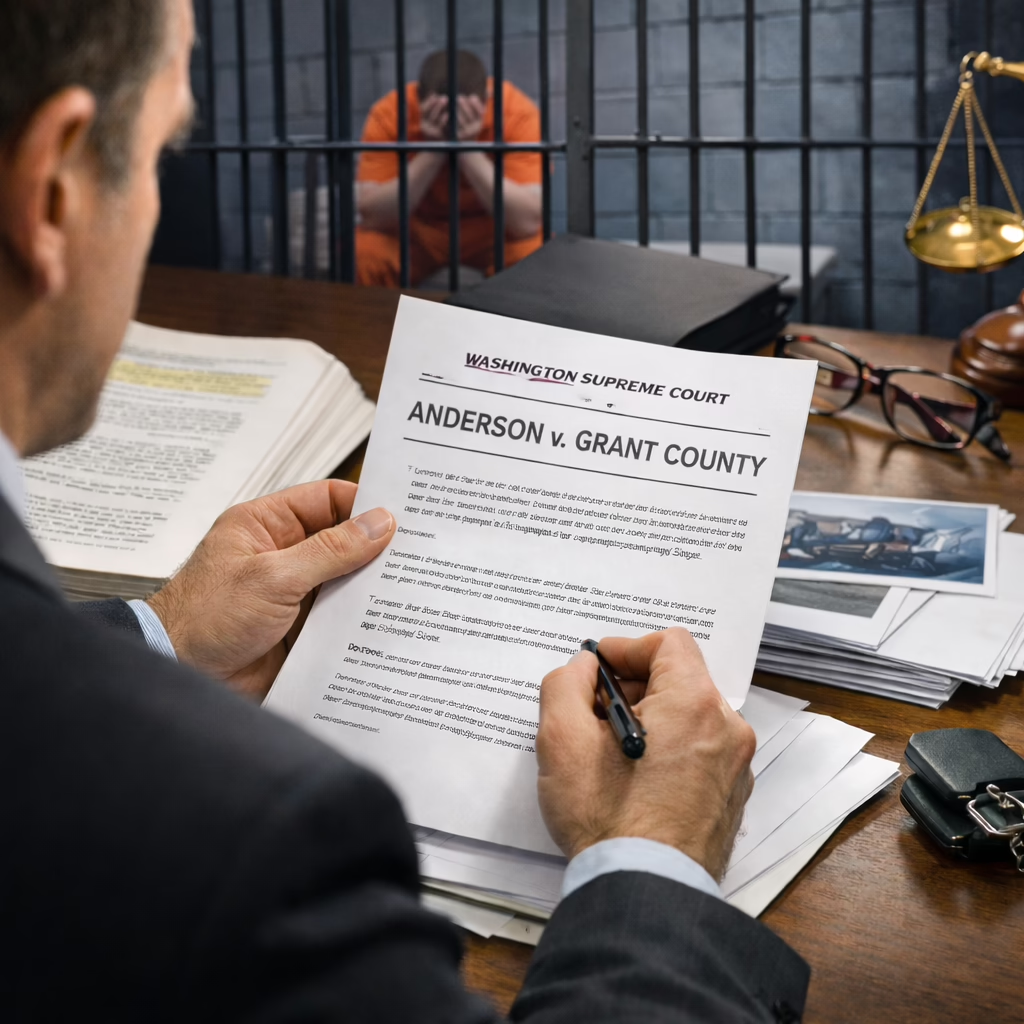
The Washington Supreme Court’s decision in Anderson v. Grant County addressed an important issue in wrongful death litigation involving jail custody: can a county jail assert statutory defenses when an inmate dies after ingesting illegal drugs inside the facility?
The case arose after an inmate, Derek Batton, died from a heroin overdose while incarcerated at the Grant County Jail. Batton’s family filed a wrongful death lawsuit alleging the county was negligent in failing to prevent drugs from entering the jail.
The county argued that two Washington statutes created complete defenses to the lawsuit:
- RCW 4.24.420 – the felony defense, and
- RCW 5.40.060 – the intoxication defense.
The key legal question was whether these statutory defenses could apply even though jailers have a special duty to protect inmates in their custody.
Facts of the Case
Derek Batton had struggled with addiction and was booked into the Grant County Jail in 2018 on outstanding warrants.
While incarcerated:
- Another inmate smuggled heroin into the jail.
- That inmate gave the drugs to Batton.
- Batton used the heroin and died from an overdose.
Evidence suggested the jail had ongoing problems with drugs being smuggled into the facility, and the sheriff’s office was aware of the issue.
Batton’s estate sued Grant County, claiming the jail was negligent because it failed to adequately search inmates and prevent the drugs from entering the facility.
The Legal Issue Before the Court
Washington law recognizes that jailers owe a special duty of care to incarcerated individuals because inmates cannot protect themselves.
The Court therefore had to decide whether that duty prevents a jail from raising two statutory defenses created by the 1986 Washington Tort Reform Act:
- Felony Defense – RCW 4.24.420
A defendant may avoid liability if the injured person was committing a felony that was a proximate cause of the injury. - Intoxication Defense – RCW 5.40.060
A defendant may avoid liability if the injured person was intoxicated, the intoxication caused the injury, and the person was more than 50% at fault.
The Court of Appeals previously held that the jail could not raise these defenses because they conflicted with the jail’s special duty to protect inmates.
The Washington Supreme Court reviewed that decision.
The Washington Supreme Court’s Decision
The Washington Supreme Court reversed the Court of Appeals.
The court held that Grant County may assert both statutory defenses in the wrongful death lawsuit.
The court emphasized several key points:
1. Statutory Defenses Still Apply to Jails
The court explained that the legislature created the felony and intoxication defenses as complete defenses to liability.
Nothing in the statutes limits their use when the defendant is a county jail.
2. The Jail’s Duty Still Exists
Importantly, the court clarified that allowing these defenses does not eliminate the jail’s duty of care toward inmates.
The jail still has a legal duty to protect those in custody. However, the statutory defenses may still apply if the legal requirements are met.
3. Courts Must Apply the Law as Written
The court also emphasized the principle of separation of powers.
If the legislature created these defenses, courts cannot refuse to apply them simply because of policy concerns. If Washington citizens want different rules, the legislature must change the statutes.
Why the Decision Matters
The Anderson v Grant County case has important implications for civil litigation involving jail deaths and injuries.
The ruling confirms that:
- Counties and jails may rely on statutory defenses created by the legislature.
- A jail’s special duty to protect inmates does not automatically override statutory defenses.
- Courts must interpret statutes according to legislative intent, even in difficult policy situations.
However, the case does not automatically bar liability. Whether the defenses apply will still depend on the facts and the jury’s findings.
Contact Blanford Law
Contact Blanford Law today at ken@blanfordlaw.com or 253-720-9304 for guidance on your legal matter.
Additional Resources
Understanding RCW 4.24.420: A Legal Perspective on Personal Injury and Wrongful Death Claims
Explains Washington’s felony defense statute and how criminal conduct can affect civil liability.
https://blanfordlaw.com/understanding-rcw-4-24-420-a-legal-perspective-on-personal-injury-and-wrongful-death-claims/
Understanding Washington State RCW 5.40.060: A Legal Perspective
A discussion of Washington’s intoxication defense and when it may bar recovery in injury or wrongful death lawsuits.
https://blanfordlaw.com/understanding-washington-state-rcw-5-40-060-a-legal-perspective/
Washington Bail for Felonies
An overview of how bail is determined in Washington felony cases and the legal factors courts consider.
https://blanfordlaw.com/washington-bail-for-felonies/
Navigating Post-Conviction Detention in Washington State (RCW 10.64.0251 Explained)
Explains detention rules following conviction and how they affect defendants awaiting further proceedings.
https://blanfordlaw.com/navigating-post-conviction-detention-in-washington-state-rcw-10-64-0251-explained/
Voting Rights Restoration in Washington State
Explains how individuals with felony convictions can restore their voting rights in Washington.
https://blanfordlaw.com/voting-rights-restoration/