
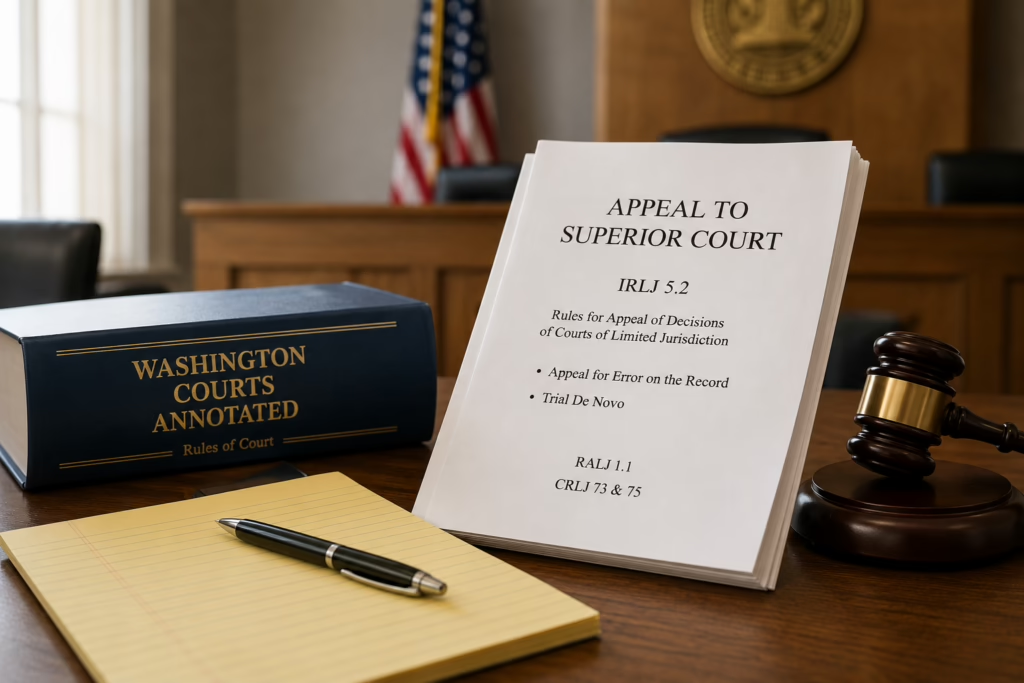
A driver who receives an adverse decision in a Washington traffic infraction case may have the right to seek an appeal to superior court. However, the appeal process is not the same in every court. Under IRLJ 5.2, appeals from courts of limited jurisdiction are governed by separate appellate rules that determine how the superior court reviews the case.
Understanding the distinction between an appeal based on the court record and a trial de novo is important for anyone considering appellate review of a traffic infraction decision.
What Is IRLJ 5.2?
IRLJ 5.2 provides:
An appeal from a court of limited jurisdiction is governed by the Rules for Appeal of Decisions of Courts of Limited Jurisdiction (RALJ).
The rule further explains that some appeals are reviewed solely for legal error based on the existing record, while other appeals are conducted as a new trial.
The applicable procedure depends on the type of court from which the appeal originates.
What Is a Court of Limited Jurisdiction?
Washington courts of limited jurisdiction include:
- District Courts
- Municipal Courts
These courts hear most traffic infractions, parking violations, and other non-criminal infractions.
When a driver loses a contested hearing and files an appeal, the case is generally reviewed by the superior court for the county where the lower court is located.
Appeals Governed by the RALJ Rules
Most modern traffic infraction appeals are governed by the Rules for Appeal of Decisions of Courts of Limited Jurisdiction (RALJ).
Under this system, the superior court reviews the existing court record rather than conducting a completely new hearing.
What Does “Appeal for Error on the Record” Mean?
An appeal for error on the record means the superior court reviews:
- The electronic recording or transcript;
- Exhibits admitted during the hearing;
- Written motions and orders;
- The legal rulings made by the trial court.
The superior court generally does not hear new testimony or consider new evidence.
Instead, the appellate court determines whether the lower court made legal errors that affected the outcome of the case.
What Is a Trial De Novo?
IRLJ 5.2 also recognizes that appeals from certain courts may proceed as a trial de novo.
A trial de novo is essentially a new trial in superior court. Rather than reviewing the prior proceeding for legal error, the superior court hears the case again and makes its own factual and legal determinations.
Historically, some courts lacked an adequate record for appellate review, making a new trial necessary.
The procedures governing a trial de novo are found in:
- CRLJ 73
- CRLJ 75
Today, most courts create a sufficient record, making RALJ review the more common appellate process.
Why the Difference Matters
The distinction between a record appeal and a trial de novo is significant.
In a record appeal:
- New evidence is generally prohibited;
- Witnesses typically do not testify again;
- The focus is on legal error.
In a trial de novo:
- The case may be heard again from the beginning;
- Evidence may be presented anew;
- The superior court acts as the fact finder.
Knowing which procedure applies can affect appellate strategy and the likelihood of success.
Deadlines and Procedural Requirements
Appeals from courts of limited jurisdiction are governed by strict deadlines and filing requirements.
Failing to timely:
- File a notice of appeal;
- Arrange for the record;
- Pay required fees; or
- Follow RALJ procedures
may result in dismissal of the appeal.
Because appellate rules can be technical, parties should carefully review the applicable requirements before proceeding.
When Should You Consider an Appeal?
An appeal may be appropriate when:
- The court misapplied the law;
- Important evidence was improperly excluded or admitted;
- Procedural errors affected the outcome;
- The court exceeded its authority.
However, simply disagreeing with the judge’s factual findings may not be enough to obtain relief on appeal.
Contact Blanford Law
If you are considering an appeal to superior court after a Washington traffic infraction hearing, contact Blanford Law today at ken@blanfordlaw.com or 253-720-9304 for guidance on your legal matter.
Additional Resources
Appeal to Superior Court in Washington
Learn how appeals from district and municipal courts proceed to superior court under Washington law, including record review and procedural requirements.
https://blanfordlaw.com/appeal-to-superior-court-washington/
Appealing a Traffic Infraction in Washington
This guide explains the process of appealing a traffic infraction, common grounds for appeal, and important filing deadlines.
https://blanfordlaw.com/appealing-traffic-infraction-washington/
What to Do When You Miss Court in Pierce County Superior Court
Missing a court date can have serious consequences. Learn what steps may be available to address a missed appearance and protect your rights.
https://blanfordlaw.com/18-what-to-do-when-you-miss-court-in-pierce-county-superior-court/
Washington Jury Instruction Error Case
Appellate courts frequently review whether legal errors affected the outcome of a case. This article discusses how jury instruction errors can become grounds for appeal.
https://blanfordlaw.com/washington-jury-instruction-error-case/
RCW 2.06.040 – Washington Court of Appeals
Explore the role and authority of the Washington Court of Appeals and how appellate review functions within the state’s judicial system.
https://blanfordlaw.com/rcw-2-06-040-court-of-appeals/