
Asbestos Statute Repose Rules in Washington
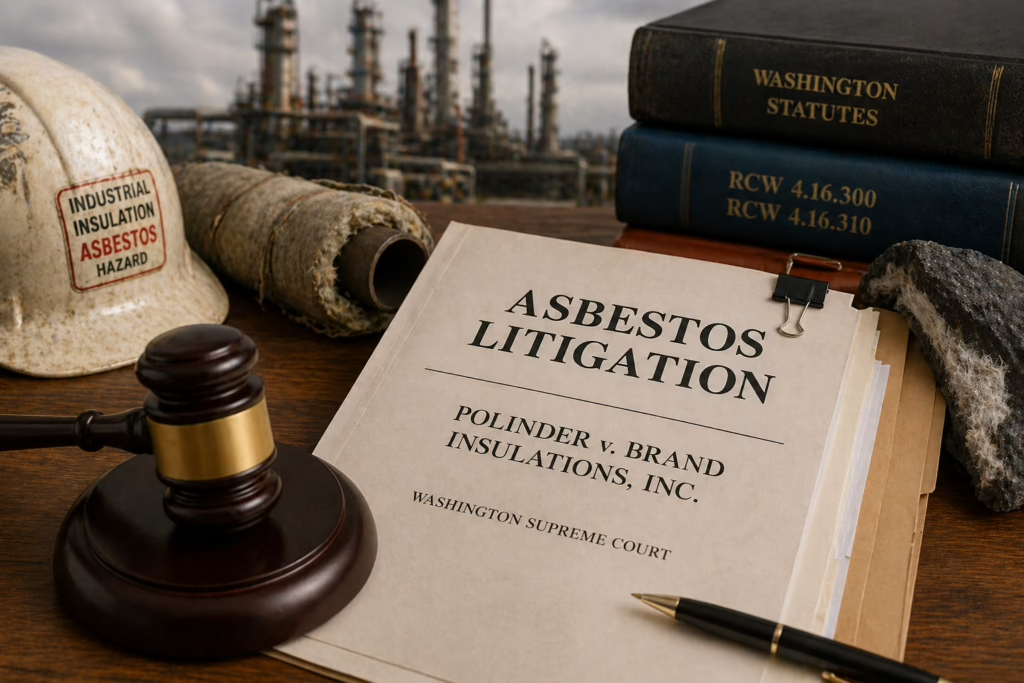
The Washington Supreme Court’s decision in Polinder v. Brand Insulations, Inc. addresses an important issue in asbestos litigation: when does Washington’s construction statute of repose block a lawsuit?
Lee Hetterly worked for years as a maintenance worker at the ARCO Cherry Point refinery in Whatcom County. During that work, he was exposed to asbestos-containing insulation. Decades later, he developed mesothelioma and later died. His estate sued multiple defendants, including Brand Insulations, Inc.
Brand argued that the claims were too late because its insulation work ended in the early 1970s. It relied on Washington’s construction statute of repose, which can cut off claims tied to construction work after six years. The Supreme Court agreed in part, but not completely.
What the Court Decided
The Court held that claims based on Brand’s construction work were barred by the statute of repose. That means claims arising from Brand’s installation of insulation during refinery construction could not proceed.
But the Court also held that other claims could continue. Claims based on Brand acting as a product seller or negligent supplier of asbestos-containing insulation were not automatically barred by the construction statute of repose.
That distinction matters. A company may wear more than one legal “hat.” It may be a construction contractor for some conduct and a product seller or supplier for other conduct.
Washington’s Construction Statute of Repose
Washington’s construction statute of repose applies to claims arising from construction, alteration, repair, design, planning, engineering, and related services for improvements to real property. See RCW 4.16.300.
The related deadline is found in RCW 4.16.310. That statute generally requires covered claims to accrue within six years after substantial completion or termination of the covered services.
In asbestos cases, this can create harsh results. Diseases like mesothelioma often appear decades after exposure. A statute of repose may expire before the injured person ever knows they are sick.
Product Seller Claims Were Different
The estate argued that Brand did more than install insulation. Brand selected asbestos-containing insulation, purchased it, arranged delivery, sold it at a markup, and supplied it for use at the refinery.
That conduct supported claims beyond construction. Washington’s product liability law defines a “product seller” as a person or entity engaged in the business of selling products, including manufacturers, wholesalers, distributors, and retailers. See RCW 7.72.010.
Because Brand may have acted as a product seller or supplier, the Supreme Court allowed those theories to continue.
Why Polinder Matters for Asbestos Cases
The asbestos statute repose issue is important because many asbestos injuries are delayed. Workers may not receive a diagnosis until decades after exposure.
This decision means defendants cannot automatically avoid liability simply by labeling all conduct as construction work. Courts must look closely at the actual role the defendant played.
If the defendant only performed construction services, the repose statute may apply. But if the defendant sold, selected, supplied, or distributed asbestos-containing products, different legal theories may remain available.
Practical Takeaways
The key lesson from Polinder v. Brand Insulations is that asbestos claims require careful legal analysis.
Important questions include:
Did the defendant install the asbestos product?
Did the defendant sell or supply the product?
Did the defendant select the asbestos-containing material?
Was the claim based on construction services or product-related conduct?
Did the injury appear long after the work was completed?
The answers may determine whether a claim survives.
Contact Blanford Law
Asbestos and mesothelioma cases often involve old worksites, multiple defendants, and complex statutes of limitation and repose.
Contact Blanford Law today at ken@blanfordlaw.com or 253-720-9304 for guidance on your legal matter.
Additional Resources
Childhood Abuse Protections Washington Supreme Court
Learn how the Washington Supreme Court has addressed legal protections for survivors of childhood abuse.
https://blanfordlaw.com/childhood-abuse-protections-washington-supreme-court/
RCW 9.73.030 Recording Consent Law
Understand Washington’s consent rules for recording private conversations.
https://blanfordlaw.com/rcw-9-73-030-recording-consent/
Childhood Abuse Statute of Limitations in Washington
This article explains time limits for civil childhood abuse claims in Washington.
https://blanfordlaw.com/childhood-abuse-statute-limitations/
Washington All-Party Consent Recording Law
A guide to Washington’s all-party consent recording requirements.
https://blanfordlaw.com/washington-all-party-consent-recording-law/
Indigent Defense Caseload Limits in Washington
Learn how public defense workload limits may affect fairness in criminal cases.
https://blanfordlaw.com/indigent-defense-caseload-limits/