
A recent Desert Aire DUI Crash on State Route 243 in Grant County highlights the dangers of impaired driving and the legal consequences that can follow a serious motor vehicle collision. When alcohol or drugs contribute to an accident, Washington law provides important protections for people injured by negligent drivers.
Although the reported collision resulted in injuries to the driver suspected of impairment, the incident raises broader questions about civil liability, compensation, and the rights of accident victims throughout Washington State.
Washington State Patrol Investigates DUI Collision Near Desert Aire
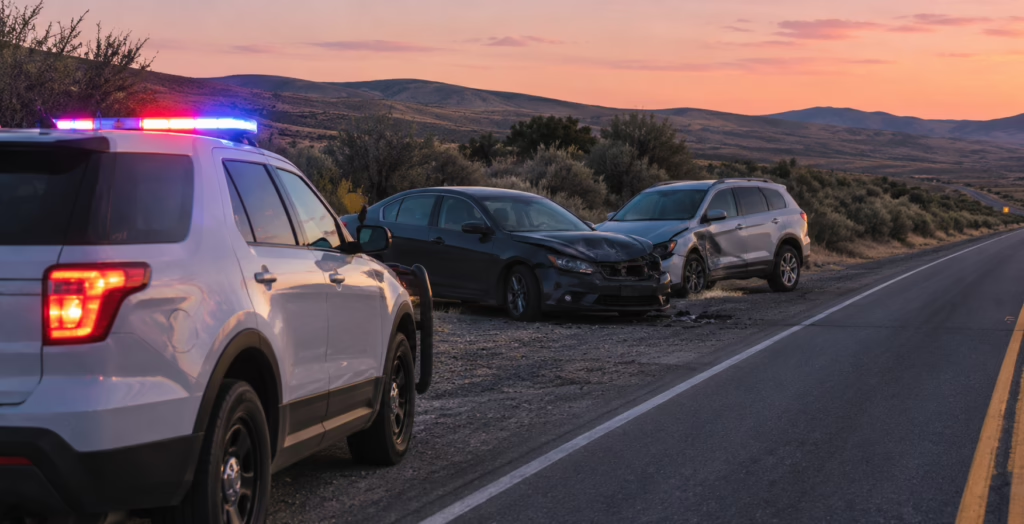
On Friday, November 13, 2026, at approximately 6:25 p.m., a two-vehicle collision occurred on State Route 243 near Desert Aire Drive in Grant County, Washington.
According to the reported investigation, a 23-year-old Mattawa resident driving a sedan attempted a left turn and failed to yield to an approaching SUV operated by a 29-year-old Mattawa resident.
The vehicles collided, leaving the sedan driver injured. Emergency responders treated that driver at the scene. The SUV driver was reportedly uninjured.
The Washington State Patrol investigated the collision and reportedly cited the sedan driver for driving under the influence and failure to yield.
Traffic along SR 243 was affected for several hours while emergency personnel responded and investigators examined the scene.
The reported citations are allegations and do not establish criminal guilt or conclusively determine civil liability.
For more information about collision investigations and traffic safety, visit the official Washington State Patrol website.
Desert Aire DUI Crash: How Washington Law Addresses Impaired Driving
Driving Under the Influence Is Prohibited by Washington Law
Under RCW 46.61.502, Washington prohibits driving while under the influence of intoxicating liquor, cannabis, or other drugs.
A driver may violate the law by operating a vehicle while impaired, even without evidence establishing an alcohol concentration above the statutory limit.
Impaired driving can affect reaction time, judgment, coordination, and the ability to recognize roadway hazards.
When an impaired driver causes a collision, the resulting conduct may establish a basis for civil liability in addition to criminal penalties.
DUI Violations and Negligence Per Se
Washington has a particularly important statute for personal injury cases involving impaired driving.
Under RCW 5.40.050, certain statutory violations involving driving under the influence constitute negligence per se.
This means that a qualifying DUI-related statutory violation can establish the negligence element of a civil claim without requiring the injured person to independently prove that the conduct fell below the ordinary standard of reasonable care.
However, negligence per se does not automatically establish the entire personal injury case.
The injured person must still demonstrate that the negligent conduct legally caused the injuries and that compensable damages resulted.
This distinction can be especially important when evaluating insurance claims following a collision involving a suspected impaired driver.
Failure to Yield and Liability for Motor Vehicle Collisions
The Desert Aire collision also involved an alleged failure to yield.
Washington law establishes specific obligations for motorists making turns and entering roadways.
Under RCW 46.61.185, a driver turning left within an intersection generally must yield to approaching vehicles that are within the intersection or close enough to create an immediate hazard.
Additionally, RCW 46.61.205 establishes right-of-way requirements for drivers entering or crossing a highway from certain locations outside another roadway.
The applicable statute depends on the precise circumstances and roadway configuration.
When a driver fails to yield and causes a collision, that conduct may provide evidence of negligence.
If impairment also contributed to the crash, the injured party may have multiple grounds for establishing liability.
What Compensation Can Victims of DUI Accidents Recover?
A person injured because of another motorist’s negligence may be entitled to recover compensation through a Washington personal injury claim.
Depending on the severity of the injuries and the available evidence, recoverable damages may include:
- Medical expenses: Emergency care, hospitalization, surgery, physical therapy, medication, and future treatment.
- Lost income: Wages lost while recovering and reduced future earning capacity.
- Pain and suffering: Physical discomfort and the consequences of injuries affecting everyday life.
- Emotional distress: Psychological harm resulting from the collision.
- Loss of enjoyment of life: Limitations on activities, hobbies, and normal daily routines.
- Property damage: Vehicle repairs or replacement and other documented property losses.
The amount recoverable depends on the facts, the injuries, available insurance coverage, and applicable Washington law.
A Criminal DUI Conviction Is Not Required for a Civil Claim
One important distinction is that a personal injury lawsuit is separate from a criminal DUI prosecution.
Criminal proceedings determine whether a driver violated Washington’s criminal laws.
A civil personal injury case determines whether a person is legally responsible for another person’s injuries and resulting damages.
An injured person does not necessarily need to wait for a DUI conviction before pursuing compensation.
Civil liability may be established through witness testimony, collision evidence, medical records, impairment evidence, and other relevant information.
Can an Injured Driver Recover Compensation If They Were Also at Fault?
Washington generally follows a comparative fault system.
Under RCW 4.22.005, a person’s contributory fault generally reduces recoverable damages in proportion to that person’s percentage of responsibility.
For example, if an injured driver sustained $100,000 in damages and was determined to be 20% responsible, the recovery would generally be reduced to $80,000.
However, Washington has an additional rule when the injured person was intoxicated.
Under RCW 5.40.060, intoxication may provide a complete defense to a personal injury claim when the injured person’s intoxication was a proximate cause of the injury and the person was more than 50% at fault. The statute also contains an important exception involving claims against intoxicated drivers.
This makes the factual circumstances of a DUI-related collision especially important.
In the Desert Aire incident, the driver suspected of impairment was reportedly the only person physically injured. That fact alone does not establish whether any party has a valid civil claim.
Why Washington State Patrol Reports Matter in Personal Injury Cases
A collision report can provide valuable information when determining responsibility for a motor vehicle accident.
The Washington State Patrol may document vehicle positions, driver statements, witness information, roadway conditions, physical evidence, and suspected traffic violations.
In crashes involving possible impairment, additional investigative evidence may include observations by responding officers and results of legally obtained testing.
These records can help attorneys and insurance companies evaluate how a collision occurred.
However, a collision report does not automatically determine fault in a civil lawsuit. Independent investigation may be necessary to establish liability and damages.
Individuals seeking collision information can begin with the Washington State Patrol or review the Washington Department of Licensing’s collision reporting guidance.
What Should You Do After an Accident Involving a Suspected Impaired Driver?
Following a collision, taking appropriate steps can help protect both your health and your potential personal injury claim.
Seek Medical Attention
Prompt medical evaluation is important even when injuries initially seem minor.
Some conditions, including concussions, neck injuries, and back injuries, may not become fully apparent immediately after a collision.
Preserve Evidence
If it is safe to do so, photograph the vehicles, roadway, damage, and visible injuries.
Keep witness contact information, insurance details, medical records, and communications relating to the collision.
Document Your Financial Losses
Maintain records of medical expenses, missed work, transportation costs, and other collision-related financial consequences.
Accurate documentation can help establish the value of a personal injury claim.
Be Careful With Insurance Settlements
Insurance companies may attempt to resolve claims before the full extent of an injury is known.
Accepting a settlement and signing a release may prevent an injured person from seeking additional compensation later.
Consulting an attorney before resolving a significant injury claim can help protect your legal interests.
How Long Do You Have to File a Personal Injury Lawsuit in Washington?
Under RCW 4.16.080(2), most Washington personal injury lawsuits arising from motor vehicle collisions must be filed within three years.
Certain exceptions or special circumstances may change the applicable deadline.
Waiting can also make it more difficult to preserve evidence, locate witnesses, and document the full consequences of an injury.
An attorney can evaluate the applicable filing deadline based on the specific facts of the case.
Contact Blanford Law About a Washington DUI Accident Injury Claim
The collision near Desert Aire illustrates the dangers associated with suspected impaired driving and the importance of understanding Washington’s personal injury laws.
For someone injured by another driver’s negligence, the legal issues may involve impaired driving, failure to yield, comparative fault, insurance coverage, and the extent of recoverable damages.
Blanford Law represents individuals pursuing personal injury claims arising from motor vehicle collisions throughout Washington State.
If you or a loved one has been injured in an accident involving a suspected impaired driver, obtaining legal guidance can help you understand your rights and available options.
Contact Blanford Law today at ken@blanfordlaw.com or 253-720-9304 for guidance on your legal matter.
Additional Resources
Blanford Law internal article links and orphaned-content links will be added after the SEO Article Tracker is available.
Additional Resources
1. Two Injured in I-90 Vantage RV Crash: Washington Passenger Injury Rights
A serious recreational vehicle collision near Vantage, Washington, highlights the legal rights of injured passengers, including potential compensation for medical expenses, lost wages, and pain and suffering.
2. Washington DUI License Suspension: What Happens After an Arrest?
Learn how Washington handles driver’s license suspensions following DUI arrests, including administrative proceedings, hearing deadlines, and the consequences of impaired driving.
3. Auburn SR 167 Crash Injures Two Men
A suspected DUI collision on State Route 167 in Auburn sent two drivers to the hospital. This article explores the accident, potential driver liability, and personal injury considerations when impaired driving contributes to a crash.
4. DUI Collision on I-90 Near Cle Elum Injures Two
This article examines a DUI-related collision on Interstate 90 near Cle Elum that injured a driver and passenger, illustrating the dangers of impaired driving and the importance of investigating accident-related injuries.
5. RCW 5.40.060: Intoxication Defense in Washington Personal Injury and Wrongful Death Cases
Understand how Washington’s intoxication defense can affect personal injury compensation, including comparative fault rules and the special statutory provisions involving intoxicated drivers.