
Washington Law on Avoiding Accidents: The Duty of All Drivers
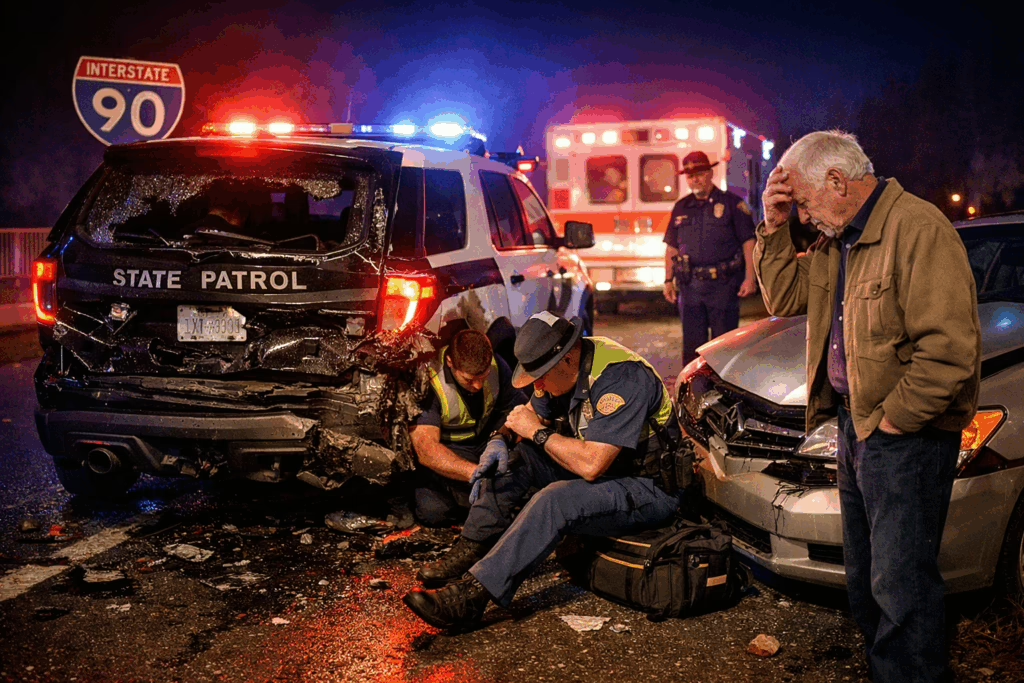
In Washington state, every driver has a primary duty to avoid accidents. This duty does not change based on age, vehicle type, or the presence of emergency responders on the roadway. A recent crash in Kittitas County involving an 86‑year‑old Easton man who rear‑ended a Washington State Patrol (WSP) SUV highlights the importance of this duty and the potential legal consequences when it is breached.
What Happened on I‑90
Late one night, in the westbound lanes of Interstate 90 near the Pine Glen area, a fully marked WSP SUV was stopped with emergency lights activated. According to reports, the SUV was stationary in a traffic lane when the elderly driver collided with it from behind. One trooper suffered minor injuries and was hospitalized, while the other trooper was not in the SUV at the time. The causing driver was uninjured. This incident follows another recent crash where a state patrol vehicle was struck in Pierce County, causing minor injuries to a sergeant. These back‑to‑back incidents illustrate the risks law enforcement faces and emphasize the duty of all drivers — including elderly drivers — to take reasonable care to avoid collisions.
Understanding the Duty to Avoid Accidents
Under Washington law, all drivers owe a duty of reasonable care to others on the road. This duty includes:
- Maintaining control of the vehicle;
- Paying attention to road and traffic conditions;
- Adjusting driving to weather and visibility;
- Maintaining a safe following distance; and
- Observing emergency vehicles and slowing or moving over as required.
Failing to uphold this duty can lead to civil liability for personal injury or property damage and may result in traffic citations or criminal charges in serious cases.
The Standard of Care for Elderly Drivers
There is no special legal standard that allows elderly drivers to exercise less caution simply because of age. Instead, the standard remains what a reasonable driver would do under similar circumstances. While age can be a factor in evaluating physical or cognitive ability in some legal contexts, it does not change the fundamental legal responsibility to avoid foreseeable harm to others.
Why Following Distance Matters
In rear‑end collisions, the driver in the rear almost always bears primary responsibility because they had the last clear chance to avoid the crash by maintaining adequate following distance and reacting appropriately to slowed or stopped traffic ahead.
A driver must be able to stop within the distance they can see to be clear — a principle that becomes especially crucial when approaching stopped emergency vehicles with flashing lights.
Legal Consequences of Failing to Avoid an Accident
When a driver breaches the duty to avoid accidents, several legal consequences may follow:
- Traffic Infractions: Speeding, following too closely, and failure to move over for emergency vehicles can lead to tickets and fines.
- Civil Liability: A driver can be sued for damages by injured parties, including law enforcement officers injured in the crash.
- Criminal Charges: In cases involving serious injury or death, a driver could face gross misdemeanor or felony charges (e.g., vehicular assault or vehicular homicide) depending on circumstances like impairment or reckless driving.
The recent I‑90 crash involving the elderly driver illustrates how a failure to maintain control and avoid a stopped emergency vehicle can have serious consequences — even when the cause may be unintentional.
What Should You Do After a Crash Involving an Emergency Vehicle?
If you are involved in a crash with a law enforcement vehicle:
- Stop Immediately: Remain at the scene if it is safe to do so and call 911 if necessary.
- Render Aid if Able: Offer reasonable assistance to anyone injured.
- Exchange Information: Provide your name, contact, and insurance information to law enforcement.
- Document the Scene: Take photos if possible and note details of how the crash occurred.
- Consult an Attorney: Especially when law enforcement is involved, legal guidance can protect your rights and help you understand your responsibilities.
Call to Action
If you or a loved one has been involved in a collision — including one involving law enforcement vehicles — it’s important to understand your legal rights and obligations. Contact Blanford Law today at ken@blanfordlaw.comor 253‑720‑9304 for guidance on your legal matter.
Additional Resources
- State v. Danielson: Washington Supreme Court Ruling – A key decision on roadside encounters and constitutional rights during vehicle stops.
- Responding to a Notice of Infraction (IRLJ 2.4) – Understand your options and legal procedures for contesting a traffic infraction in Washington.
- SUV Crash in Kittitas County Raises Safety Concerns – A look at recent SUV crashes and what drivers can do to reduce collision risks.
- SUV Rollover in Ellensburg: Legal and Safety Analysis – Examining the causes and legal implications of SUV rollovers in Central Washington.
- State v. Danielson: Impact on Vehicle Stop Rights – How this case shapes law enforcement authority during traffic stops.