
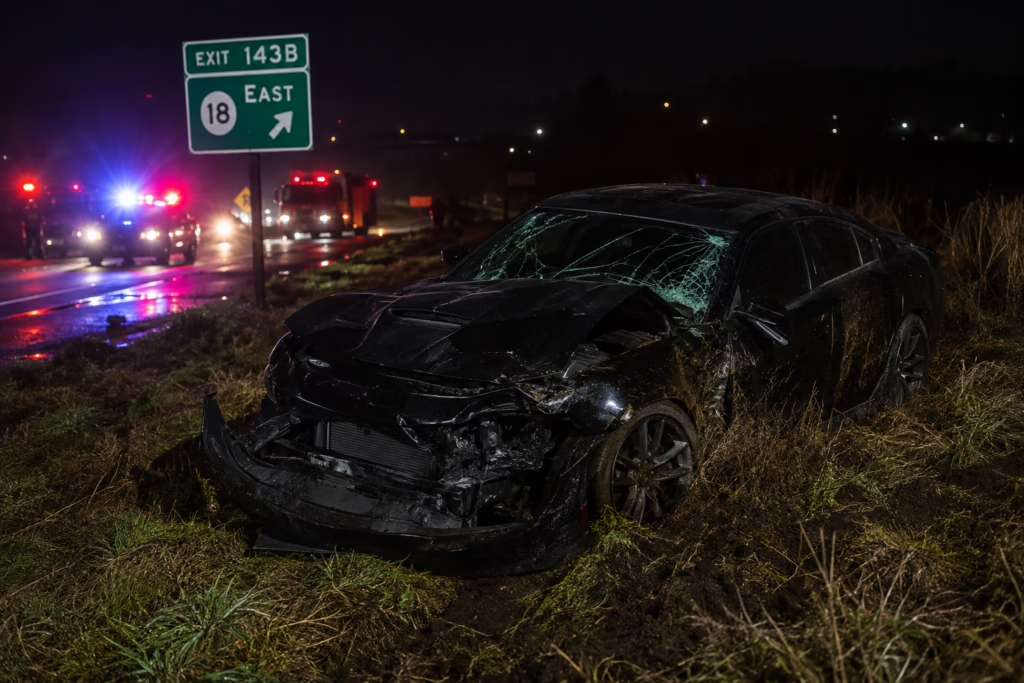
The reported Federal Way crash injuries following a high-speed incident on Interstate 5 raise important questions for injured passengers and others harmed in serious Washington car crashes. According to the reported facts, a Dodge Charger allegedly traveling 93 mph on northbound I-5 failed to stop for a Washington State Patrol trooper before leaving the roadway near the State Route 18 exit in Federal Way. Both the driver and passenger were injured and transported to a hospital.
Although the driver reportedly faces investigation for several criminal offenses, including DUI and felony attempting to elude, an injured passenger may face an entirely different set of concerns: medical bills, lost income, insurance claims, ongoing treatment, and whether compensation may be available for injuries caused by another person’s driving.
A criminal investigation and a personal injury claim are separate matters. An injured passenger does not have to wait for a criminal case to be completed before learning about potential civil rights and insurance coverage.
What Happened in the Federal Way I-5 Crash?
Shortly before 1 a.m., a Washington State Patrol trooper reportedly saw a black Dodge Charger traveling northbound on Interstate 5 near 54th Avenue East in Fife.
According to WSP, the vehicle was traveling approximately 93 mph in a 60 mph zone.
The trooper attempted to stop the vehicle, but the driver allegedly continued north toward Federal Way. As the Charger attempted to take the exit toward eastbound State Route 18, it reportedly left the roadway and crashed into a field.
The driver, identified in reports as a 31-year-old Puyallup man, and his 27-year-old Federal Way passenger were both injured and transported to a hospital.
The driver was reportedly taken into custody for investigation of multiple offenses, including felony attempting to elude, vehicular assault, DUI, reckless endangerment, third-degree driving while license suspended, and an ignition interlock device violation.
Those are allegations, and criminal responsibility remains subject to the criminal court process.
More information about highway safety, collision investigations, and Washington State Patrol services is available from the Washington State Patrol.
Federal Way Crash Injuries and an Injured Passenger’s Rights
Passengers are often in a different legal position from the person driving the vehicle.
A passenger generally is not responsible for controlling the speed of the car, deciding whether to stop for police, or choosing how the vehicle is operated. If a driver’s negligent or reckless conduct causes a crash, an injured passenger may have a claim against the driver responsible for the collision.
That can be true even when the injured passenger knows the driver personally.
A personal injury claim is generally pursued against applicable insurance coverage rather than being treated simply as a dispute between the passenger and the driver. Depending on the circumstances, several insurance policies or coverage types may need to be investigated.
Alleged Criminal Conduct Can Also Be Important Evidence
The reported criminal allegations do not automatically establish civil liability.
However, evidence gathered during the Washington State Patrol investigation may become important in a later injury claim. That evidence can include:
- Collision reports
- Photographs of the crash scene
- Vehicle damage
- Trooper observations
- Speed evidence
- Video recordings
- Witness statements
- Toxicology evidence
- Medical records
- Evidence concerning the events immediately before the crash
An allegation that a vehicle was traveling 93 mph in a 60 mph zone, for example, could be significant when evaluating whether the driver exercised reasonable care.
Evidence can change or disappear over time, which is one reason an injured person may want to begin preserving records soon after a serious collision.
What Compensation Could an Injured Passenger Recover?
The value of a Washington personal injury claim depends on the facts and the actual losses caused by the crash.
An injured passenger may potentially seek compensation for damages such as:
- Emergency medical treatment
- Hospital expenses
- Follow-up medical care
- Physical therapy or rehabilitation
- Medication costs
- Future medical treatment
- Lost wages
- Reduced earning capacity
- Pain and suffering
- Emotional distress
- Permanent impairment or disability
The existence of an injury does not guarantee a particular settlement. Medical evidence, insurance coverage, fault, treatment history, and the long-term effect of the injuries can all influence a claim.
Who Pays Medical Bills After a Washington Crash?
One of the first practical questions after a collision is often who will pay the medical bills.
Several sources of coverage may potentially apply.
Personal Injury Protection
Personal Injury Protection, commonly called PIP, may pay qualifying medical expenses and certain other losses without requiring the injured person to first prove who caused the accident.
Whether PIP coverage is available depends on the applicable auto insurance policy.
At-Fault Driver’s Liability Insurance
If another driver’s negligence caused the collision, that driver’s bodily injury liability coverage may potentially provide compensation.
A liability claim usually requires investigation of fault and damages before a settlement is reached. That means liability insurance may not immediately pay medical providers while treatment is ongoing.
Health Insurance
Health insurance may also pay medical expenses after a crash. If health insurance pays accident-related bills, reimbursement or subrogation issues can arise later when the injury claim is resolved.
Sorting out these different sources of coverage can become especially important after hospitalization or significant injuries.
Does DUI Affect a Washington Personal Injury Claim?
The driver in this incident was reportedly investigated for DUI, but an investigation is not the same as a conviction.
From a personal injury standpoint, the important question is whether the available evidence shows that negligent or reckless driving caused the passenger’s injuries.
Evidence of impairment may become relevant if it is established through admissible evidence.
The civil claim and criminal DUI case serve different purposes. The criminal case concerns whether the State can prove a criminal offense. A personal injury claim concerns whether another party is legally responsible for the injured person’s losses.
An injured passenger should therefore not assume that a civil claim depends entirely on whether prosecutors ultimately obtain a DUI conviction.
Washington Uses Comparative Fault
Washington follows a comparative fault system.
Under RCW 4.22.005, fault attributed to an injured claimant can proportionately reduce compensation, but contributory fault does not automatically bar recovery.
For many ordinary passengers, there may be little or no basis to assign responsibility for how the vehicle was driven. Still, insurers may investigate all of the circumstances surrounding a crash.
Questions about fault should be evaluated based on the evidence rather than assumptions made shortly after a collision.
Insurance Issues Can Become Complicated After a Serious Crash
A high-speed crash can create insurance questions beyond determining who caused the accident.
An investigation may need to determine:
- Who owned the Charger
- Whether the driver was insured
- What liability limits were available
- Whether the passenger had separate auto insurance
- Whether PIP coverage applies
- Whether uninsured or underinsured motorist coverage applies
- Whether any exclusions are being asserted
- Whether multiple injured people are competing for limited insurance proceeds
When injuries are significant, policy limits can become especially important.
An insurer’s available coverage may be much lower than the injured person’s medical expenses and other losses. Identifying all potential insurance policies can therefore be an important part of investigating a personal injury case.
Why Medical Documentation Matters After Federal Way Crash Injuries
People injured in serious collisions should prioritize appropriate medical care.
Medical records can document the injuries caused by the crash, treatment recommendations, symptoms, limitations, and recovery process. Gaps in treatment or failure to follow medical advice can later become issues in an insurance claim.
Injured people should also consider keeping records of:
- Medical appointments
- Prescriptions
- Out-of-pocket expenses
- Time missed from work
- Wage-loss information
- Changes in daily activities
- Pain and physical limitations
The goal is not to exaggerate an injury. It is to maintain an accurate record of how the collision affected the injured person’s life.
How Long Do You Have to File a Washington Injury Claim?
Washington law generally provides a three-year limitation period for actions involving injury to a person under RCW 4.16.080.
That does not mean an injured person should wait three years to investigate a crash.
Important evidence may be much easier to obtain shortly after the collision. Vehicles can be repaired or destroyed, witnesses can become difficult to locate, recordings may be overwritten, and memories can fade.
There can also be situations in which different deadlines or procedural requirements apply. Anyone concerned about a filing deadline should obtain advice based on the specific facts of the case.
A Criminal Case Does Not Compensate an Injured Passenger
The criminal charges reported in connection with this incident may result in court proceedings involving the driver and the State of Washington.
Those proceedings are not the same as an insurance claim or civil personal injury case.
Even when a driver faces serious criminal allegations, an injured passenger may need to independently pursue compensation for medical expenses, wage loss, pain and suffering, and other damages.
A personal injury attorney can investigate insurance coverage, obtain collision evidence, communicate with insurance companies, review medical documentation, and evaluate what compensation may be available.
Speak With a Washington Personal Injury Attorney
A high-speed crash can leave an injured passenger dealing with medical treatment, missed work, insurance adjusters, and uncertainty about how the bills will be paid. When another person’s driving may have caused the collision, it is important to understand the available insurance coverage and potential personal injury claims.
Contact Blanford Law today at ken@blanfordlaw.com or 253-720-9304 for guidance on your legal matter.
Additional Resources
Car Accident in Washington: What to Know After a Crash
Learn about key legal and practical issues that can arise after a Washington car accident, including insurance, fault, and next steps.
https://blanfordlaw.com/car-accident-washington/
Album Release Traffic Fatalities
Read about a Washington traffic-fatality case and the legal issues that can follow serious roadway collisions.
https://blanfordlaw.com/album-release-traffic-fatalities/
DUI Arrest Score: What Drivers Should Know
Review information about DUI arrests in Washington and the consequences that may follow an impaired-driving investigation.
https://blanfordlaw.com/dui-arrest-score-jai/
Auburn SR 167 Crash Injuries
Learn about a serious SR 167 crash near Auburn and the types of legal and safety issues that can arise after a major roadway collision.
https://blanfordlaw.com/auburn-sr-167-crash-injuries/