
Understanding the Intoxication Defense Under RCW 5.40.060
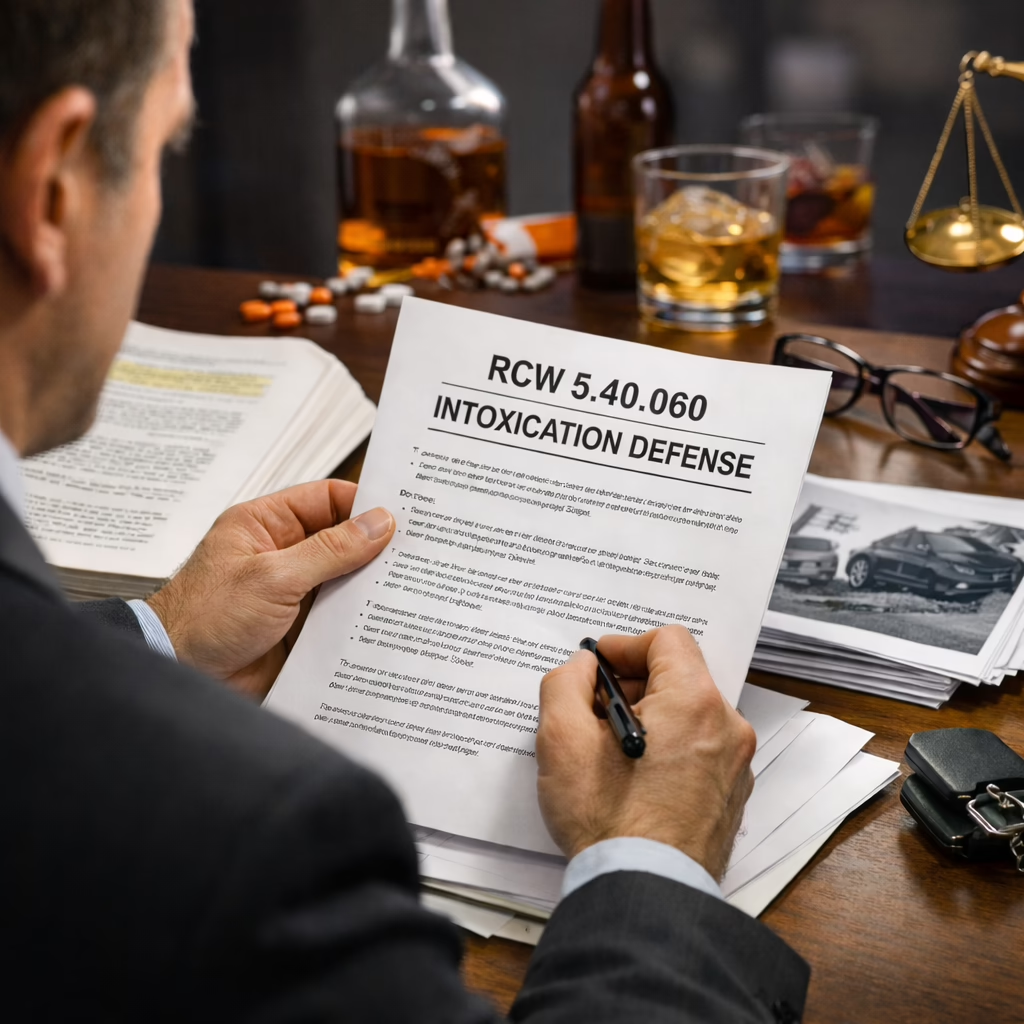
RCW 5.40.060 creates a legal defense in Washington for certain personal injury and wrongful death lawsuits. The statute allows a defendant to avoid liability when the injured or deceased person was under the influence of intoxicating liquor or drugs, and that intoxication contributed significantly to the injury or death.
The rule reflects a policy decision in Washington law: individuals whose own intoxication substantially caused their injuries may be barred from recovering damages.
However, the statute imposes specific legal requirements before this defense applies.
When the Intoxication Defense Applies
Under RCW 5.40.060(1), a defendant may assert a complete defense if the following elements are proven:
- The injured or deceased person was under the influence of intoxicating liquor or drugs at the time of the incident.
- The intoxication was a proximate cause of the injury or death.
- The trier of fact determines the person was more than 50% at fault for the occurrence.
If these elements are satisfied, the statute provides a complete bar to recovery in a civil action for damages.
This means the injured party—or their estate in a wrongful death case—cannot recover damages from the defendant.
How Washington Law Defines “Under the Influence”
RCW 5.40.060 incorporates the intoxication standard used in Washington DUI law.
The statute specifically states that the determination of intoxication must follow the same standard used for criminal convictions under RCW 46.61.502, Washington’s driving under the influence law.
Under this framework:
- A person may be considered under the influence if alcohol or drugs impair their ability to function safely.
- Evidence meeting the DUI standard is treated as conclusive proof of intoxication for purposes of the defense.
Because DUI standards are well-established in Washington law, courts can rely on familiar evidence such as:
- Blood alcohol concentration (BAC) results
- Toxicology reports
- Officer observations or field sobriety evidence
- Expert testimony regarding impairment
This provision helps streamline litigation by providing a clear legal standard for intoxication.
The Role of Proximate Cause
Even if intoxication is proven, the defense only applies if the intoxication was a proximate cause of the injury or death.
In Washington law, proximate cause generally involves two components:
- Cause in fact – the injury would not have occurred without the conduct.
- Legal causation – the harm is reasonably connected to the conduct.
For example, intoxication may be considered a proximate cause if impairment leads to unsafe behavior that contributes to the incident.
However, if the intoxication had no meaningful connection to the injury, the defense may not apply.
The More-Than-50% Fault Requirement
RCW 5.40.060 also requires the fact finder to determine that the intoxicated individual was more than 50 percent at fault.
Washington normally follows a comparative fault system, where damages are reduced based on each party’s share of responsibility.
But this statute creates a special rule:
if the intoxicated person’s fault exceeds 50 percent, the claim may be completely barred.
This makes the intoxication defense significantly stronger than ordinary comparative fault principles.
Exception for Intoxicated Drivers
Intoxication Defense Washington Law and Motor Vehicle Cases
RCW 5.40.060(2) creates an important exception involving intoxicated drivers.
The intoxication defense cannot be used by a driver who was also under the influence if:
- The driver’s intoxication was a proximate cause of the injury or death, and
- The injured person’s intoxication did not cause the incident.
In other words, an intoxicated driver cannot avoid liability simply because the victim was also intoxicated, unless the victim’s condition actually contributed to the occurrence.
This provision helps prevent impaired drivers from escaping responsibility when their own intoxication caused the collision.
Why RCW 5.40.060 Matters in Civil Litigation
RCW 5.40.060 plays an important role in Washington personal injury and wrongful death cases by addressing situations involving alcohol or drug impairment.
The statute:
- Limits recovery when intoxication substantially contributed to the injury
- Establishes a clear intoxication standard tied to DUI law
- Requires proof that the intoxicated person was more than 50% responsible
- Prevents intoxicated drivers from using the defense when their impairment caused the crash
Because intoxication can significantly affect liability, this statute often becomes a critical issue in cases involving accidents, injuries, or fatalities.
Contact Blanford Law
Contact Blanford Law today at ken@blanfordlaw.com or 253-720-9304 for guidance on your legal matter.
Additional Resources
Understanding Washington State RCW 5.40.060: A Legal Perspective
A deeper look at the intoxication defense in Washington and how courts evaluate impairment and comparative fault in civil litigation.
https://blanfordlaw.com/understanding-washington-state-rcw-5-40-060-a-legal-perspective/
Understanding RCW 4.24.420: A Legal Perspective on Personal Injury and Wrongful Death Claims
Explains Washington’s felony defense statute and how criminal conduct can affect civil liability.
https://blanfordlaw.com/understanding-rcw-4-24-420-a-legal-perspective-on-personal-injury-and-wrongful-death-claims/
Washington Bail for Felonies
Overview of how Washington courts determine bail conditions in felony criminal cases.
https://blanfordlaw.com/washington-bail-for-felonies/
Navigating Post-Conviction Detention in Washington State (RCW 10.64.0251 Explained)
A guide to detention rules following conviction and how they affect defendants awaiting further proceedings.
https://blanfordlaw.com/navigating-post-conviction-detention-in-washington-state-rcw-10-64-0251-explained/
Voting Rights Restoration in Washington State
Explains how individuals with felony convictions may restore their right to vote in Washington.
https://blanfordlaw.com/voting-rights-restoration/