
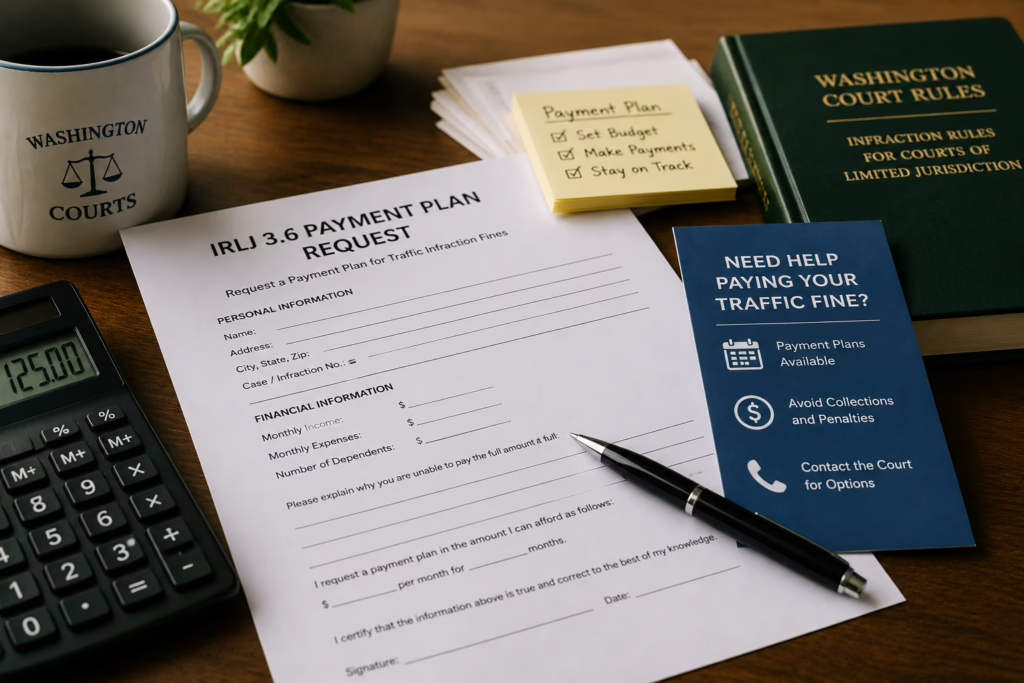
Washington traffic tickets and court fines can create serious financial pressure for many drivers. Recognizing this reality, Washington courts provide procedures that allow individuals to request installment payment arrangements for traffic-related monetary obligations. Under IRLJ 3.6 payment plans, individuals may ask the court for additional time to pay traffic infraction penalties and associated costs.
The rule helps ensure that people who cannot immediately pay a ticket in full still have a way to satisfy court obligations while avoiding unnecessary collection activity or additional financial hardship.
What Is IRLJ 3.6?
IRLJ 3.6 is part of Washington’s Infraction Rules for Courts of Limited Jurisdiction. The rule governs payment plans related to traffic infractions and other monetary obligations imposed by the court.
The rule provides that a person may request a payment plan at any time for:
- Monetary penalties;
- Court fees;
- Assessments;
- Costs; and
- Other financial obligations connected to an infraction.
Importantly, the rule recognizes that many individuals do not have the present ability to pay a traffic ticket in full immediately after receiving a citation or court decision.
When Courts Must Approve Payment Plans
Mandatory Payment Plans Under IRLJ 3.6
Subsection (a) of the rule requires courts to approve payment plans in certain situations.
Under IRLJ 3.6 payment plans, the court must grant a payment arrangement if:
- The court determines the person does not currently have the ability to pay in full;
- The person has not previously received a payment plan for the same monetary obligation; and
- The court has not already authorized its collection agency to begin civil legal enforcement action.
If these conditions are met, the court is required to enter into a payment plan with the individual.
This mandatory language is important because it limits judicial discretion when a person demonstrates genuine financial hardship.
Ability to Pay Considerations
Financial Hardship Evaluations
Although the rule does not define a precise formula for determining inability to pay, courts generally consider factors such as:
- Income;
- Employment status;
- Monthly expenses;
- Dependents;
- Public assistance eligibility; and
- Other outstanding financial obligations.
Defendants may need to provide financial documentation or complete court forms explaining their financial situation.
Courts increasingly recognize that excessive fines and aggressive collections can create long-term economic consequences for individuals and families.
Discretionary Payment Plans
Collection Agency Involvement
Subsection (b) addresses situations where the court has already authorized a collections agency to pursue civil enforcement action.
In those cases, the court still may approve a payment plan, but approval becomes discretionary rather than mandatory.
This means the judge or court administrator can decide whether to allow installment payments after collection proceedings have begun.
The distinction is important because delays in addressing unpaid traffic fines can reduce the options available to a defendant.
Why Payment Plans Matter
Avoiding Collections and Additional Penalties
Failing to address unpaid traffic fines can lead to significant consequences, including:
- Collection agency fees;
- Wage garnishment;
- Damage to credit;
- Additional court costs; and
- Civil enforcement actions.
By requesting a payment plan early, individuals may avoid more severe financial consequences.
Access to Justice Concerns
The adoption and amendment of rules like IRLJ 3.6 reflect broader concerns about fairness in court-imposed financial obligations.
Courts throughout the country have faced criticism for imposing fines and fees that disproportionately affect lower-income individuals. Payment plans help courts balance enforcement of legal obligations with practical economic realities.
Washington’s rules increasingly emphasize access to justice and the importance of providing realistic payment options.
How to Request an IRLJ 3.6 Payment Plan
Contacting the Court
Drivers seeking installment payments should contact the court handling the infraction as soon as possible.
Many courts now provide:
- Online request forms;
- Financial declaration forms;
- Remote hearing options; and
- Information regarding collections and payment alternatives.
Some courts may allow payment arrangements without requiring a formal hearing.
Documentation That May Help
Individuals requesting payment plans should be prepared to provide:
- Proof of income;
- Recent pay stubs;
- Benefit statements;
- Monthly expense information; and
- Documentation of financial hardship.
Providing complete and accurate information can improve the likelihood of approval.
Relationship Between IRLJ 3.6 and IRLJ 3.5
IRLJ 3.6 works closely with IRLJ 3.5, which governs hearings based on written statements.
Recent rule changes require courts to notify defendants about:
- Inability-to-pay options;
- Payment plan availability; and
- Possible collection consequences for unpaid fines.
Together, these rules aim to make the traffic infraction process more transparent and accessible.
Key Takeaways About IRLJ 3.6 Payment Plans
The IRLJ 3.6 payment plans rule provides important protections for Washington drivers facing financial hardship after a traffic infraction.
Key points include:
- Payment plans may be requested at any time;
- Courts must approve plans in certain hardship situations;
- Collection activity can affect available options;
- Early action is important to avoid additional enforcement measures; and
- Courts increasingly prioritize access-to-justice concerns in traffic cases.
Anyone struggling to pay traffic-related court obligations should promptly explore available payment options before collection proceedings begin.
Contact Blanford Law
Contact Blanford Law today at ken@blanfordlaw.com or 253-720-9304 for guidance on your legal matter.
Additional Resources
- IRLJ 3.6 Payment Plans
Learn how Washington courts handle payment plans for traffic infraction fines and financial hardship requests.
URL: https://blanfordlaw.com/irlj-3-6-payment-plans/ - Posting Bail at King County Jail
An overview of the bail process, release procedures, and important considerations for individuals in custody in King County.
URL: https://blanfordlaw.com/posting-bail-king-county-jail/ - Snoqualmie Pass Comprehensive Safety Action Plan
A discussion of roadway safety improvements and transportation planning efforts in King and Kittitas Counties.
URL: https://blanfordlaw.com/snoqualmie-pass-comprehensive-safety-action-plan-improving-travel-safety-in-king-and-kittitas-counties/ - Coupeville Fatal Crash SR20 Roundabout Safety
An article examining traffic safety concerns and roadway design issues related to SR20 roundabouts.
URL: https://blanfordlaw.com/coupeville-fatal-crash-sr20-roundabout-safety/ - The Importance of Estate Planning for Navy Families
A guide discussing estate planning considerations unique to military families and service members.
URL: https://blanfordlaw.com/the-importance-of-estate-planning-for-navy-families-unique-considerations-to-keep-in-mind/