
Understanding IRLJ 5.1 in Washington Traffic Infraction Cases
IRLJ 5.1 is a procedural rule within the Infraction Rules for Courts of Limited Jurisdiction that determines which decisions in a traffic infraction case may be appealed.
Traffic infractions in Washington are handled in district courts and municipal courts, which are courts of limited jurisdiction. Because these cases are civil rather than criminal, the appeal process is narrower than in many criminal proceedings.
IRLJ 5.1 sets clear limits on when either party may appeal a court decision in a traffic infraction case.
When a Defendant May Appeal
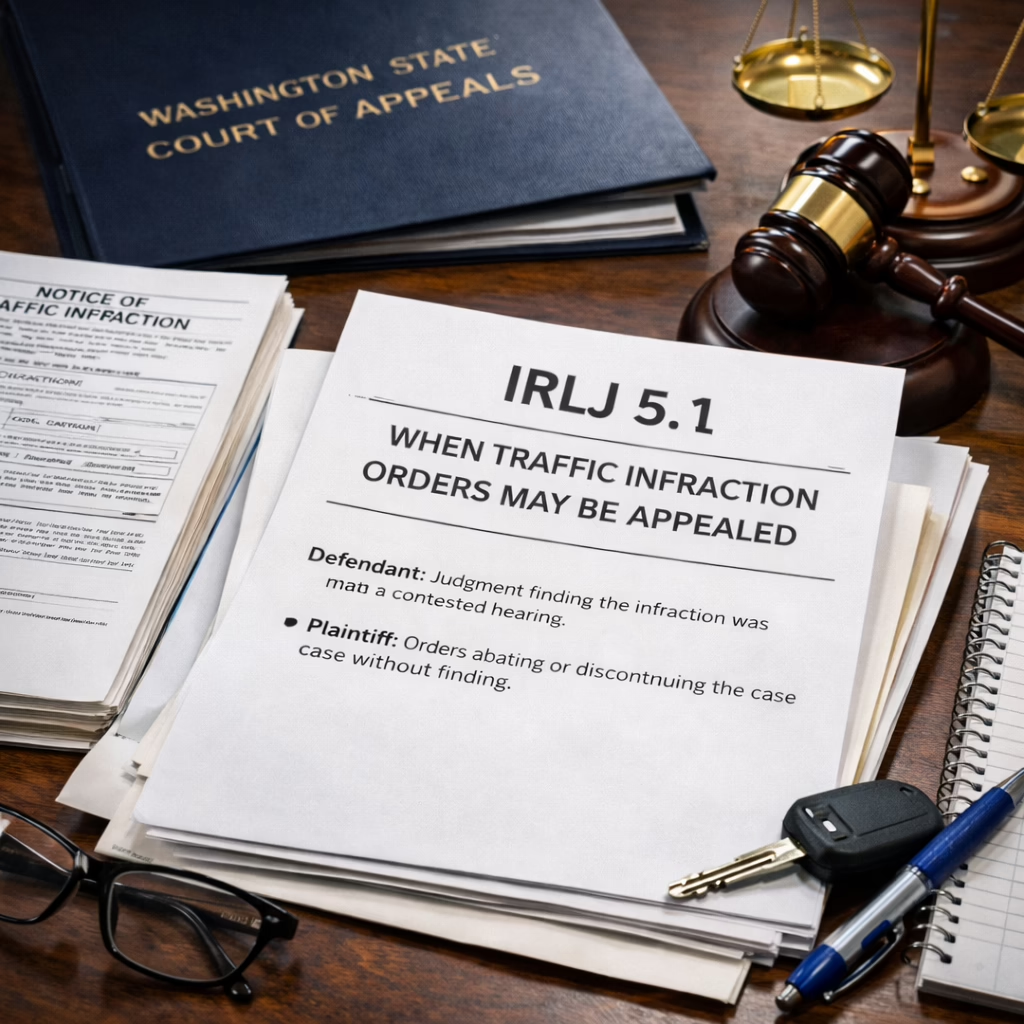
Under IRLJ 5.1, a defendant may appeal only one type of decision:
A judgment entered after a contested hearing that finds the defendant committed the infraction.
In practical terms, this means:
- The driver must first request a contested hearing.
- The court must then enter a judgment finding the infraction was committed.
- After that judgment, the defendant has the right to pursue an appeal.
If a defendant simply pays the fine or requests a mitigation hearing, there generally will not be a judgment that can be appealed under this rule.
When the Plaintiff May Appeal
The plaintiff in a traffic infraction case is typically the government entity that issued the citation, such as a city or county prosecuting authority.
Under IRLJ 5.1, the plaintiff may appeal a decision that:
- Abates the case
- Discontinues the case
- Otherwise determines the case without a judgment that the defendant did not commit the infraction
In other words, if the court effectively ends the case in a way other than entering a formal judgment that the defendant did not commit the infraction, the government may appeal that ruling.
Orders That Cannot Be Appealed
The rule also establishes an important limitation.
No other orders or judgments are appealable by either party.
This means that routine rulings during a traffic infraction proceeding generally cannot be appealed independently. Only the specific categories described in IRLJ 5.1 qualify for appellate review.
The rule is designed to keep the infraction process efficient and streamlined, preventing minor procedural rulings from generating multiple appeals.
Why IRLJ 5.1 Matters
Although traffic infractions are civil matters, the consequences can still be significant. Infractions may result in:
- Monetary penalties
- Insurance impacts
- Points or consequences affecting driving privileges
Because of these potential consequences, IRLJ 5.1 provides a limited pathway for appellate review when a contested hearing results in an unfavorable judgment.
At the same time, the rule maintains efficiency by strictly limiting which decisions can be appealed.
Contact Blanford Law
Contact Blanford Law today at ken@blanfordlaw.com or 253-720-9304 for guidance on your legal matter.
Additional Resources
Understanding Washington State RCW 5.40.060: A Legal Perspective
Explains how intoxication may serve as a defense in certain personal injury and wrongful death cases.
https://blanfordlaw.com/understanding-washington-state-rcw-5-40-060-a-legal-perspective/
Understanding RCW 4.24.420: A Legal Perspective on Personal Injury and Wrongful Death Claims
Discusses Washington’s felony defense statute and how criminal conduct can affect civil liability.
https://blanfordlaw.com/understanding-rcw-4-24-420-a-legal-perspective-on-personal-injury-and-wrongful-death-claims/
Washington Bail for Felonies
An overview of how courts determine bail in Washington felony cases.
https://blanfordlaw.com/washington-bail-for-felonies/
Navigating Post-Conviction Detention in Washington State (RCW 10.64.0251 Explained)
Explains detention rules that may apply after conviction.
https://blanfordlaw.com/navigating-post-conviction-detention-in-washington-state-rcw-10-64-0251-explained/
Voting Rights Restoration in Washington State
Explains how individuals with felony convictions may restore their voting rights.
https://blanfordlaw.com/voting-rights-restoration/